Why Healthcare Cybersecurity Solutions Matter
Healthcare organizations are facing a growing number of cyber threats that put patient data, clinical operations, and connected medical devices at risk. Healthcare cybersecurity solutions are now a critical component of patient safety and operational resilience. From ransomware attacks that disrupt care delivery to phishing campaigns targeting staff credentials, organizations must be prepared to defend against increasingly sophisticated threats.
Effective healthcare cybersecurity solutions help providers protect sensitive health information, secure digital infrastructure, and maintain uninterrupted access to critical systems. As healthcare environments become increasingly connected, organizations must safeguard not only traditional IT assets but also electronic health records (EHRs), cloud applications, and Internet of Medical Things (IoMT) devices.
A modern healthcare cybersecurity strategy combines multiple layers of protection, including network security, endpoint detection and response, identity and access management, threat monitoring, and medical device security. Together, these capabilities help healthcare organizations reduce risk, detect threats earlier, and respond more effectively to security incidents.
Strong cybersecurity practices also support compliance with regulatory frameworks such as HIPAA, GDPR, and NIST. By investing in comprehensive healthcare cybersecurity solutions, providers can strengthen their security posture, protect patient privacy, and build the resilience needed to support secure, high-quality patient care.
Key Security Challenges in Healthcare
Healthcare environments face a unique set of security challenges that increase their exposure to cyber risk, including:
- Legacy systems and outdated infrastructure
- Expanding use of IoMT (Internet of Medical Things) devices
- Complex networks with multiple third-party integrations
- High-pressure environments where uptime is critical
These challenges make it difficult to maintain full visibility and control over all connected assets, creating security gaps that attackers can exploit.
Why Is the Healthcare Sector a Target for Cyberattacks
Healthcare organizations are among the most targeted industries due to the high value of medical data and the critical nature of their operations.
Key reasons include:
- Valuable PHI Data: Medical records are more valuable than financial data on the black market
- Ransomware Impact: Hospitals are more likely to pay due to operational urgency
- Expanding Attack Surface: Growth of IoMT and connected environments
- Legacy Infrastructure: Older systems lacking modern security controls
As a result, healthcare organizations are frequent targets for cybercriminals seeking financial gain or operational disruption.
Common Cybersecurity Threats in Healthcare
Healthcare organizations face a wide range of threats that can compromise patient data and disrupt clinical operations.
Below, we explore some of the most significant cybersecurity threats in healthcare today.
- Data breaches: Unauthorized access to patient data can expose PHI and result in regulatory fines.. For more details, visit Cases Currently Under Investigation.
- Ransomware attacks: Attackers encrypt data and demand payment, disrupting operations and patient care.
- Phishing & Social Engineering: Healthcare staff are frequent targets of deceptive emails designed to steal credentials.
- IoMT & Medical Device Vulnerabilities: Connected devices often lack built-in security, making them a primary attack vector.
- Insider Threats: Employees (intentional or accidental) can expose sensitive data.
- Rogue Devices: Unauthorized hardware can bypass traditional security controls.
Types of Healthcare Cybersecurity Solutions
Protecting healthcare environments requires a multi-layered cybersecurity approach. This includes network security (firewalls and segmentation), endpoint protection (EDR/XDR), and medical device security (IoMT) to safeguard connected equipment. Identity and access management (IAM) with MFA and Zero Trust ensures only authorized access, while threat detection and response (SIEM and SOC) enables real-time monitoring.
Additionally, asset visibility and risk management, combined with Sepio’s Zero Trust Hardware Access, provide full control over all connected devices, detecting rogue hardware and preventing unauthorized physical-layer attacks across healthcare networks.
Healthcare Cybersecurity Best Practices
A strong cybersecurity posture requires a combination of technology, processes, and people:
- Data Protection: Ensuring the confidentiality, integrity, and availability of patient information, often governed by regulations such as the Health Insurance Portability and Accountability Act (HIPAA).
- Healthcare Network Security: Implementing robust measures like firewalls to secure networks, prevent unauthorized access, and detect and respond to any suspicious activities.
- Endpoint Security: Protecting individual devices, including web-applications, from malware, ransomware, and other cyberattacks.
- Access Control: Using strong passwords and authentication to restrict access to sensitive data and ensuring only authorized users can access patient information.
- Incident Response: Establishing protocols for managing security issues, including compromised systems or data breaches.
- Security Training and Awareness: Educating healthcare staff about cyber risks, recognizing phishing attempts, and promoting a culture of security awareness.
- Regulatory Compliance: Ensuring adherence to HIPAA, GDPR, and other frameworks for data privacy and security governance.
Sepio Solution for Healthcare Security
Sepio offers a comprehensive suite of healthcare cybersecurity solutions, providing visibility and control over hardware assets through physical layer technology. Sepio’s platform detects and mitigates rogue devices, ensuring full visibility of all hardware within the healthcare network security infrastructure. With predefined granular security policies, Sepio supports compliance and best practices, offering easy setup without the need for extensive baselining.
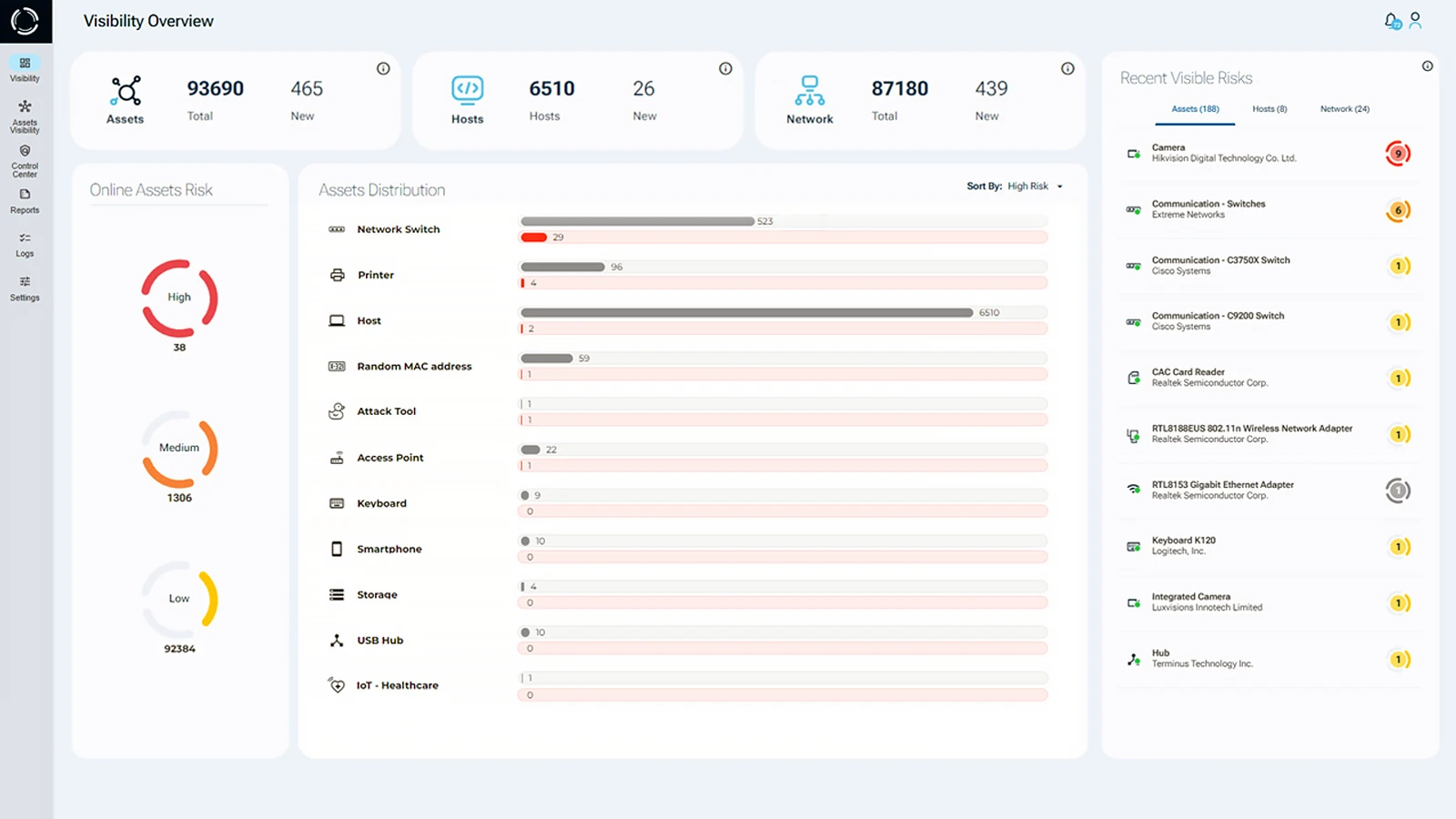
By adopting Sepio’s platform, healthcare providers can detect and mitigate risks from hardware attack tools. This proactive approach strengthens data protection, ensures operational continuity, and prepares organizations to respond effectively to evolving healthcare cybersecurity threats.
Learn More About Sepio’s Cybersecurity in Healthcare
Investing in comprehensive Healthcare Cybersecurity Solutions is essential for ensuring patient safety, regulatory compliance, and operational resilience. Discover how Sepio’s advanced healthcare cybersecurity solutions can protect sensitive patient data and prevent hardware level attacks. With tailored solutions designed specifically for the healthcare industry, we can help you maintain the highest level of cybersecurity.
Speak with one of our experts to learn how we can help you secure your healthcare organization with the best cybersecurity solutions available.