
Hardware Detection and Response (HWDR)
Get Hardware Detection and Response network cybersecurity delivered as a service with continuous hardware assets monitoring.
You are not a hardware security specialist. You don’t have to be!
Free up IT and security teams to focus on business enablement, and leverage superior hardware asset security insights delivered as a service.
Reduce the risks and costs with hardware related, security incidents and data breaches

Get more value from your existing security tools and technology by boosting their performance

Our hardware security experts detect, Identify and mitigate hardware related threats as soon as they’re connected
Sepio’s Hardware Detection and Response (HWDR) provides a continuous, expert-managed service focused on protecting cyber-physical systems (CPS) from hardware-based cyber threats. Our specialists are adept at detecting and mitigating risks to hardware components, USB peripherals, network devices, and their interconnected systems.
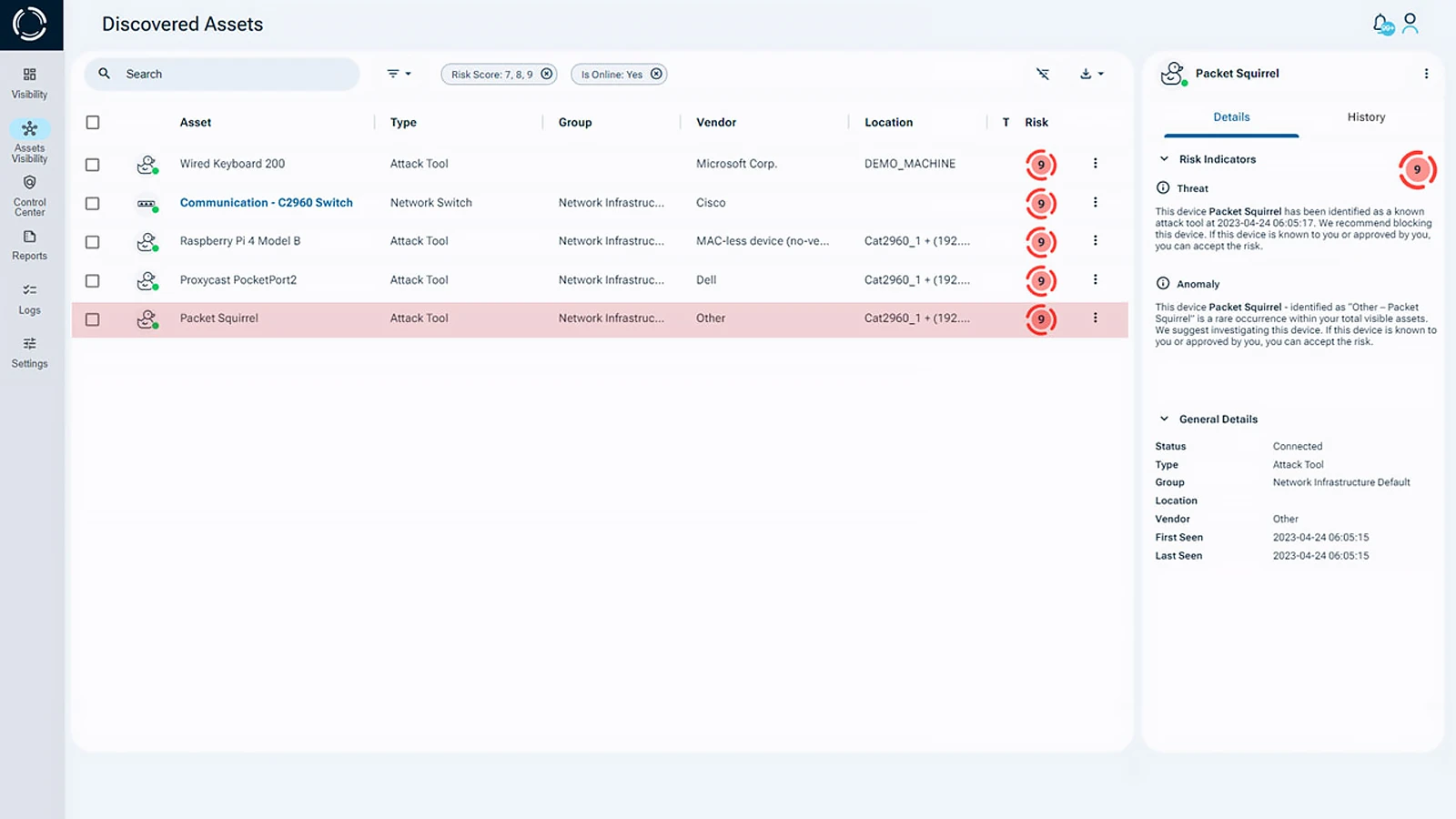
Sepio’s Discovered Assets
Hardware Detection and Response (HWDR), a dedicated continuous hardware-centric cybersecurity service
With deep expertise in hardware vulnerabilities, the Sepio team responds swiftly to threats, ensuring minimal disruption and robust protection of your essential data from complex hardware-based attacks. Entrust us with managing all hardware-related incidents, allowing you to concentrate on achieving your business objectives.

Discover and accurately detect all hardware assets

Enforce flexible, scalable policies and meet regulatory requirements

Mitigate risks from rogue assets

Reduce hardware clutter and optimize budget spending

Integrate seamlessly with your existing security solutions

Certified – SOC 2 Type II, ISO/IEC 27001 and ISO/IEC 27017
Hardware Detection and Response use cases
Solution: Our elite team of hardware security experts provides continuous monitoring of your hardware assets. Ensuring detection of rogue devices, and other hardware-based threats. Sepio’s physical layer-based, patented technology provides state-of-the-art hardware threat detection capabilities – wider coverage with better accuracy.
Solution: Sepio’s HWDR team can take immediate, expert-led actions to neutralize and mitigate hardware threats. Responding and resolving issues within minutes. Substantially faster than conventional software-focused responses. Sepio’s expert will set up the right rule sets and policies as per your organization’s guidelines.
Solution: Leveraging physical layer-based, deep hardware examination techniques, Sepio’s team conducts proactive searches to uncover subtle indications of compromised hardware and swiftly eliminates such threats. Enhancing your security posture beyond the capabilities of common software-only solutions.
Solution: Whether enhancing your current security tools or implementing new ones, Sepio’s HWDR service amplifies your return on investment by extending protection to the physical layer of your technology stack. Through sophisticated integration and data correlation with your NAC, XDR, DLP, or other tools, Sepio filters out irrelevant alerts and focuses on genuine hardware threats. Ensuring clarity and precision in threat management.
Sepio offers a unique detection solution. Providing visibility into all hardware connected assets
Access cybersecurity as a service, featuring ongoing monitoring of hardware assets. By doing so, mitigate risks and lower the costs with hardware-related security incidents and data breaches.
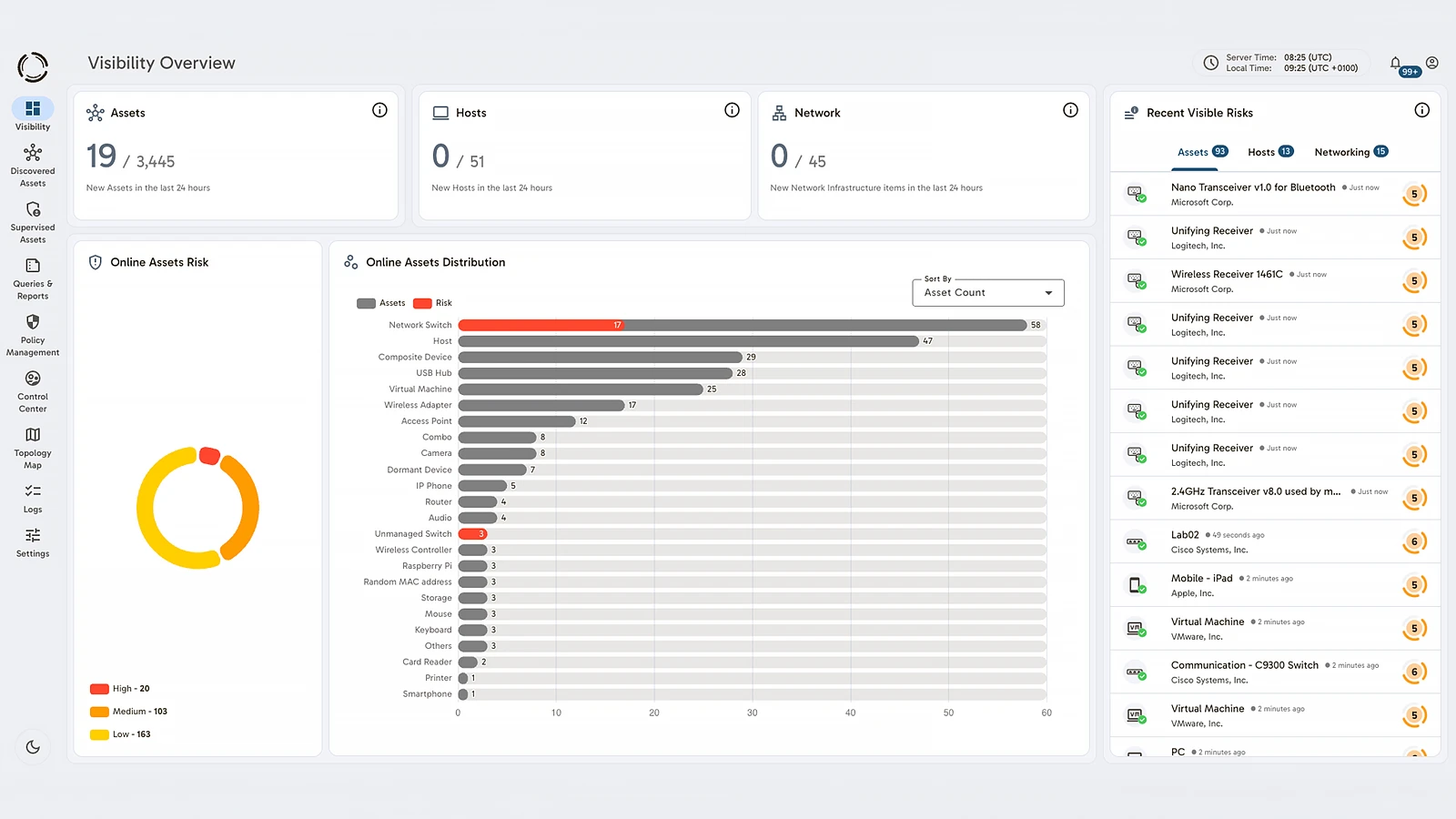
Sepio Visibility Overview
Take the first step. Discover how Sepio HWDR can protect your network from malicious devices
Our experts will help you understand Sepio’s patented technology and how its unique trafficless approach can help you detect unwanted assets and rogue devices effectively.
Talk to an ExpertFrequently Asked Questions
Sepio HWDR is a continuous, expert-managed Hardware Detection and Response service focused on protecting organizations from hardware-based cyber threats. It is delivered as a service and includes ongoing monitoring of hardware assets and hardware-related incidents.
Traditional MDR and XDR services are usually centered on software, endpoints, identities, and network telemetry. Sepio HWDR adds a hardware-centric layer, focusing on threats involving USB peripherals, network devices, rogue assets, and other connected hardware that traditional software-focused tools may not reliably detect.
Sepio HWDR is designed to detect and help mitigate hardware-related threats, including rogue devices, compromised hardware, malicious peripherals, and other hardware-based attacks as soon as they are connected to the environment.
Sepio’s HWDR is using a trafficless approach that is compatible with existing cybersecurity tools. In practice, this means the service is not dependent on traditional traffic inspection to identify hardware-related risk, which can help extend visibility to areas conventional monitoring may miss.
No. One of the service’s core value propositions is that organizations do not need in-house hardware security specialists. Sepio’s HWDR is an outsourced, continuous service run by hardware security experts so internal IT and security teams can stay focused on broader business and operational priorities.
Yes. Sepio HWDR provides optional outsourced 24/7 management of hardware security-related incidents and threats.
Sepio’s HWDR is focused on risks to hardware components, USB peripherals, network devices, and their interconnected systems. It is also providing visibility into all hardware-connected assets.
Sepio’s HWDR team can take immediate, expert-led actions and that it responds and resolves hardware-originated issues within minutes, aiming to reduce response time compared with conventional software-focused approaches.
Yes. The HWDR is compatible with existing cybersecurity tools and is integrated with technologies such as NAC, XDR, DLP, and other tools to improve threat clarity and focus on genuine hardware threats.
No. HWDR is meant to boost the performance and value of existing tools, not replace them. It is an added hardware security layer that strengthens the rest of the stack.
There are four main outcomes: continuous hardware threat monitoring, faster hardware threat response, uncovering threats traditional tools may miss, and improving ROI from existing security investments through integration and hardware-focused threat filtering.
Yes. Sepio’s HWDR helps organizations enforce flexible, scalable policies and meet regulatory requirements
Yes. Reducing risk from rogue assets is one of the service’s explicit benefits, alongside discovering hardware assets accurately and mitigating hardware-related threats.
Yes. Sepio’s integrations and data correlation help filter out irrelevant alerts and focus on genuine hardware threats, which can improve clarity and reduce wasted effort.
The HWDR is for organizations that want continuous monitoring of connected hardware assets, better protection against hardware-based threats, and access to specialist expertise without having to build that capability fully in-house. This would be especially relevant where connected assets, rogue devices, or cyber-physical environments are a concern.
Yes. Sepio is SOC 2 Type II, ISO/IEC 27001, and ISO/IEC 27017 certified.