
Manufacturing Devices May Have Hidden IoT Security Vulnerabilities
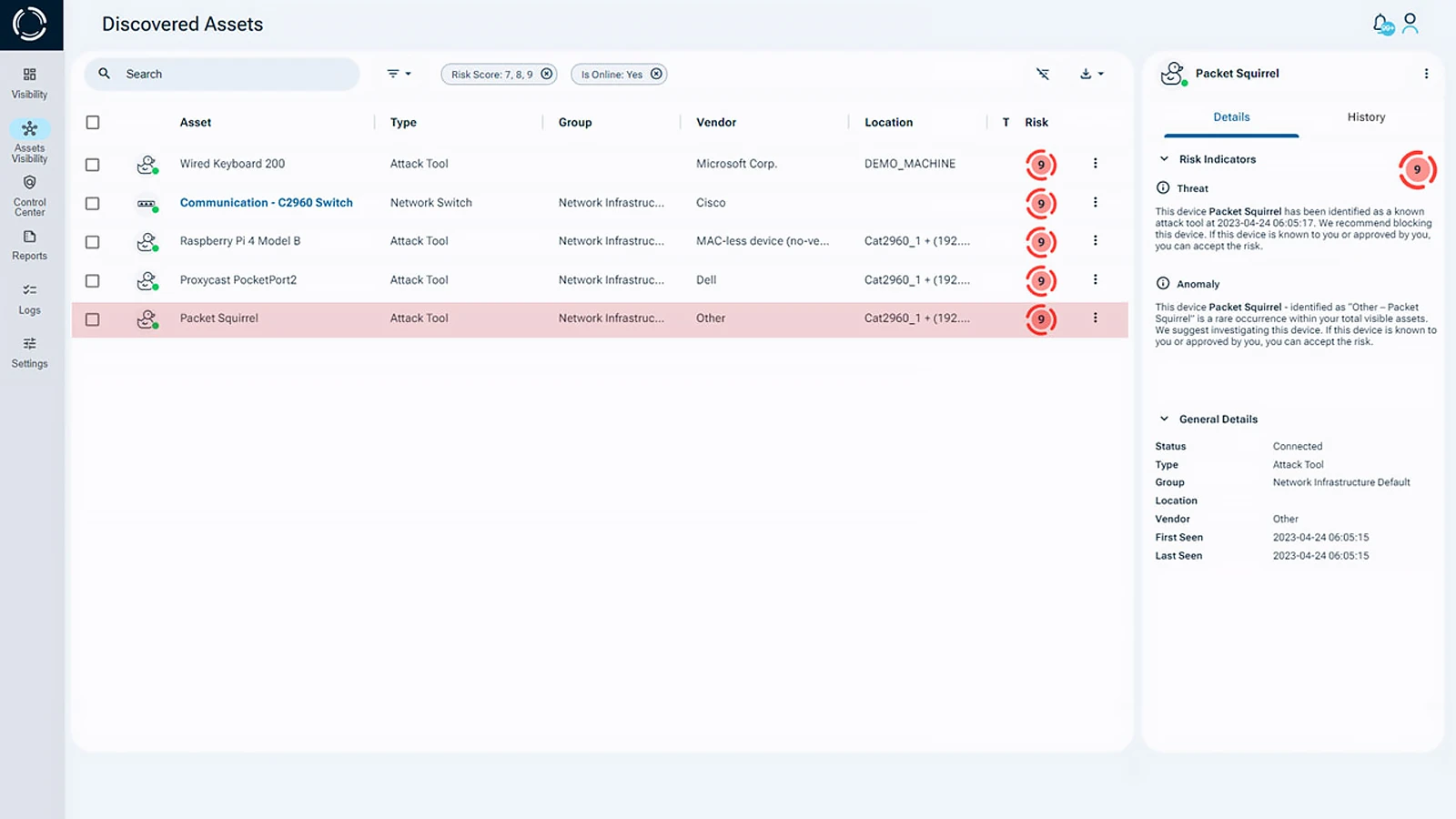
Our solution will make sure that hardware-based attacks tools are not used to steal your secrets or disable your production floor.

Eliminate IoT-driven risks and keep manufacturing running with Physical Layer visibility
In manufacturing, operational continuity is non-negotiable, and your leadership relies on you to keep production running without disruption. At the same time, the growing number of connected IoT devices introduces new attack surfaces that adversaries exploit for IP theft, ransomware, and operational sabotage.
Traditional security often misses IoT blind spots, allowing hidden or rogue devices to disrupt production and business continuity.
Sepio’s Physical Layer-based approach closes these gaps by providing complete visibility into all connected assets, known and unknown. By enabling Zero Trust Hardware Access, you can verify the integrity of every device, eliminate hidden threats, and ensure your manufacturing operations remain secure, resilient, and continuously running.
Key Business Benefits for Secure Manufacturing IoT

Manufacturing Business Continuity
Maintain business continuity with no downtime due to hardware-based attack campaigns on IoT devices.

Risk Management Compliance
Achieve a higher level of risk management compliance in manufacturing.

IP Protection
Safeguard your valuable IP and prevent bad competitors from catching up.

Full Asset Visibility
Ensure that all assets are accounted for and IoT device vulnerabilities are discovered.

IoT Security Risks and Hardware-Based Attacks
The more devices connected to a network, the more entry points for an attacker to infiltrate the target.
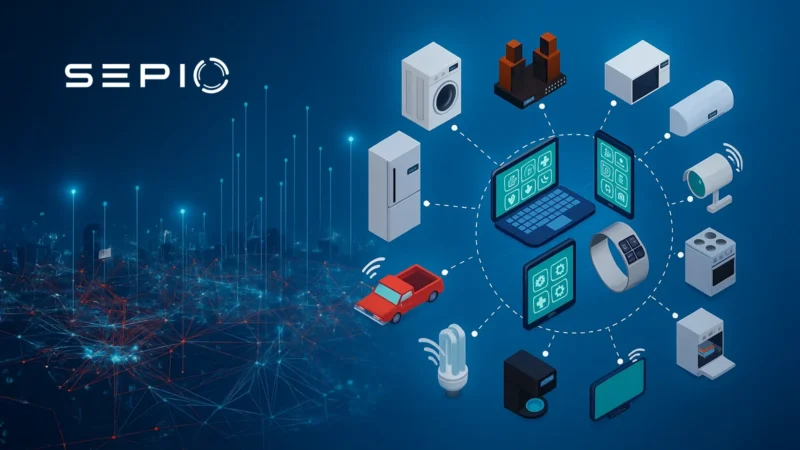
The proliferation of IoT device usage across organizations has meant bad actors have more access points to confidential data, including intellectual property. Additionally, IoT devices typically have lax security measures imposed in order not to hinder the user’s experience. So, even for what seems to be a well-secured organization, the use of unchecked devices increases the IoT security risk and makes it easier for an hardware-based attack to be carried out.
Addressing these IoT security vulnerabilities is crucial to safeguarding organizational data and protecting against potential cyber threats in an increasingly connected world.
More about IoT Security Vulnerabilities

Take Control of IoT Hardware Across Manufacturing Environments
Manufacturing organizations cannot secure what they cannot fully identify and trust. Sepio enables Zero Trust Hardware Access by providing deep visibility into every connected IoT, OT, and industrial asset across factory floors and production environments—helping teams identify unmanaged, rogue, and vulnerable devices before they become operational or security risks.
By eliminating hardware blind spots, Sepio helps manufacturers reduce IoT security vulnerabilities, protect critical operations, and maintain uptime without disrupting production. Schedule a Demo to see how Sepio can strengthen hardware trust and secure manufacturing environments at scale.
Frequently Asked Questions
Sepio HWDR is a continuous, expert-managed Hardware Detection and Response service focused on protecting organizations from hardware-based cyber threats. It is delivered as a service and includes ongoing monitoring of hardware assets and hardware-related incidents.
Traditional MDR and XDR services are usually centered on software, endpoints, identities, and network telemetry. Sepio HWDR adds a hardware-centric layer, focusing on threats involving USB peripherals, network devices, rogue assets, and other connected hardware that traditional software-focused tools may not reliably detect.
Sepio HWDR is designed to detect and help mitigate hardware-related threats, including rogue devices, compromised hardware, malicious peripherals, and other hardware-based attacks as soon as they are connected to the environment.
Sepio’s HWDR is using a trafficless approach that is compatible with existing cybersecurity tools. In practice, this means the service is not dependent on traditional traffic inspection to identify hardware-related risk, which can help extend visibility to areas conventional monitoring may miss.
No. One of the service’s core value propositions is that organizations do not need in-house hardware security specialists. Sepio’s HWDR is an outsourced, continuous service run by hardware security experts so internal IT and security teams can stay focused on broader business and operational priorities.
Yes. Sepio HWDR provides optional outsourced 24/7 management of hardware security-related incidents and threats.
Sepio’s HWDR is focused on risks to hardware components, USB peripherals, network devices, and their interconnected systems. It is also providing visibility into all hardware-connected assets.
Sepio’s HWDR team can take immediate, expert-led actions and that it responds and resolves hardware-originated issues within minutes, aiming to reduce response time compared with conventional software-focused approaches.
Yes. The HWDR is compatible with existing cybersecurity tools and is integrated with technologies such as NAC, XDR, DLP, and other tools to improve threat clarity and focus on genuine hardware threats.
No. HWDR is meant to boost the performance and value of existing tools, not replace them. It is an added hardware security layer that strengthens the rest of the stack.
There are four main outcomes: continuous hardware threat monitoring, faster hardware threat response, uncovering threats traditional tools may miss, and improving ROI from existing security investments through integration and hardware-focused threat filtering.
Yes. Sepio’s HWDR helps organizations enforce flexible, scalable policies and meet regulatory requirements.
Yes. Reducing risk from rogue assets is one of the service’s explicit benefits, alongside discovering hardware assets accurately and mitigating hardware-related threats.
Yes. Sepio’s integrations and data correlation help filter out irrelevant alerts and focus on genuine hardware threats, which can improve clarity and reduce wasted effort.
The HWDR is for organizations that want continuous monitoring of connected hardware assets, better protection against hardware-based threats, and access to specialist expertise without having to build that capability fully in-house. This would be especially relevant where connected assets, rogue devices, or cyber-physical environments are a concern.
Yes. Sepio is SOC 2 Type II, ISO/IEC 27001, and ISO/IEC 27017 certified.