AI-Powered Zero Trust Hardware Access
Superintelligence That Makes Zero Trust Complete.
Discover what connects. Verify what it is. Understand the risk. Enforce trust.


You Cannot Trust What You Cannot Truly Identify.
Addressing Critical Blind Spots in Hardware Security
Traditional security tools often rely on declared identifiers, reported inventory or observed traffic. But a device can appear legitimate while its physical identity tells a different story. Rogue peripherals, spoofed assets, unmanaged infrastructure and dormant hardware can remain outside the reach of conventional controls. As intelligent, autonomous and AI-enabled devices proliferate, these blind spots create a growing gap between assumed trust and verified trust.
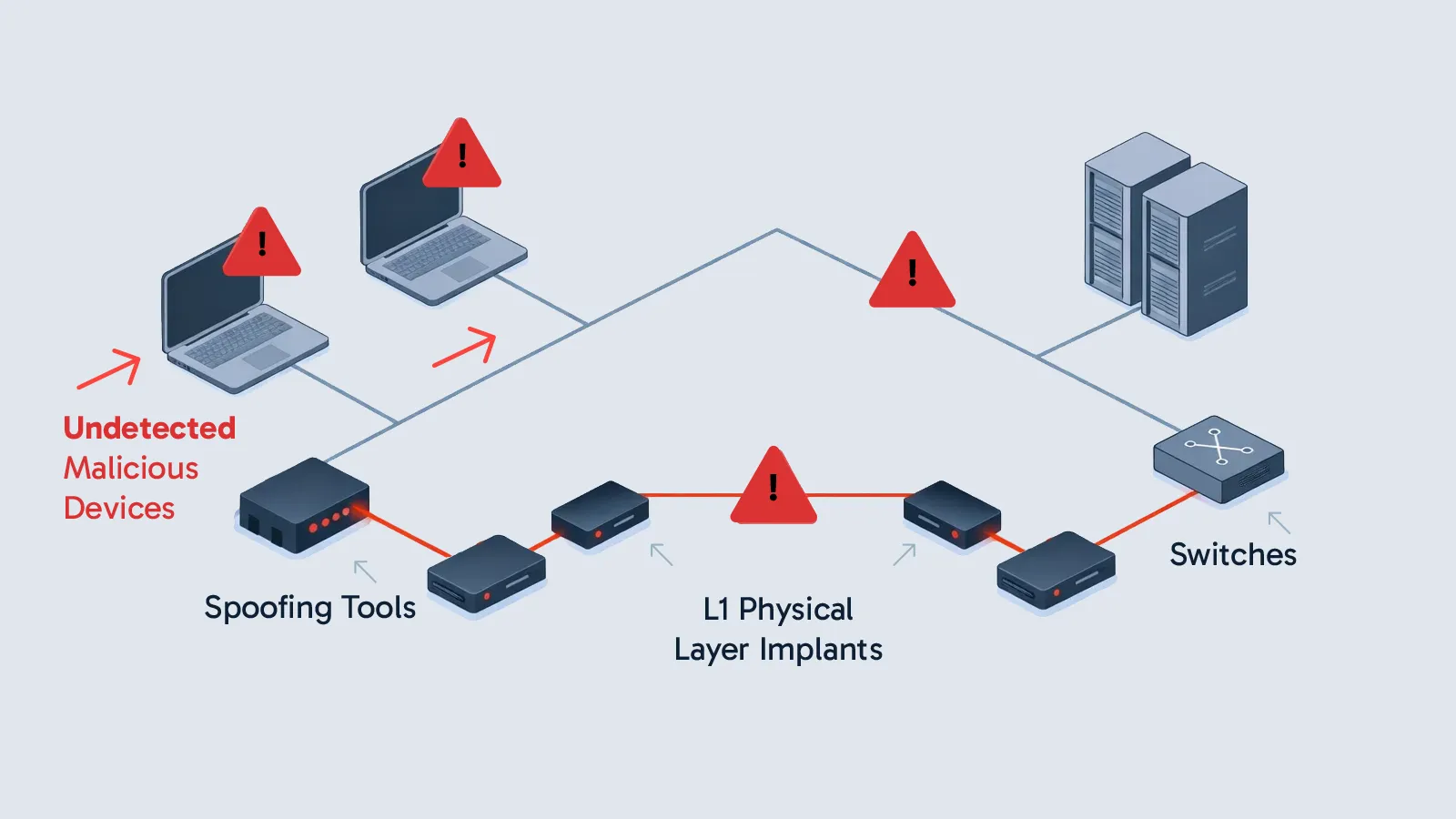
When device identity cannot be reliably verified, Zero Trust remains a theoretical concept rather than an operational reality. The result is a set of critical network security risks:
Blind Spots at Layer 1 (Physical Layer): Unverified or rogue devices can appear as legitimate devices, bypassing security entirely because nothing validates their real, physical identity.
NAC/EDR Evasion: Traditional network security tools focus mostly on software and network layers, leaving a critical blind spot at the hardware level. Because device identity is easy to manipulate, attackers can change how a device “appears” on the network. This allows rogue or malicious hardware to blend in as trusted assets.
Internal Attacks: Insiders or threat actors with internal access can connect unauthorized hardware.
Sepio Zero Trust Hardware Access.
Superintelligence That Makes Zero Trust Complete
Sepio delivers the missing hardware foundation of Zero Trust by validating devices based on what they physically are, not what they claim to be. By combining massive amounts of physical-layer device intelligence with advanced AI and Hardware Superintelligence, Sepio creates a unique Hardware AssetDNA for connected assets, continuously learning, identifying anomalies, and exposing impersonation, spoofing, hidden devices, and hardware risks that traditional cybersecurity tools cannot see.
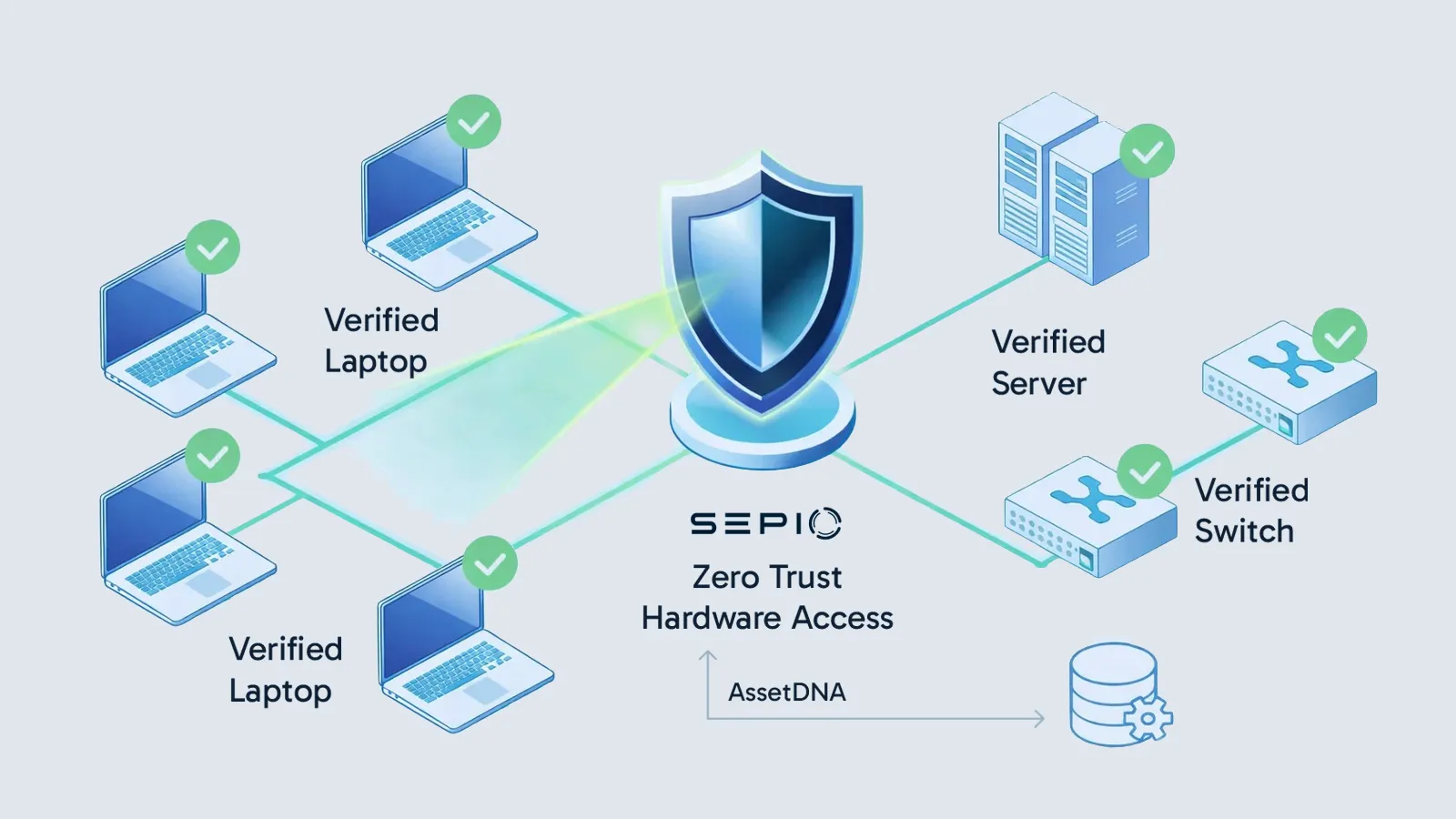
AI-Powered Verified Device Truth: Sepio applies Hardware Superintelligence to physical-layer metadata and Hardware AssetDNA, establishing a trusted understanding of each device’s true identity and uncovering anomalies, impersonation, and risks beyond the reach of conventional security controls.
Intelligent Risk & Automated Mitigation: Turn hardware intelligence into action. Sepio continuously analyses device identity, context, and risk to drive policy-based decisions and enable containment, blocking, isolation, escalation, and remediation through existing security controls.
Complete Asset Intelligence: Continuously discover and understand authorized, unmanaged, hidden, and previously unknown assets across the environment. Sepio transforms raw hardware visibility into actionable intelligence, ensuring governance, security, and compliance are based on verified reality, not assumptions.
Intelligence Across the Security Ecosystem: Sepio extends Hardware Superintelligence across the existing security and IT Asset Management stack, enriching integrated platforms with trusted device identity, risk, and context to accelerate decisions, automate response, and make Zero Trust complete.
Industry Leaders Trust Sepio

Sepio provides valuable insights into our asset inventory, helping us better manage devices and plan their lifecycle.
Michael Erickson
Chief Information Security Officer, Baptist Health

The network visibility created by Sepio’s solution is a critical component of any effective rogue device management solution.
Defense Research Analyst
Frost & Sullivan

Sepio offers a unique capability to identify and categorize connected devices, helping organizations manage risk more effectively.
Bonnie Stith
Former Director of the Center for Cyber Intelligence in the CIA

Sepio addresses a critical security need by providing visibility into every IoT device connected to an organization’s infrastructure.
Lane Bess
CEO, Deep Instinct, Former CEO, Palo Alto Networks, Chairman, Sepio

Sepio has an innovative and robust solution that identifies a type of threats that were difficult to identify otherwise.
Security Leader
Energy and Utilities Industry
Understanding Blind Spots in Hardware Security
Blind spots in hardware security often remain hidden until they evolve into serious vulnerabilities. These gaps can stem from overlooked devices, fragmented visibility across environments, or the rapidly expanding attack surface driven by the proliferation of IoT and OT systems.
When left unaddressed, such blind spots expose organizations to a variety of hardware‑level threats.
Developing a deeper understanding of where these weaknesses originate enables security teams to reinforce their defenses, minimize risk, and build more resilient and transparent hardware architectures.
The Sepio Zero Trust Hardware Access Framework
In a world where every connected device can become a potential entry point for attackers, securing the hardware layer is no longer optional, it is foundational to Zero Trust. The Sepio Zero Trust Hardware Access (ZTHA) Framework provides a structured approach to identifying, validating, and enforcing trust across all physical assets, regardless of their type, behavior, or location. By shifting from implicit trust to continuous verification, this framework ensures that every device is known, authenticated, compliant, and governed by dynamic policies that reduce risk and strengthen organizational resilience. Know every device. Verify every connection. Enforce trust at the hardware layer.
Key Capability: The most comprehensive device discovery
Requirement: Discover and map all connected devices (including IT, IoT, OT, Shadow IT, USB, and other peripherals) even those invisible to traditional, network-centric security tools
Key Capability: Unmatched device identification accuracy
Requirement: Establish asset identity based on its own characterizes, registered information and organizational context
Key Capability: Easy to understand individual risk indicators and aggregate risk scores.
Requirement: Continuous validation of the device’s behavior, configuration, and compliance against a security policy
Key Capability: Flexible, native policy engine with rules based on device type, behavior, location, etc.
Requirement: Continuous validation of the device’s behavior, configuration, and compliance against a security policy
Key Capability: Seamless integration with NAC, SIEM, SOAR, and other security controls for enforcement and remediation
Requirement: Automatically notify, alert, isolate, or deny unauthorized and non-compliant devices in real time, while triggering actionable remediation workflows.