Superintelligence That Makes Zero Trust Complete
Hardware Superintelligence extends Zero Trust’s core principle of Never Trust, Always Verify to the physical foundation of the enterprise. While organizations have invested heavily in verifying users, applications, workloads, and network activity, one fundamental question often remains unanswered:
Can you trust the hardware itself?
Sepio extends Zero Trust to its physical foundation by verifying connected devices based on what they actually are, not simply what they claim to be.
By combining physical-layer intelligence, Hardware AssetDNA, advanced AI, and a continuously expanding understanding of connected hardware, Sepio delivers Hardware Superintelligence: the ability to discover, identify, understand, assess, and act on hardware risk at scale.
The result is Zero Trust Hardware Access (ZTHA), ensuring that hardware trust is never assumed, but continuously established through verified identity, context, posture, and risk.
Why Zero Trust Needs Hardware Superintelligence
Devices are becoming more diverse, autonomous, AI-enabled, and increasingly difficult to identify, classify, and secure. IT, OT, IoT, IoMT, peripherals, edge systems, and AI-enabled devices increasingly coexist within the same environments.
At the same time, many security controls continue to depend on information that hardware provides about itself, MAC addresses, IP addresses, software agents, certificates, traffic patterns, or manufacturer-reported identifiers. Those signals are important, but they do not always tell you what the device physically is.
This creates a fundamental Zero Trust gap. Shadow IT, unmanaged hardware, dormant devices, spoofed assets, unauthorized switches, malicious peripherals, and sophisticated hardware implants can exist beyond the effective visibility of conventional cybersecurity tools. As complexity increases, organizations need more than hardware visibility. They need the intelligence to understand:
- What is connected?
- What is it really?
- Does it belong here?
- Is it behaving as expected?
- What risk does it represent?
- Should it be trusted?
- What action should be taken?
This is where Zero Trust Hardware Access Superintelligence changes the equation.
The Missing Hardware Layer of Zero Trust
Traditional Zero Trust architectures are highly effective at validating identities, controlling access, limiting privileges, and reducing lateral movement. But those controls can inherit one dangerous assumption:
That the device presenting the identity is the device it claims to be.
Zero Trust Hardware Access removes that assumption. Sepio evaluates physical-layer device characteristics and environmental context to create a high-confidence understanding of hardware identity. Instead of asking only:
“What identity is this device presenting?”
Sepio adds another question:
“What does the physical evidence tell us this device actually is?”
That additional intelligence strengthens the entire Zero Trust architecture (ZTA). After all, Zero Trust cannot be fully realized if the hardware accessing the environment has not been independently verified.
This approach aligns closely with the National Security Agency (NSA) Zero Trust implementation guidelines, which emphasize continuous verification and authorization for every user and device.
From Hardware Data to Hardware Superintelligence
Sepio continuously derives intelligence from the physical characteristics, connectivity, context, and attributes of connected assets. Advanced AI and machine learning enable Sepio to transform this unique hardware data into increasingly sophisticated understanding of device identity, anomalies, relationships, posture, and risk.
This creates Hardware Superintelligence, intelligence specifically built to understand the hardware layer. Rather than relying on a single identifier or static asset record, Sepio evaluates multiple dimensions of device evidence and context to establish Hardware AssetDNA and continuously assess whether what is connected corresponds with what should be connected. Hardware Superintelligence transforms raw visibility into:
Discovery ➜ Understanding ➜ Verification ➜ Risk ➜ Action
The Zero Trust Hardware Access Framework
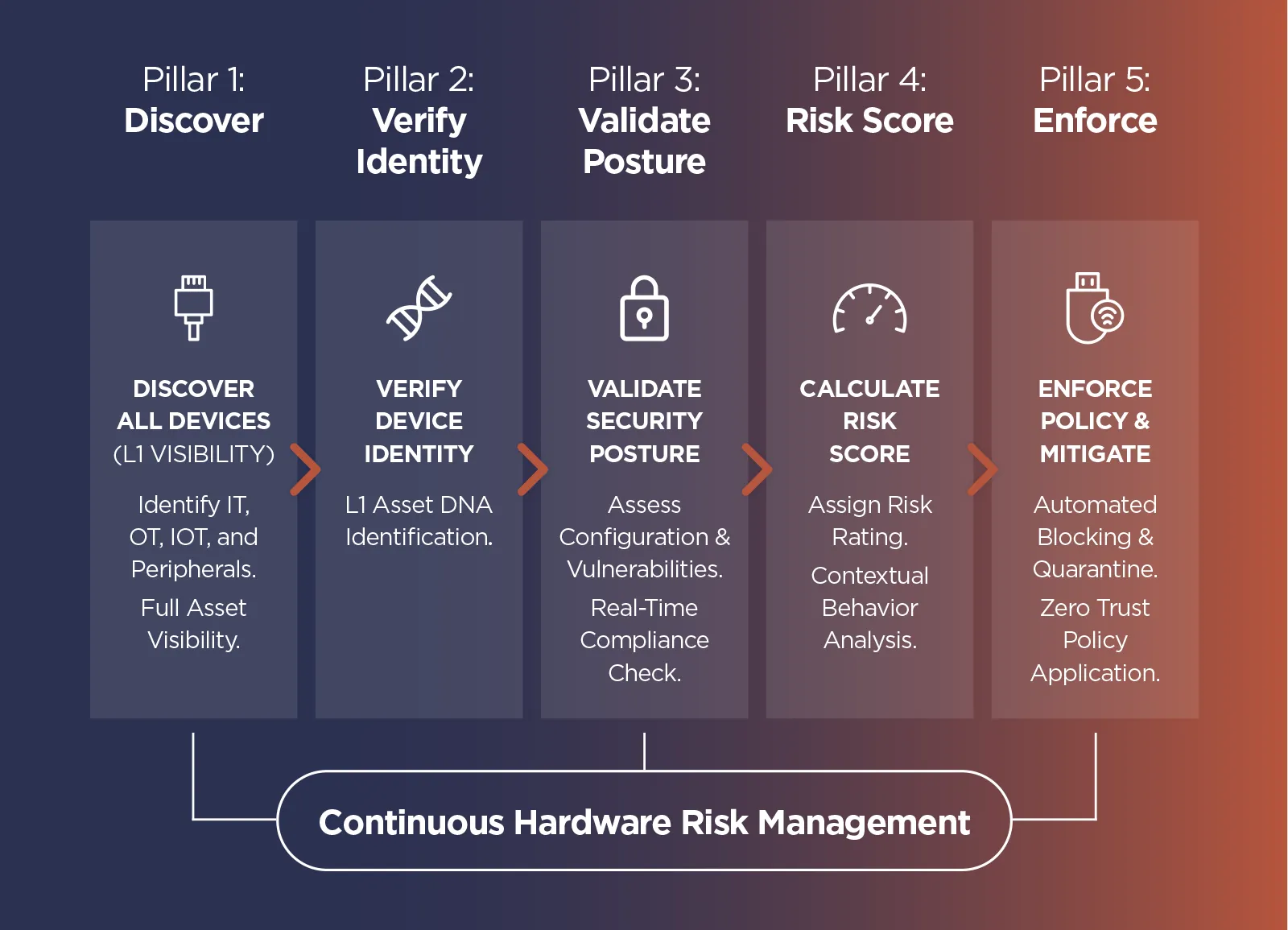
Zero Trust Hardware Access provides a structured progression from discovering hardware to making intelligent trust and enforcement decisions. The framework is built on five interconnected pillars:
- Discover: Know everything that is connected.
- Verify: Understand what every device actually is.
- Validate: Determine whether it belongs and whether it meets policy.
- Assess: Understand the risk using context and evidence.
- Enforce: Convert the hardware intelligence decision into action.
Hardware Superintelligence connects these five pillars, continuously transforming physical-layer evidence into increasingly informed security decisions.
Discovery: Comprehensive Hardware Discovery
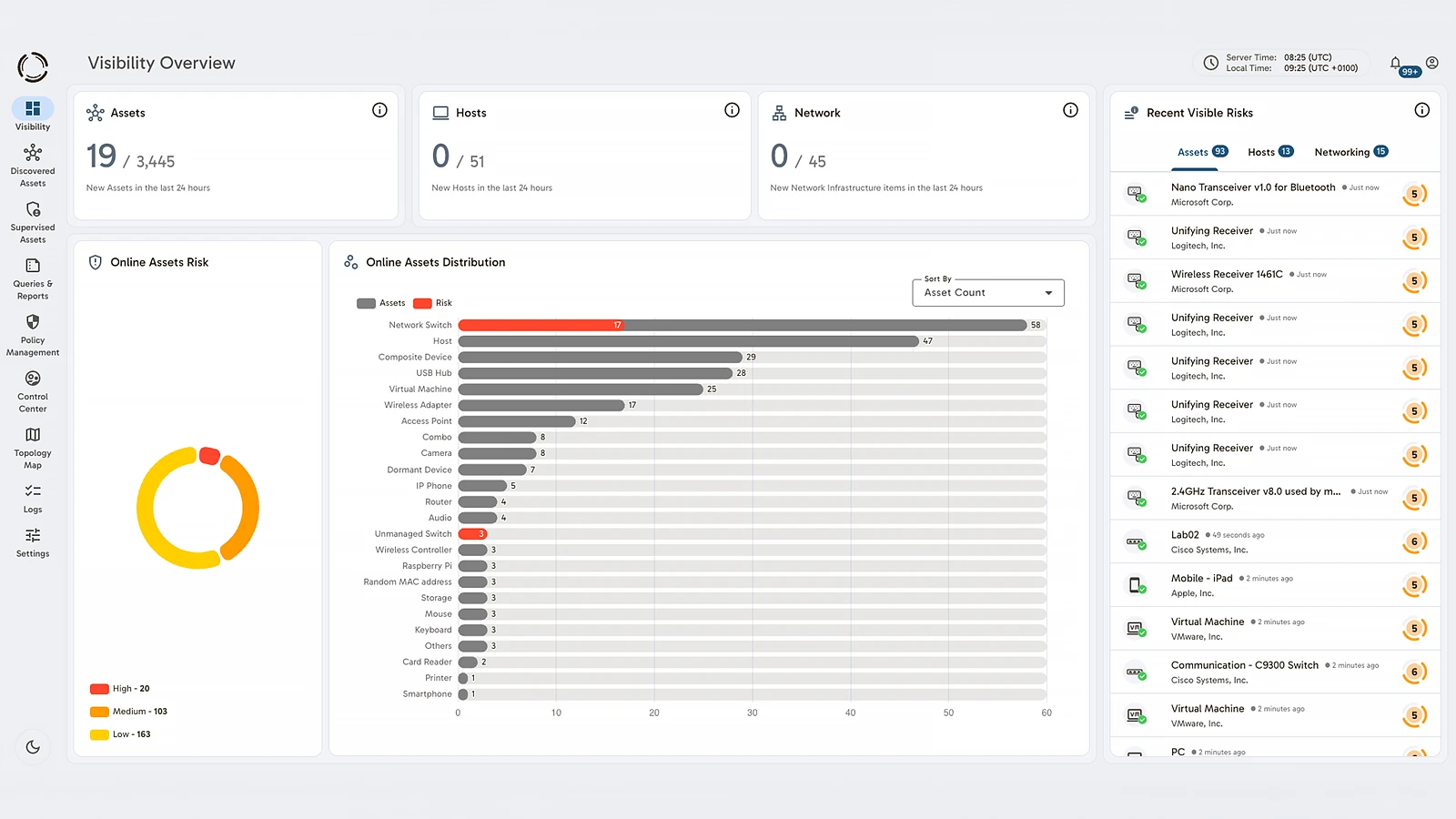
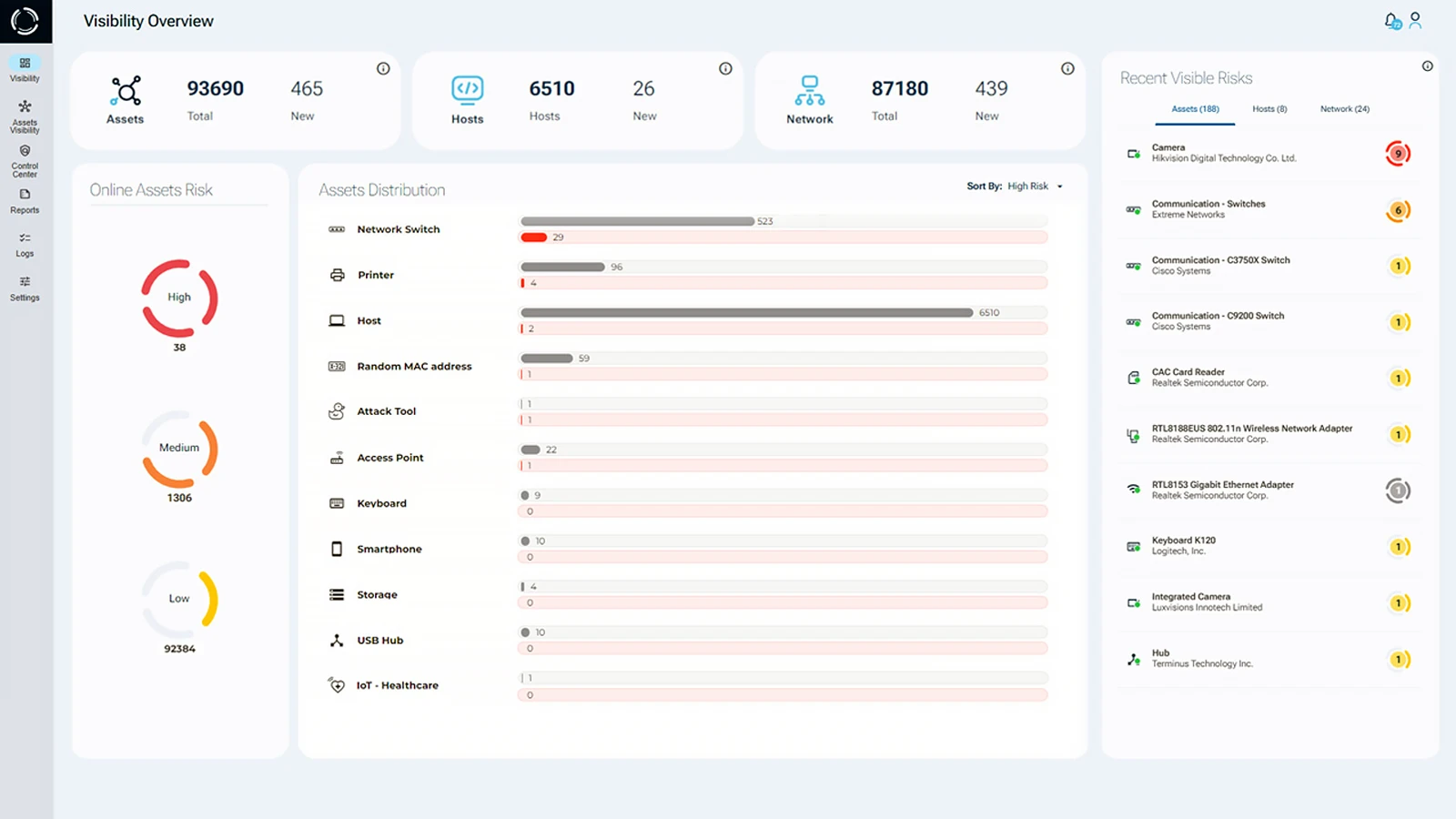
You cannot protect what you do not know exists. Zero Trust Hardware Access begins with continuous discovery of the real hardware environment, including assets that traditional cybersecurity network-centric technologies may overlook. This includes:
- Managed and unmanaged devices
- IT, OT, IoT and IoMT assets.
- Shadow IT.
- Silent or dormant devices.
- USB and peripheral devices.
- Embedded systems.
- Network infrastructure.
- Unauthorized switches and hubs.
- Non-traditional and difficult-to-identify hardware.
But discovery alone is no longer enough. Hardware Superintelligence adds context and understanding to visibility, helping organizations move from “something is connected” to “we understand what it is and why it matters.”
Outcome: A continuously updated representation of the actual connected hardware environment, based on observed reality rather than inventory assumptions.
Verify: AI-Powered Verified Device Truth
Zero Trust fails if device identity can be accepted at face value. Sepio uses physical-layer intelligence and Hardware AssetDNA to establish a high-confidence understanding of device identity. This enables organizations to move from:
“What does this device claim to be?”
to:
“What does the evidence prove it to be?”
Hardware Superintelligence analyses device characteristics together with organizational and environmental context to identify anomalies that may indicate impersonation, spoofing, unauthorized hardware, or unexpected device behaviour.
Outcome: A trusted hardware identity that can be used as the basis for Zero Trust policy and access decisions.
Validate: Continuously Understand Whether Hardware Belongs
Knowing what a device is does not automatically mean it should be trusted. Hardware Superintelligence continuously evaluates identity and context against expected policy. Questions include:
- Is this device expected to be here?
- Is it connected where it should be?
- Does its identity correspond with organizational records?
- Is it operating within its expected role?
- Has its posture or context changed?
- Does it violate defined hardware security policies?
This moves hardware security beyond static inventory and toward continuous trust evaluation.
Outcome: An always-current understanding of whether each connected asset remains consistent with organizational policy and expectations.
Assess: Transform Hardware Intelligence into Risk Intelligence
Not every anomaly represents the same level of risk. Sepio combines verified identity, context, policy, and detected risk indicators to help organizations understand which hardware events require attention first. Hardware Superintelligence helps evaluate factors such as:
- Identity confidence
- Device anomalies
- Unexpected characteristics
- Location and connectivity
- Business context
- Policy violations
- Known vulnerabilities
- Asset criticality
- Potential security impact
The result is an explainable and actionable view of hardware risk, not simply another list of discovered devices.
Outcome: Prioritized hardware risk intelligence that helps security teams determine what requires remediation, escalation, investigation, or immediate enforcement.
Enforce: Turn Hardware Intelligence Into Action
Zero Trust ultimately requires a decision:
Should this device be trusted?
Sepio transforms verified hardware identity and risk intelligence into policy-driven action. Depending on organizational policy and existing security infrastructure, actions can include:
- Notify and alert
- Escalate for investigation
- Initiate remediation workflows
- Quarantine or restrict access
- Isolate unauthorized hardware
- Block access
- Trigger integrated security controls
Sepio works with existing security and IT infrastructure to extend Hardware Superintelligence across the enterprise and provide trusted device intelligence to enforcement and remediation systems.
Outcome: Hardware risk moves from visibility to measurable action.
From Hardware Trust to Hardware Superintelligence
Sepio’s Hardware Superintelligence transforms hardware visibility into actionable understanding. Rather than simply discovering connected devices, Sepio continuously analyzes Physical Layer characteristics, Hardware AssetDNA, environmental context, behavioral indicators, and threat intelligence to build a trusted understanding of every asset.
As organizations increasingly manage IT, OT, IoT, IoMT, edge, and AI-enabled devices within the same environment, hardware security requires more than asset discovery. Security teams need to understand what a device is, whether it belongs, the risk it presents, and what action may be required.
By combining Physical Layer fingerprinting, machine learning, and hardware intelligence, Sepio helps organizations continuously evaluate hardware identity, posture, and risk as part of their Zero Trust strategy. Discovery ➜ Identification ➜ Understanding ➜ Trust ➜ Action.
The result is a continuously evolving understanding of connected hardware that helps security teams identify unmanaged assets, detect anomalies, assess risk, and make informed trust decisions with confidence.
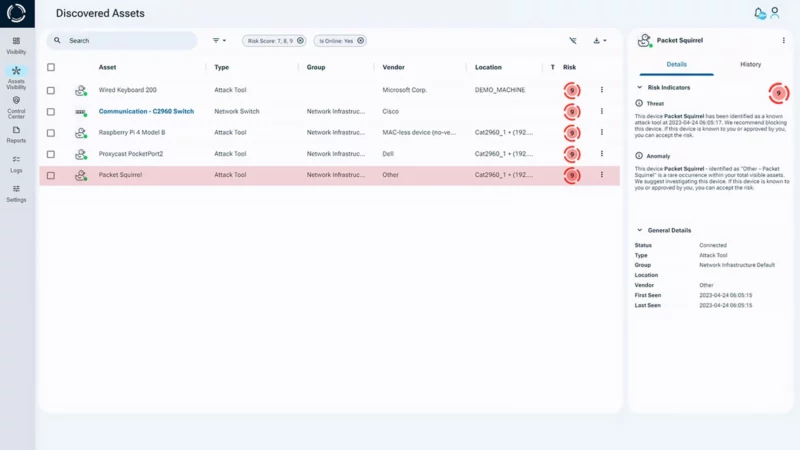
Ready to Strengthen your Zero Trust Architecture?
Talk to one of our experts or book a live demo to see how Sepio combines Physical Layer intelligence, Hardware AssetDNA, AI-powered Hardware Superintelligence, and Hardware Access Control to deliver Zero Trust Hardware Access with complete hardware visibility, trusted device verification, and actionable hardware intelligence.
Read the Zero Trust Hardware Access White Paper (pdf)