Hardware Security Delivered as a Service
Hardware Detection and Response (HWDR) provides continuous hardware asset visibility, hardware threat detection, and expert-led response across your environment. Unlike traditional security solutions, HWDR identifies rogue devices, unauthorized hardware, and hardware-based threats that often remain invisible to conventional security tools.
Free your IT and security teams from the complexity of hardware security and focus on business priorities, while Sepio delivers expert-driven hardware detection, visibility, and response capabilities that strengthen your overall hardware defense strategy.
Reduce Risk from Hardware-Based Threats
Hardware-based threats are often difficult to detect and can lead to serious security incidents and data breaches.
Sepio Hardware Defense and Response (HWDR) helps organizations reduce both the risk and cost of hardware-related threats by providing 24/7 monitoring, detection, and response, managed by dedicated hardware security experts.
Strengthen Your Hardware-Based Security Posture with AssetDNA™
Sepio enhances your existing security stack by adding visibility into hardware assets that traditional tools cannot detect.
By combining deep hardware visibility with network and device context, HWDR improves overall hardware defense by identifying risks that would otherwise remain hidden.
Continuous Hardware Threat Detection and Response
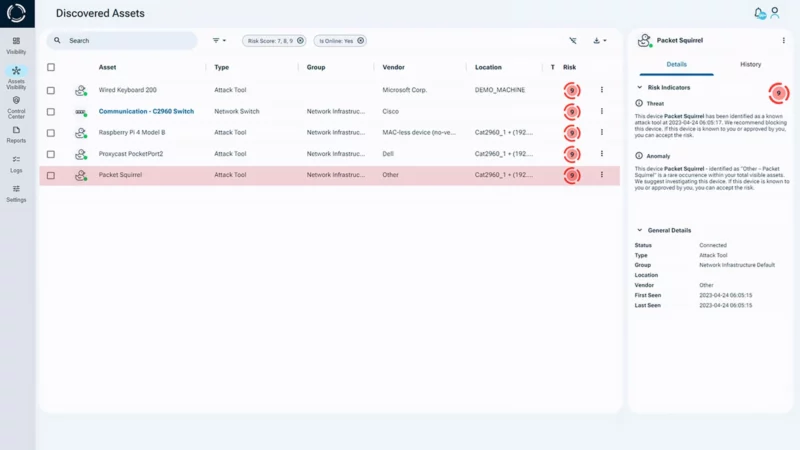
Sepio HWDR delivers continuous, expert-led hardware defense across all assets, including USB peripherals, network devices, and connected systems.
Our team detects, identifies, and mitigates hardware-based threats as soon as they appear, ensuring fast response and minimal disruption.
What Makes Sepio HWDR Different?
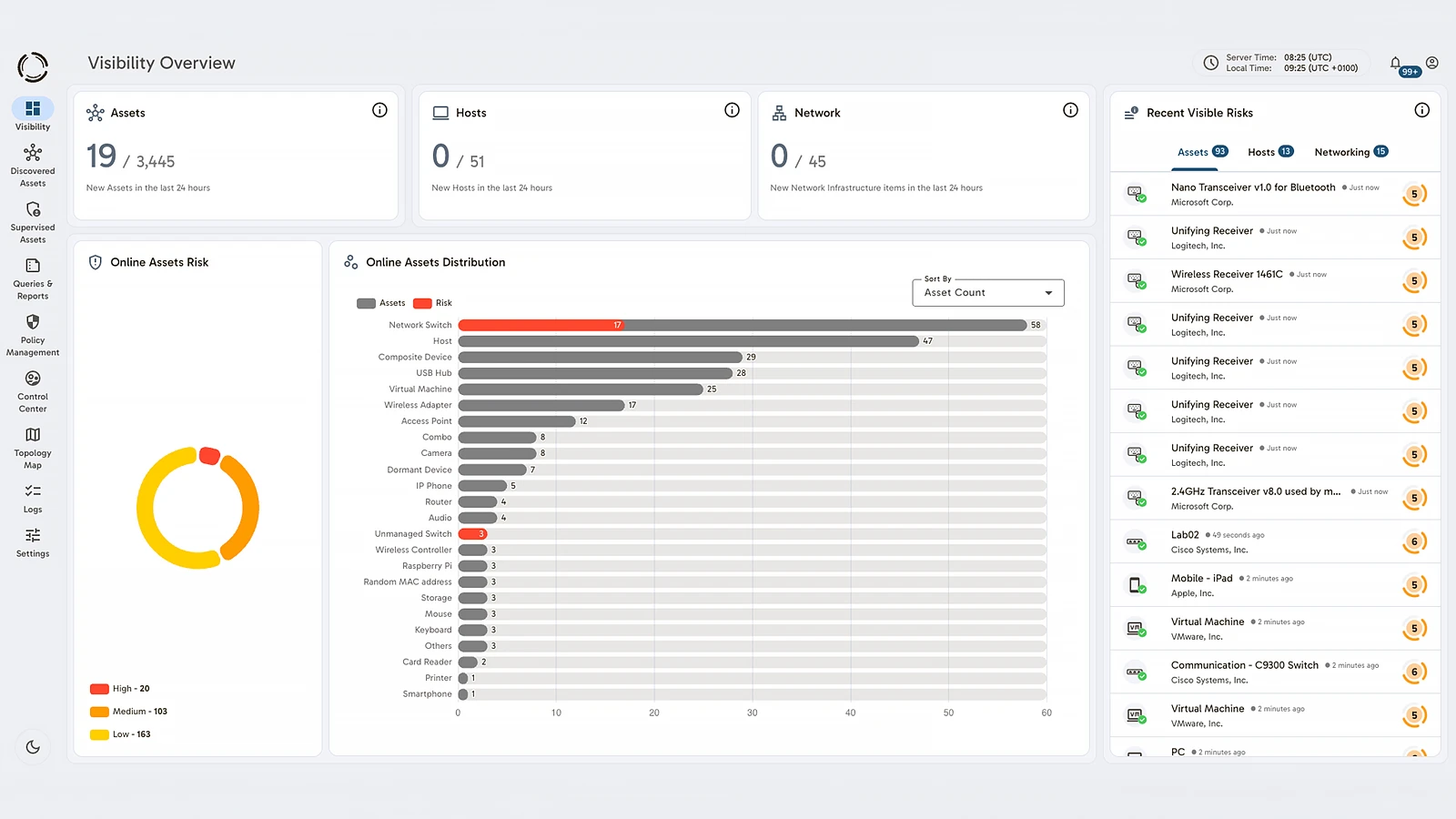
Sepio HWDR combines patented hardware visibility technology with expert-led security operations to continuously identify, assess, and respond to hardware-based threats. Unlike traditional security tools that rely on self-reported device information, Sepio validates hardware identities and exposes hidden, unmanaged, and rogue assets across your environment.
- Continuous discovery and validation of all connected hardware assets
- Real-time hardware threat detection
- Expert-led investigation and response
- Policy enforcement and compliance support
All delivered as a service, without requiring your team to become hardware security specialists.
Key Capabilities
- Discover and accurately identify all connected hardware assets
- Enforce flexible, scalable policies and compliance requirements
- Mitigate risks from rogue or unauthorized devices
- Reduce hardware sprawl and optimize resource usage
- Integrate seamlessly with existing security tools
- Certified for enterprise environments (SOC 2 Type II, ISO/IEC 27001, ISO/IEC 27017)
Use Cases
- Continuous Hardware Threat Monitoring
Maintain full visibility and control over all hardware assets at all times. - Accelerated Incident Response
Reduce response times with expert-led detection and mitigation. - Uncover Hidden Risks
Reveal threats from hardware vulnerabilities that traditional tools miss. - Maximize Existing Security Investments
Extend protection to the physical layer while boosting the effectiveness of your current stack.
See What You’ve Been Missing™
Hardware risks are real, and often invisible until it’s too late.
Sepio HWDR gives you the visibility, expertise, and response capabilities to stay ahead.
Request a Demo. Experience continuous hardware detection and response backed by industry-leading hardware visibility and expert-driven protection against hardware-based threats.
Talk to an expertFrequently Asked Questions
Hardware Detection and Response (HWDR) is a managed security service that continuously discovers, monitors, detects, and responds to hardware-related risks across an organization’s environment. It helps identify rogue devices, unauthorized hardware, and hardware-based threats that may not be visible to traditional security tools.
Hardware-based threats originate from physical devices connected to a network or endpoint. These threats can include rogue devices, unauthorized USB peripherals, compromised network equipment, malicious hardware implants, and manipulated devices designed to bypass traditional security controls.
EDR focuses primarily on software activity and endpoint behavior. HWDR extends security visibility to the physical layer by identifying and monitoring hardware assets, including unmanaged, unauthorized, hidden, or rogue devices that EDR solutions may not detect.
Organizations cannot secure assets they cannot see. Complete hardware asset visibility helps security and IT teams identify unknown devices, enforce policies, reduce attack surfaces, improve compliance, and detect hardware risks before they lead to security incidents.
Yes. HWDR continuously monitors connected hardware assets and helps identify rogue, unauthorized, spoofed, or unmanaged devices that may introduce security risks to the environment.
HWDR improves hardware security by combining continuous hardware asset discovery, threat detection, policy enforcement, and expert-led response. This helps organizations reduce the risk of hardware-based attacks and maintain stronger visibility and control over their environments.
Yes. Organizations operating in critical infrastructure, healthcare, manufacturing, financial services, government, and other regulated sectors can use HWDR to improve hardware asset visibility, support compliance initiatives, and strengthen protection against hardware-based threats.