What Is Airport Hardware Security?
Airport hardware security focuses on protecting, identifying, validating, and monitoring the physical devices connected to airport networks. As a critical component of airport cybersecurity, it helps ensure that IT, OT, IoT, and network infrastructure assets can be trusted across airport operations.
As airports become increasingly connected, hardware security gaps are emerging as a significant risk to operational resilience. A single compromised, rogue, or misidentified device can disrupt passenger processing, baggage handling, access control, communications, and other critical services.
The modern connected airport depends on thousands of hardware assets supporting passenger processing, baggage handling, surveillance, communications, access control, and operational technology systems. As a result, airport cybersecurity must extend beyond users and software identities to establish trust in every connected device.
Airport Cybersecurity Across IT, OT, IoT, and Network Infrastructure
Airport hardware security is inherently complex due to the mix of IT, OT, IoT, and cyber-physical systems (CPS) that support daily operations. Some systems are managed by the airport authority, while others are operated by airlines, tenants, vendors, and government agencies.
This creates a dynamic environment where systems ownership, location, and trust continuously change and are difficult to verify.
Typical Connected Airport Hardware Assets
- Passenger kiosks and check-in systems supporting passenger processing and terminal operations
- Baggage handling systems, PLCs, and operational control equipment that support continuous passenger and cargo movement
- CCTV, surveillance, and access control systems protecting terminals, restricted areas, and operational facilities
- Biometric identification and authentication systems
- HVAC and building management systems
- Network infrastructure and endpoints
- Vendor-managed, third-party, and unmanaged hardware assets
Each of these assets expands the airport’s attack surface. When hardware identity and visibility are limited, all higher-level security controls inherit risk, weakening overall airport cyber resilience.
The Expanding Airport Cyber Attack Surface
Today, airport cybersecurity is no longer just about protecting data. It is about maintaining operational resilience across a growing ecosystem of connected hardware, operational technology (OT), IoT devices, network infrastructure, and third-party systems. As airports continue to modernize and automate operations, every connected device becomes a potential entry point for cyber threats.
As a result, a cyber incident involving connected hardware can disrupt passenger processing, baggage handling, access control, communications, surveillance, and other critical airport operations. Even when safety systems remain unaffected, these disruptions can lead to delays, manual workarounds, reduced efficiency, and reputational damage.
Key factors expanding the attack surface include:
- Converged IT/OT environments: Corporate, terminal, and operational systems often share dependencies, even when segmented.
- Vendor and tenant ecosystems: Third-party devices reduce hardware visibility and ownership clarity.
- Unmanaged and agentless assets: Legacy, IoT, and externally managed devices limit security oversight.
- Physical access realities: Distributed airport environments make device monitoring and enforcement more challenging.
- Digital transformation initiatives: Increasing adoption of connected technologies, automation, and smart infrastructure continues to expand the attack surface.
The Hidden Airport Hardware Security Gap
Airport network security depends on the ability to identify, classify, and trust every connected device operating across terminal networks, operational technology environments, baggage handling systems, access control platforms, and third-party infrastructure. When device identity cannot be verified, network segmentation, access control, monitoring, and Zero Trust policies become significantly less effective.
Despite investments in endpoint security, network monitoring, identity management, OT security, and network segmentation, many airports still face a critical challenge: they cannot reliably verify what connected devices are operating across their environments. Without trusted hardware identity, airport teams may struggle to distinguish authorized devices from rogue hardware, unmanaged assets, or malicious attack tools.
Traditional methods for identifying connected devices are unreliable:
- MAC addresses can be spoofed
- Hostnames can be misleading
- Certificates do not prove physical identity
- Agents are not universally supported (especially in OT and IoT environments)
- Network visibility is limited by encryption and segmentation
In dynamic airport environments involving airlines, vendors, contractors, and tenants, asset inventories quickly become outdated, leaving critical gaps in visibility and trust.
Why Zero Trust Falls Short Without Hardware Verification
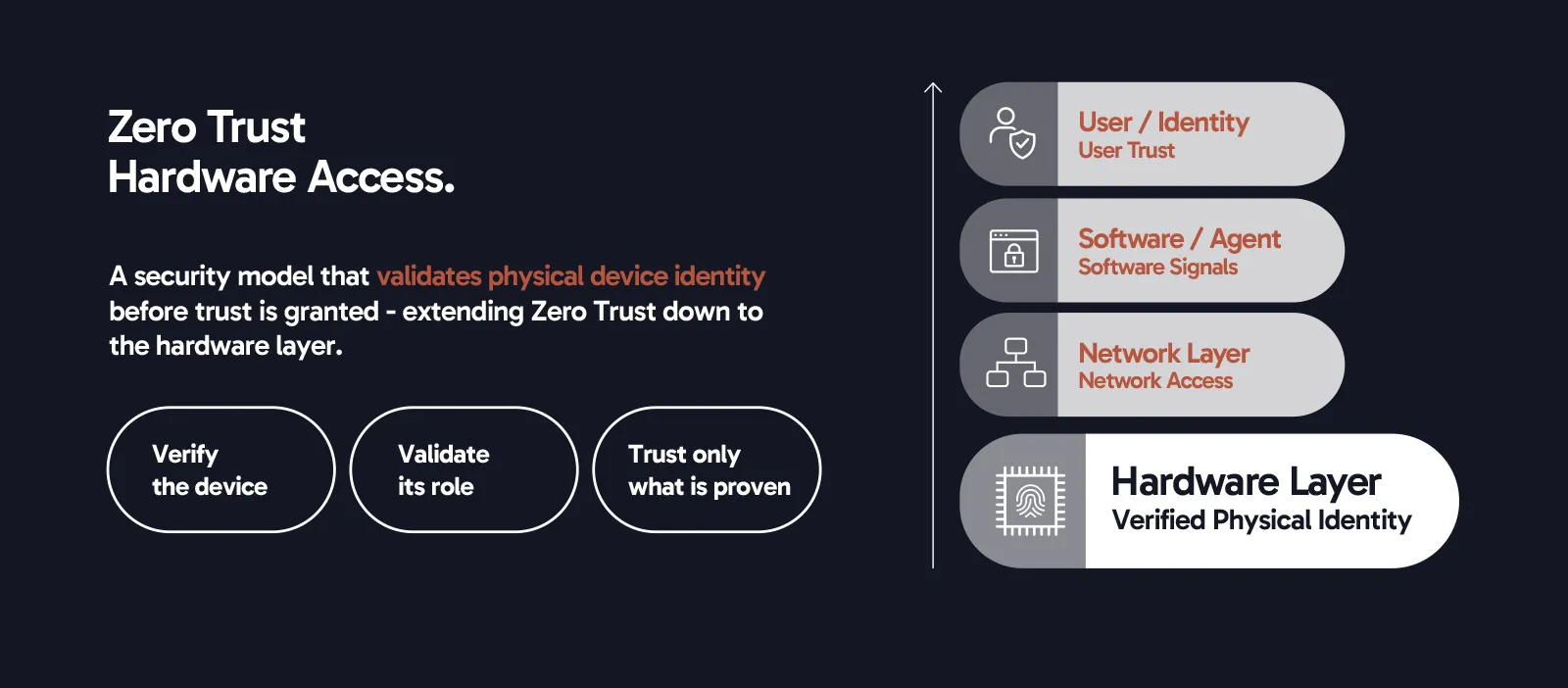
Zero Trust has transformed cybersecurity by requiring explicit verification of users, applications, and access (NIST SP 800-207). However, most implementations rely on the software or identity layer, assuming devices are what they claim to be.
In airport environments, devices may be:
- Unknown or unmanaged hardware assets
- Misclassified, repurposed, or undocumented devices
- Spoofed, impersonated, or compromised endpoints
- Connected outside approved network zones or physical locations
Why Software Identity Is Not Enough
- Network identifiers (MAC, IP) do not prove physical hardware identity
- Security agents cannot be deployed across all OT, IoT, and legacy systems
- Network traffic inspection is constrained by encryption and segmentation
- CMDB and asset inventory data quickly become outdated
- Vendor-provided equipment requires independent validation
Without hardware-level verification, Zero Trust relies on assumptions rather than evidence, introducing risk where device identity cannot be guaranteed.
The Five Pillars of Zero Trust Hardware Access
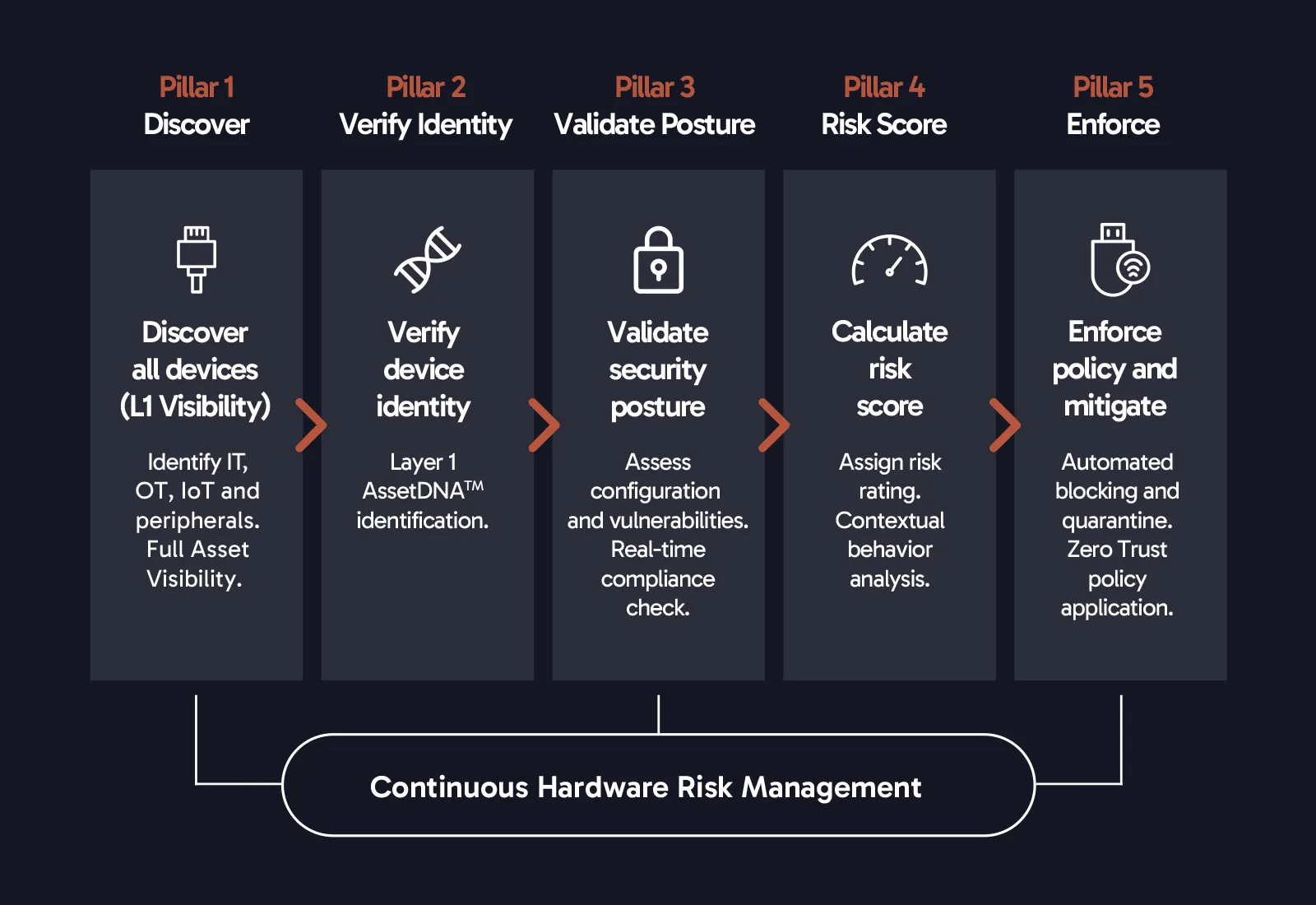
To address these challenges, a complete airport hardware security strategy requires a Zero Trust framework built on five core pillars:
- Discover: Continuously identify all connected hardware across IT, OT, and IoT.
- Verify: Establish true identity using physical-layer intelligence.
- Validate: Confirm alignment with expected role, location, and ownership.
- Score: Assess risk based on exposure, context, and trust.
- Enforce: Trigger actions through policies, alerts, and integrations.
Together, these pillars provide a comprehensive approach to airport hardware security. By continuously validating device identity and behavior, organizations can reduce blind spots, strengthen Zero Trust implementation, and improve overall cyber resilience.
How Sepio Delivers Zero Trust Hardware Access
Sepio operationalizes the Zero Trust Hardware Access framework through AssetDNA™ technology. Sepio physical-layer intelligence establishes trusted hardware identity and continuously validates connected assets across airport environments.
Airport organizations can use Sepio to:
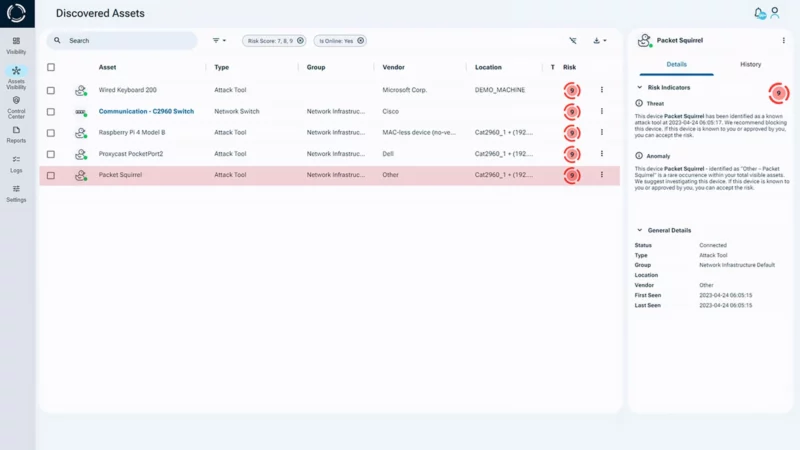
- Discover unknown and unmanaged devices
- Detect rogue and unauthorized hardware
- Validate device location and ownership
- Monitor changes in hardware risk posture
- Integrate enforcement actions into existing security workflows
Key Airport Hardware Security Use Cases
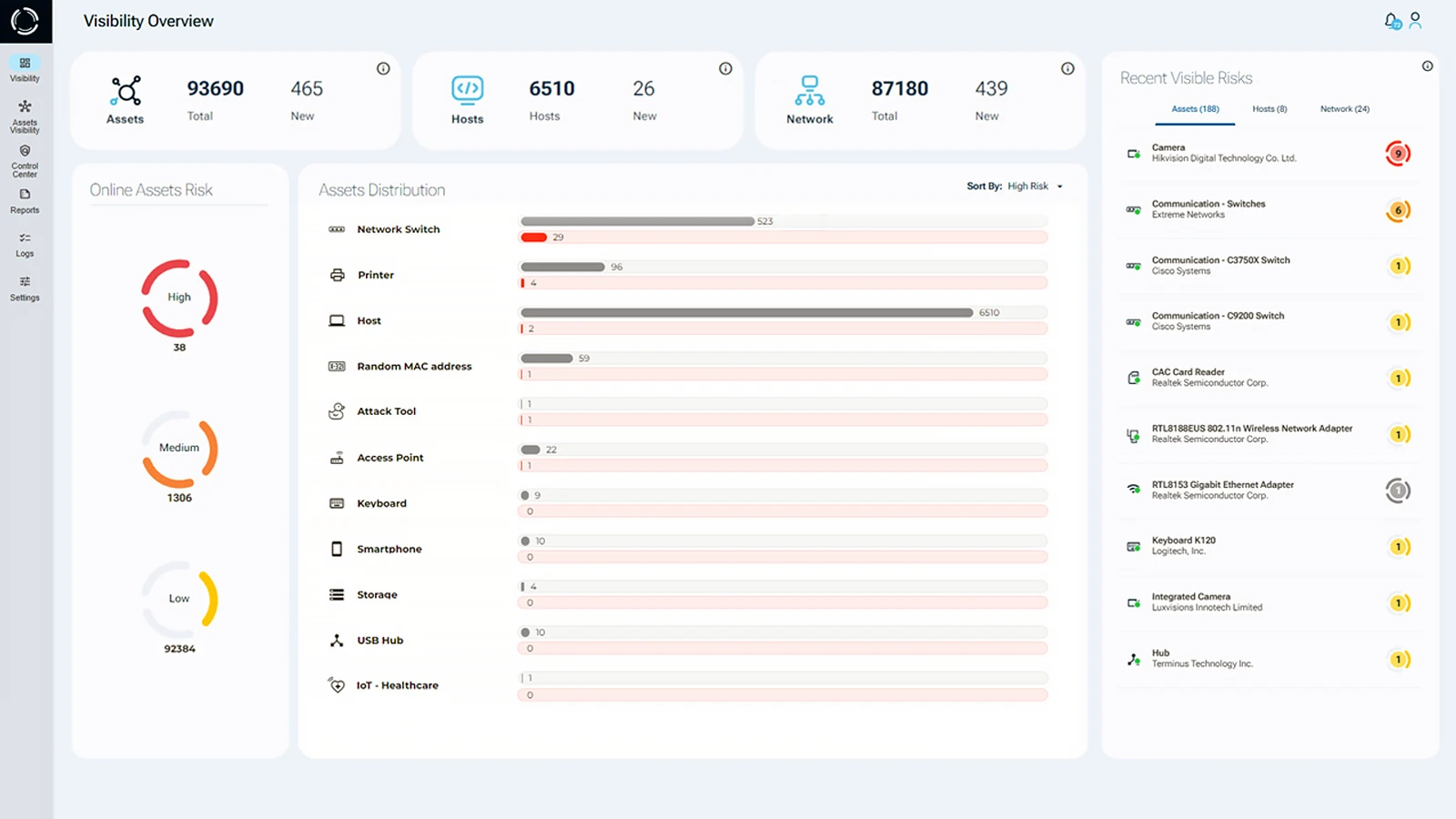
Airport environments require continuous visibility and control over connected hardware assets across IT, OT, and IoT systems. Accordingly, key use cases include:
- Unknown and Unmanaged Asset Discovery: Identify unknown, unmanaged, and shadow hardware devices across airport networks to eliminate visibility gaps.
- Rogue Device Detection: Detect unauthorized or malicious hardware devices in operational zones, restricted areas, and critical infrastructure environments.
- OT and Infrastructure Visibility: Gain deep visibility into operational technology, including baggage handling systems, HVAC, and building infrastructure.
- Endpoint Coverage Gaps: Identify hardware devices that lack endpoint protection (EDR), network access control (NAC), or monitoring capabilities.
- Third-Party Device Governance: Validate, monitor, and control hardware assets introduced by airlines, vendors, contractors, and tenants.
- Incident Response Acceleration: Quickly identify affected hardware assets during security incidents to enable faster, more accurate response.
Supporting Airport Cyber Resilience and Compliance
Airport cybersecurity programs focus on visibility, control, and compliance. To support this, Sepio adds hardware-level visibility, device identity verification, and continuous validation.
Once hardware identity is established, organizations can use that trusted foundation to strengthen security operations, improve compliance readiness, and support broader cyber resilience objectives.
- Asset Discovery: Maintain a complete, up-to-date inventory of IT, OT, IoT, and cyber-physical assets. Sepio continuously discovers and classifies connected hardware devices.
- Segmentation Readiness: Ensure devices are placed in the correct network zones and detect policy violations. Sepio validates device identity and location against segmentation policies.
- Access Control: In addition, prevent unauthorized device access to critical systems. Sepio enables trust-based enforcement, including allow, block, quarantine, and escalation actions.
- Continuous Monitoring: At the same time, detect changes that may impact operations. Sepio provides continuous visibility into device identity, behavior, and connectivity.
- Risk-Based Remediation: Furthermore, prioritize response based on real risk and asset criticality. Sepio enhances risk scoring using hardware identity, location, and context.
- Audit Evidence: Finally, demonstrate control over connected assets. Sepio delivers validated hardware-level records and detailed audit history.
Airport hardware security also supports broader cybersecurity initiatives aligned with TSA cybersecurity requirements, NIST guidance, Zero Trust principles, and critical infrastructure protection programs.
The Future of Airport Cybersecurity Depends on Trusted Device Identity
As airports continue to modernize their IT, OT, and IoT environments, airport hardware security is becoming a foundational component of cyber resilience. Organizations that can discover, verify, and trust every connected device are better positioned to reduce risk, strengthen Zero Trust initiatives, and protect critical airport operations.
To address this, Sepio’s Zero Trust Hardware Access (ZTHA) approach extends Zero Trust to the physical layer, enabling airports to discover, verify, and enforce trust in every connected device across IT, OT, and IoT environments.
Ready to eliminate hardware blind spots in your airport environment? Schedule a demo.
Download the Zero Trust Hardware Access for Airports (pdf)