What Is an IP KVM
IP KVM (Keyboard, Video, and Mouse over IP) devices enable remote hardware-level access to servers, workstations, and other critical systems, allowing users to interact with a machine as if they were physically present. Commonly used for remote administration, troubleshooting, and infrastructure management, IP KVM solutions provide access even when the operating system is unavailable or the device is located in a remote environment.
Because IP KVMs operate independently of the host operating system, they provide valuable out-of-band management capabilities that help organizations maintain and support critical infrastructure.
What Is the Risk of IP KVM Devices
While IP KVM devices offer legitimate administrative benefits, they can also introduce significant security risks when deployed without proper visibility and oversight. Because they provide direct hardware-level access to connected systems, unauthorized, unmanaged, or undocumented IP KVM devices may create remote access paths that operate outside traditional security controls.
Unlike software-based threats, IP KVM hardware operate at the physical layer, giving them capabilities that traditional security controls cannot easily detect or monitor. As a result, they can:
- Bypass endpoint security solutions and host-based agents
- Maintain persistent access, even when systems are powered off or disconnected
- Operate outside the visibility of traditional network monitoring tools
- Remain undetected by conventional asset discovery and inventory solutions
Without complete visibility into connected hardware assets, organizations may be unaware of IP KVM devices operating within their environment. This creates security blind spots that can increase the risk of unauthorized access, policy violations, and hardware-based attacks.
How Sepio Detects IP KVM Devices
Sepio enhances IP KVM device detection by combining physical-layer visibility with network-level insights and advanced hardware fingerprinting, AssetDNA™, to accurately identify devices across the environment.
By correlating physical device characteristics with network and behavioral data, Sepio uncovers IP KVM devices, including solutions such as PiKVM, that may operate outside standard monitoring, segmentation, and control mechanisms.
Key capabilities:
- Hardware fingerprinting to uniquely identify IP KVM devices, including PiKVM
- Detection of unmanaged and rogue hardware, regardless of network configuration or connectivity
- Identification of out-of-band management connections that bypass standard monitoring controls
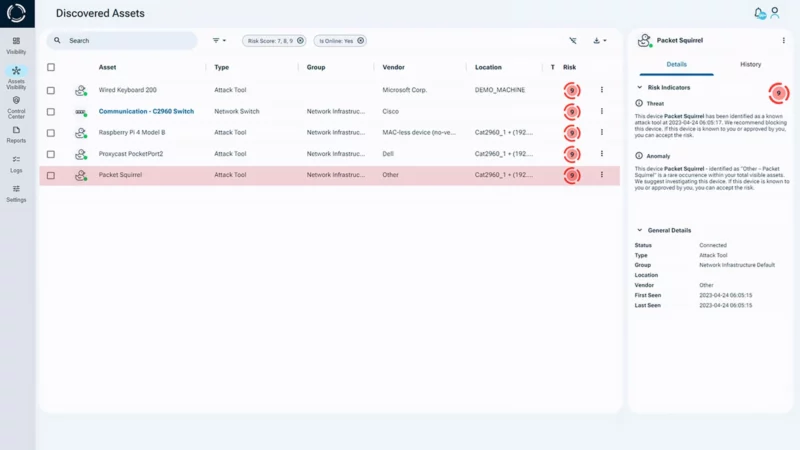
- Continuous, real-time visibility into all connected physical assets
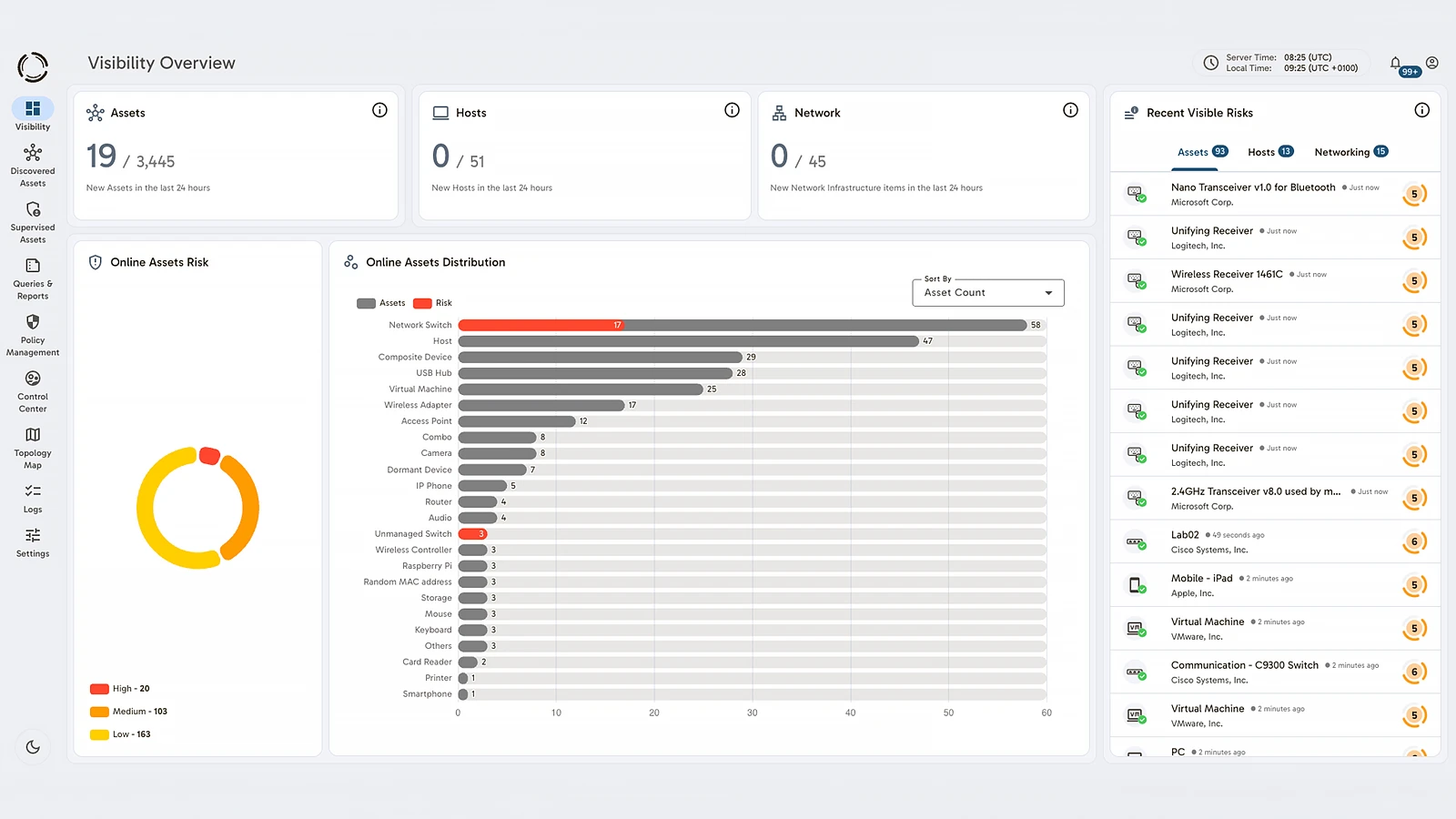
Identify Rogue and Unauthorized Devices Instantly
Sepio enables security teams to:
- Detect unauthorized IP KVM devices the moment they connect
- Identify hidden or disguised hardware attempting to blend into the environment
- Distinguish between approved and rogue remote access tools with precision
- Map physical connections across the network infrastructure
Mitigate Hardware-Based Attack Vectors
With full visibility into connected hardware, organizations can:
- Enforce strict device control and access policies
- Remove or isolate rogue IP KVM devices before they are exploited
- Prevent persistent, out-of-band access threats
- Strengthen defenses against supply chain and insider-driven risks
Why Sepio
Traditional security tools focus on software, endpoints, and network behavior. However, Sepio goes deeper by delivering hardware-level visibility that uncovers assets and risks others cannot see.
Sepio combines advanced hardware fingerprinting, AssetDNA™, with multi-layer visibility across physical, network, and behavioral data to accurately identify and secure connected assets. By correlating device characteristics with network context, Sepio provides reliable asset identification without relying solely on traffic analysis.
Built on secure-by-design principles and trusted in regulated environments, Sepio provides a strong foundation for identifying and managing hardware-based risks, including rogue IP KVM devices.
- High-confidence asset identification powered by hardware fingerprinting
- Visibility across physical, network, and connected environments
- Optional agent-based enforcement for endpoint and peripheral control
- Comprehensive coverage across IT, OT, and IoT environments
- Continuous asset visibility with real-time risk assessment
- Designed for modern, hybrid, and complex enterprise infrastructures
Gain Full Control Over Hidden Hardware Risks
IP KVM devices are powerful tools, but in the wrong hands, they become invisible entry points into your most critical systems.
Sepio delivers the visibility and control needed to detect, classify, and mitigate these hidden threats. As a result, organizations can ensure that all hardware assets are properly identified, continuously monitored, and effectively managed in line with enterprise security policies.
Backed by strong security controls, continuous monitoring, and centralized visibility, Sepio ensures that rogue IP KVM devices never go unnoticed or unmanaged. In turn, this significantly reduces the risk of undetected hardware-based attacks.
See What You’ve Been Missing™
Discover how Sepio detects rogue IP KVM devices in real time. Request a demo and gain complete visibility into your hardware attack surface.
Talk to an expertFrequently Asked Questions
An IP KVM (Keyboard, Video, and Mouse over IP) device enables remote hardware-level access to servers, workstations, and other systems. Unlike software-based remote access tools, IP KVMs allow users to interact with a device even when the operating system is unavailable or offline.
Because IP KVM devices provide direct access to connected systems, unauthorized, unmanaged, or undocumented deployments can introduce security risks. These devices may create remote access paths that operate outside traditional endpoint security, monitoring, and asset management controls.
Yes. Since IP KVM devices operate independently of the host operating system, they can provide hardware-level access that is not monitored by traditional endpoint protection solutions or host-based agents.
Identifying IP KVM devices can be challenging because they may not appear in traditional asset inventories or endpoint management platforms. Organizations require continuous hardware visibility to discover, classify, and monitor connected hardware assets across the environment.
Sepio leverages patented AssetDNA™ technology to establish trusted hardware identities using physical-layer (Layer 1) characteristics. By combining hardware fingerprinting with network and behavioral context, Sepio can accurately identify IP KVM devices, including solutions such as PiKVM, even when they operate outside standard monitoring and control mechanisms.
AssetDNA™ is Sepio’s patented hardware fingerprinting technology that identifies devices based on physical-layer characteristics rather than relying solely on software agents, MAC addresses, or device-reported information. This enables trusted hardware identification across IT, OT, IoT, and peripheral environments.
Yes. Sepio continuously monitors connected hardware assets and can help security teams identify rogue, unauthorized, unmanaged, or undocumented IP KVM devices before they become a security risk.