AI is transforming more than applications. It is transforming the devices that connect to our networks. As a result, AI hardware security is becoming an increasingly important challenge for security teams.
For years, security teams have understood the threat posed by rogue hardware. A Raspberry Pi hidden behind a printer. A small computer connected beneath a desk. A manipulated USB device. A transparent network implant inserted between trusted systems.
These devices can provide an attacker with an inexpensive foothold inside an organization. But historically, most of these tools had an important limitation:
They did what they were programmed to do. They could collect information, provide remote access, relay communications, or execute predefined actions. More sophisticated decisions typically depended on an external operator or command-and-control infrastructure.
Edge AI is beginning to change that assumption. Adding dedicated AI acceleration to inexpensive single-board computers can potentially transform a hardware implant from a simple programmable tool into something much closer to an autonomous, context-aware computing node operating inside the trusted environment. That represents an important change in the hardware threat model.
From Programmable Hardware to Intelligent Hardware
The Raspberry Pi is a useful example because of its accessibility, size, ecosystem, and increasingly powerful edge-computing capabilities. The Raspberry Pi AI HAT+ 2 pairs the Raspberry Pi 5 with a Hailo-10H neural processing unit capable of 40 TOPS of INT4 inference performance and 8 GB of dedicated onboard memory. More importantly, this generation adds support for running generative AI workloads, including local large language models and vision-language models, directly at the edge.
That distinction matters.
Instead of merely executing a sequence such as:
Observe ➜ Send data ➜ Wait for instructions ➜ Execute
An AI-enabled edge device can increasingly operate according to a model closer to:
Observe ➜ Interpret ➜ Decide ➜ Adapt ➜ Act
And much of that processing can happen locally. For cybersecurity teams, that deserves attention. From an AI hardware security perspective, the ability to make local decisions creates new security challenges that did not previously exist.
AI Processing No Longer Has to Compete for the Main CPU
Traditional embedded hardware has finite computing resources. If the device is simultaneously processing network information, storing data, running applications, managing communications, and performing additional analysis, those workloads compete for the same CPU and memory.
Dedicated AI acceleration changes that architecture. From an AI hardware security perspective, dedicated AI acceleration allows intelligent edge devices to perform local analysis and decision-making without affecting their primary functions.
The Hailo-10H within the Raspberry Pi AI HAT+ 2 provides dedicated neural-processing capability and its own memory, allowing supported AI workloads to execute without consuming the Raspberry Pi’s primary system resources.
From a legitimate engineering perspective, that is extremely valuable. But the same architectural advantage could potentially apply to malicious hardware. A rogue device could dedicate its primary processor to its conventional functions while separately performing tasks such as classification, anomaly recognition, contextual analysis, or decision-making.
This is not simply about making an attack device faster. It potentially allows the device to become smarter without sacrificing its primary capabilities.

How Edge AI Changes the Security Visibility Equation
Cloud-based AI creates observable dependencies. A device sending information to an external AI service needs connectivity. It creates outbound traffic. It may generate DNS requests, TLS sessions, unusual destinations, or other telemetry that security controls can potentially observe.
Local AI removes much of that dependency. Raspberry Pi describes its edge AI architecture specifically in terms of processing information directly on the device rather than requiring a remote cloud service.
For defenders, this creates an interesting inversion. AI hardware security must account for devices that can interpret their environment and make decisions locally, rather than relying entirely on external infrastructure. The exact characteristics that make edge AI attractive for legitimate applications, low latency, offline operation, privacy, reduced bandwidth, local decision-making, can also make a malicious embedded device potentially more self-contained. Imagine a rogue device that does not continuously transmit everything it sees. Instead, it observes its environment locally and determines what information is relevant before communicating externally. The volume of communication could become smaller while the intelligence behind those communications becomes significantly greater. Less traffic does not necessarily mean less capability. For defenders, AI hardware security is no longer just about identifying rogue devices, but understanding what those devices can do autonomously.
Context-Aware Hardware Creates New Security Risks
Traditional attack hardware generally follows predefined logic. AI potentially adds context. An edge AI device could theoretically analyze the environment around it and distinguish between normal conditions and situations of interest. Rather than simply collecting everything available to it, an intelligent device could potentially determine:
- What type of environment it has entered
- Which connected systems appear important
- When conditions have changed
- Which information deserves attention
- Whether it should remain dormant
- When an event warrants additional action
The important cybersecurity distinction is autonomy. Previously, much of the intelligence sat with the attacker. Increasingly, some of the intelligence can sit inside the device itself.
Vision Adds Another Dimension to Hardware Risk
The evolution is not restricted to network information. Modern edge AI platforms are heavily optimized for computer vision. Raspberry Pi’s AI hardware supports workloads including object detection, image segmentation, pose estimation, and, with AI HAT+ 2, vision-language models.
Combine inexpensive edge computing with a small camera and the device is no longer limited to understanding its digital surroundings. It can potentially understand aspects of its physical surroundings as well. Again, these capabilities have many positive applications: industrial automation, robotics, facilities management, smart cameras, manufacturing, and physical security.
But security architecture should consider what happens when the same capabilities appear inside an unauthorized device. A future rogue hardware platform might potentially correlate information from several sources: network + USB + wireless + sensors + visual environment and make decisions locally across all of them. That is substantially different from the traditional concept of a simple Raspberry Pi drop box.
AI Could Turn Data Collection Into Data Triage
One of the traditional limitations of implanted hardware is information overload. Collecting data is relatively easy. Understanding which data matters is harder. Historically, large quantities of collected information often had to be transferred elsewhere and analyzed by an attacker or external infrastructure.
Local AI can potentially move part of that analysis onto the device itself. Instead of forwarding everything it encounters, an intelligent device could potentially summarize observations, identify unusual patterns, correlate events, or prioritize information before communicating it elsewhere.
That changes the economics of covert hardware. A low-cost device no longer has to act purely as a collection point. It can potentially become an analyst as well.
Autonomous Hardware Challenges Traditional Security Assumptions
This evolution raises a larger question:
What does your security architecture actually trust?
Consider a small unauthorized computing device connected inside an enterprise. It might:
- Use a perfectly valid Ethernet interface
- Present a familiar MAC address
- Communicate using legitimate protocols
- Use encrypted communications
- Remain quiet for long periods
- Generate little unusual traffic
- Increasingly perform its analysis locally.
Traditional controls frequently evaluate what a device says, what traffic it generates, or which credentials it presents. But none of those necessarily answers the most fundamental question:
What is the device actually connected to my environment?
That distinction becomes more important as edge devices become increasingly intelligent.
AI Makes Zero Trust Hardware More Important
Zero Trust introduced a powerful principle: Never trust. Always verify. Yet much of Zero Trust implementation still concentrates on users, applications, workloads, and network sessions. Hardware itself is frequently granted trust based on relatively weak identifiers.
- MAC addresses can be duplicated
- VID/PID information can be imitated
- Device names can be changed
- Credentials can be acquired
Approved network behavior does not necessarily prove approved hardware. The emergence of autonomous edge AI makes that gap harder to ignore. Because the question is no longer simply:
“Could someone connect an unauthorized computer?”
It increasingly becomes:
“What happens when the unauthorized computer can understand its environment and make decisions for itself?”
Sepio Zero Trust Hardware Access: Verify the Device, Not Its Story
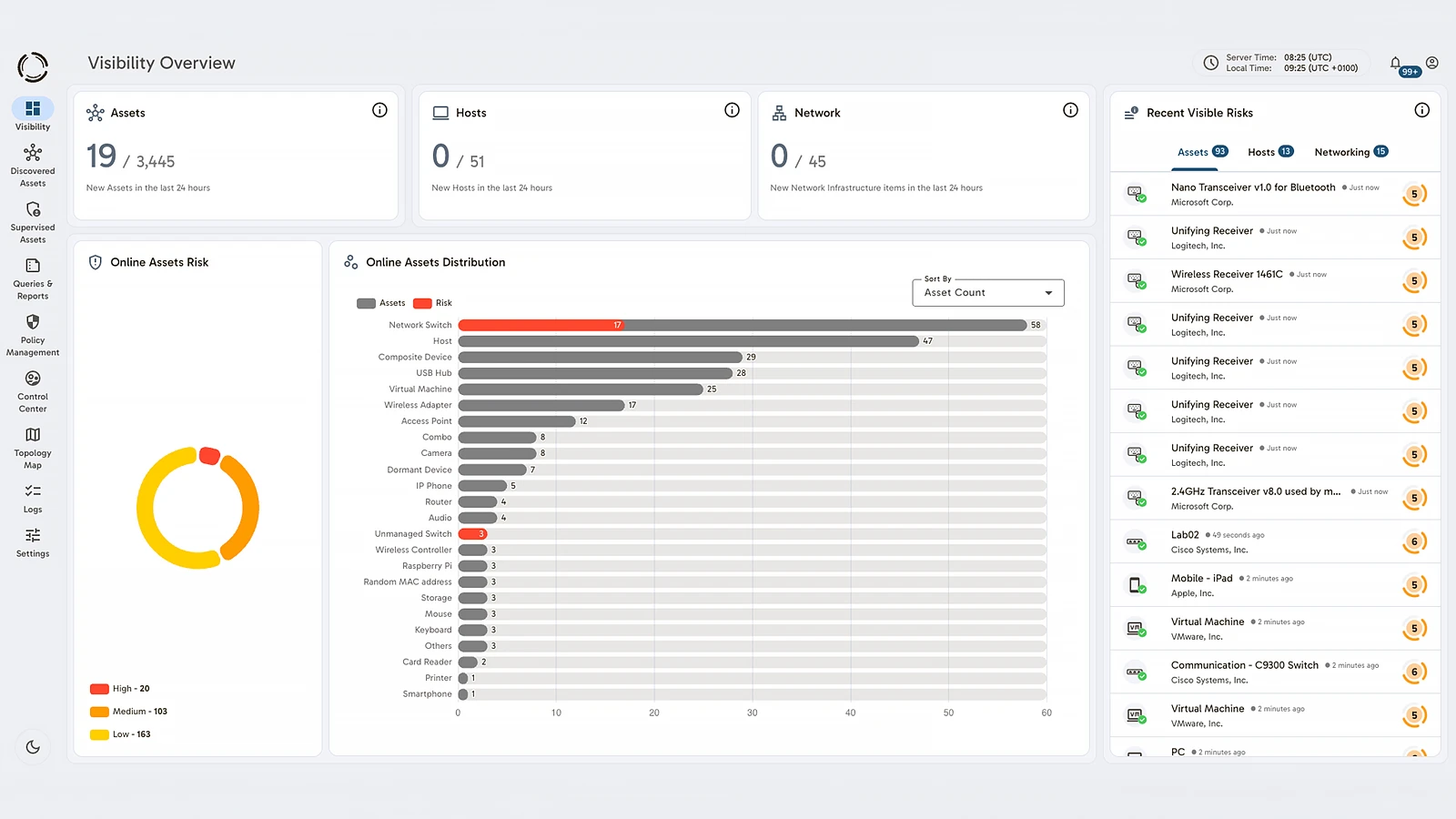
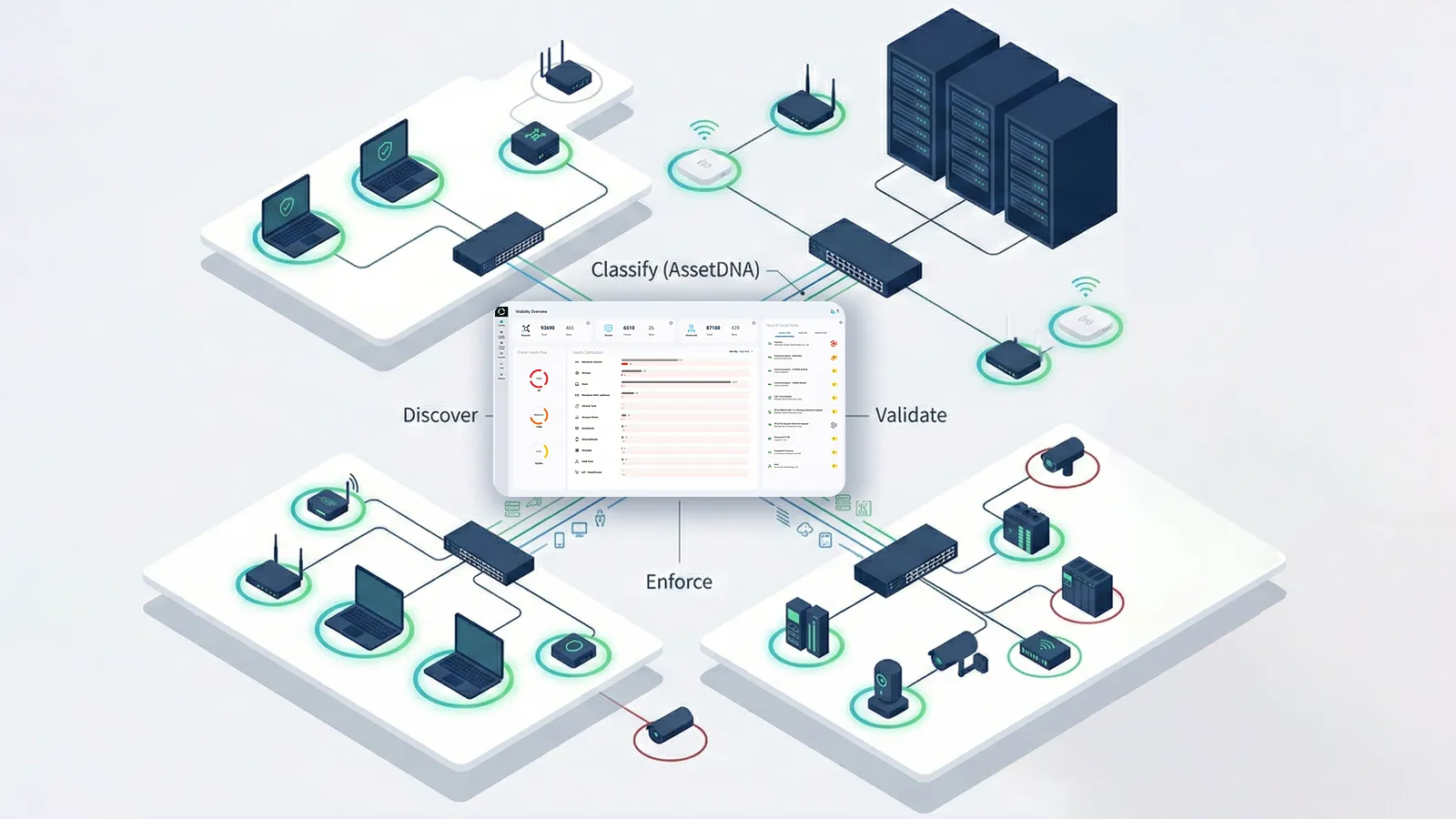
Sepio’s Zero Trust Hardware Access (ZTHA) approach addresses this challenge at the hardware layer. Instead of relying solely on logical identifiers or observed network traffic, Sepio provides organizations with visibility and validation of connected hardware based on device characteristics and hardware-level intelligence. Sepio’s AssetDNA™ technology helps organizations establish a more reliable understanding of the assets actually present across their environment, including IT, OT, IoT, IIoT, IoMT, USB-connected assets, unmanaged network devices, and hardware that may otherwise be difficult to identify using conventional approaches.The principle is straightforward:
Validate first. Then trust.
This allows organizations to extend Zero Trust beyond user identity and software identity toward hardware identity. That distinction becomes increasingly important when the connected device may deliberately claim to be something else. And AI does not change that fundamental requirement. Whether a rogue device runs a simple script or a sophisticated local AI model, security teams still need to determine:
Is this the hardware we expected to be here?

You Cannot Analyze Your Way Out of a Hardware Identity Problem
There will always be value in network monitoring, behavioral analytics, EDR, NDR, NAC, SIEM, and other security technologies. But increasingly intelligent hardware highlights an important limitation:
Behavior is not identity. Effective AI hardware security requires organizations to validate hardware identity rather than relying solely on observed behavior.
A malicious device may behave normally until it decides not to. An autonomous device may deliberately minimize observable activity. And local AI could allow increasingly sophisticated decisions to occur without generating the external traffic traditionally associated with remote analysis or command-and-control. This makes hardware validation complementary to behavioral security, not a replacement for it.
Security teams need both:
Understand what the device is doing.
And, increasingly:
Understand what the device actually is.
The Hardware Attack Tool Is Evolving
AI is making endpoints smarter. AI is making cameras smarter. AI is making industrial devices smarter. AI is making embedded systems smarter. We should expect the same technological evolution to affect offensive hardware.
The important shift is not simply that Raspberry Pi computers are becoming more powerful. It is that inexpensive, compact hardware can increasingly:
observe, understand, reason, and respond locally.
The traditional hardware drop box was a remote operator’s tool. The next generation may increasingly become an autonomous operator in its own right. This shift elevates Edge AI security from a future consideration to a present-day cybersecurity challenge. And when that happens, asking whether the device has the correct MAC address will not be enough. Trust must begin with the hardware itself.
Sepio Zero Trust Hardware Access – See What You’ve Been Missing.
Talk to an expert. See What You’ve Been Missing.Frequently Asked Questions
Yes. Modern Raspberry Pi AI accelerators are explicitly designed for edge inference. The AI HAT+ 2 adds dedicated memory and support for local LLM and vision-language-model workloads without requiring continuous cloud processing.
Local processing reduces reliance on external services and connectivity. From a defensive perspective, that means organizations should not assume sophisticated processing necessarily creates significant outbound AI-related traffic.
Absolutely not. Edge AI has enormous legitimate value. The cybersecurity issue is that the same capabilities available to defenders, developers, manufacturers, and automation systems are also technically available to malicious or unauthorized hardware.
A NAC platform may identify or control a device using network identity, authentication, profiling, or policy. The challenge arises when hardware cannot use standard authentication mechanisms or when logical identifiers do not reliably establish the physical identity of the device. Sepio ZTHA is designed to complement existing access-control architecture by adding hardware-level validation.
Traffic analysis provides valuable behavioral intelligence, but behavior and identity answer different questions. Increasing local processing can also reduce the need for frequent external communication. Hardware-level validation adds another security dimension by helping organizations understand what is actually connected.
Zero Trust Hardware Access extends Zero Trust principles to connected devices. Rather than automatically trusting an asset because it presents an expected logical identity, the objective is to validate the physical device before granting or maintaining trust.
Sepio’s approach is trafficless and does not depend on deep packet inspection or SPAN-based traffic collection. This enables hardware visibility across environments where conventional traffic-based approaches can have limitations.
The important issue isn’t Raspberry Pi specifically. It is the democratization of powerful, inexpensive edge intelligence. As connected hardware gains greater autonomy, establishing trustworthy device identity becomes an increasingly important component of Zero Trust.