
CISA BOD 26-04 × SEPIO AI-POWERED ZERO TRUST HARDWARE ACCESS
Risk-Based Remediation Needs Hardware Superintelligence.
CISA BOD 26-04 shifts vulnerability management toward risk-based action. Sepio brings verified hardware identity and AI Hardware Superintelligence into the decision.
THE NEW FEDERAL DIRECTIVE
From Asset Discovery to Intelligent, Risk-Driven Action
BOD 23-01 established the importance of better asset visibility and vulnerability detection. BOD 26-04 advances federal vulnerability management with remediation timelines tied to exposure and exploitation risk.
Under BOD 26-04, decisions consider whether an asset is publicly exposed, whether a vulnerability is in CISA’s Known Exploited Vulnerabilities (KEV) catalog, exploit automation, and technical impact. Certain highest-risk cases call for action within three calendar days, including forensic triage.
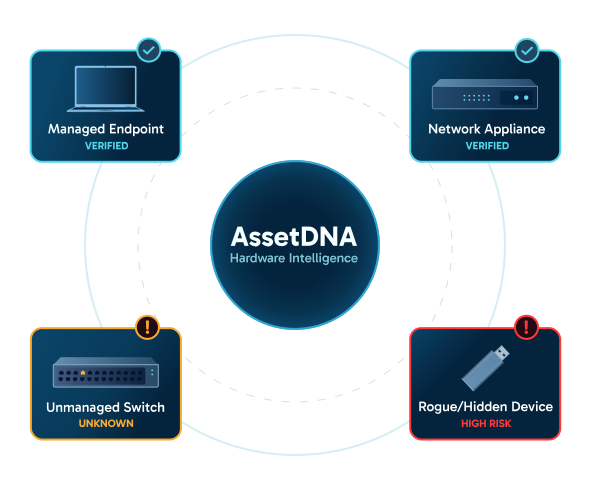
The missing prerequisite: an accurate, current, trustworthy hardware inventory. You cannot confidently associate a vulnerability with an asset that is absent, misidentified, or concealed.
THE CONTINUITY
BOD 23-01
Improve asset visibility and vulnerability detection.
BOD 26-04
Prioritize and remediate vulnerabilities by operational risk.
Sepio’s contribution
Verify the hardware underlying the asset record and enrich remediation decisions.
THE HARDWARE BLIND SPOT
Even Advanced AI Cannot Prioritize Hardware It Cannot See
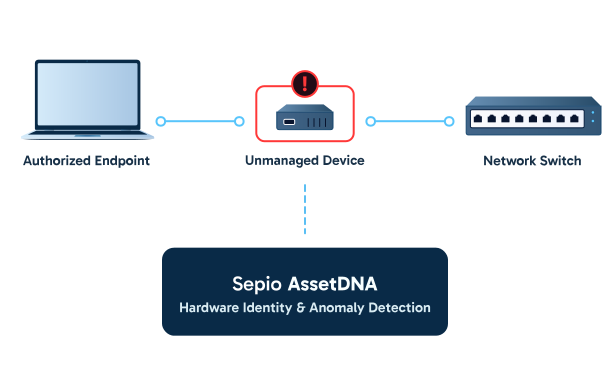
Imagine a device connected between an authorized endpoint and the network. It may be omitted from inventory, or its identity may be inaccurately inferred from network attributes. Remediation workflows built on that record inherit the same blind spot.
- Detect unexpected or unmanaged hardware relationships.
- Validate physical device identity instead of relying solely on claimed attributes.
- Correlate verified hardware context with vulnerability and exposure intelligence.
- Prioritize the right assets and initiate the right response.
SEPIO HARDWARE SUPERINTELLIGENCE
AI Is Only as Effective as the Hardware Truth Behind It
A risk engine can prioritize known vulnerabilities. But what happens when a device is hidden, incorrectly classified, impersonating trusted hardware, or missing from the asset inventory?
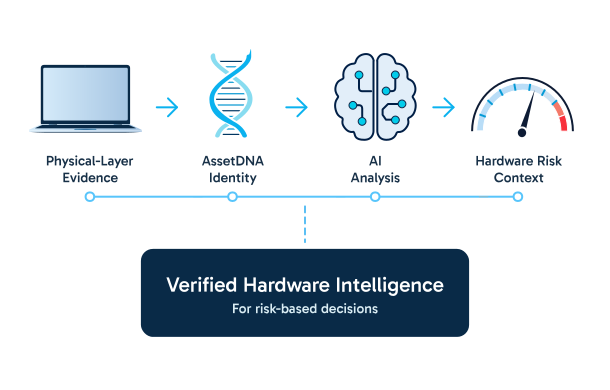
Sepio brings a different intelligence source into the decision: physical-layer metadata and AssetDNA, analyzed with advanced AI and Hardware Superintelligence to continuously reveal anomalies, interpret device context, and strengthen actionability.
Sepio hardware risk intelligence enriches BOD 26-04 processes; CISA’s mandatory vulnerability prioritization factors and remediation obligations still apply.
DIRECTIVE ALIGNMENT
Where Sepio Contributes and Where Complementary Tools Remain Essential
Hardware Superintelligence enriches asset identity and risk context. Sepio complements, rather than replaces, CVE scanning, KEV intelligence, internet exposure validation, forensic triage and agency reporting tools.
| Operational need | Sepio contribution | Role |
|---|---|---|
| Accurate asset inventory | Discover connected and unmanaged hardware; validate physical device identity. | Strong alignment |
| Exposure context | Provide connection and topology signals; use separate tools to establish internet reachability. | Supporting |
| Risk prioritization | Enrich prescribed vulnerability risk factors with hardware anomalies and asset context. | Strong alignment |
| KEV / CVE / exploitability | Correlate with third-party vulnerability and threat intelligence; does not independently establish all required factors. | Supporting |
| Remediation and containment | Enable security workflows and policy-based actions through supported integrations. | Strong alignment |
| CDM reporting and forensic triage | Contribute hardware evidence and inventory records; integrations and investigative obligations require validation. | Supporting |
FROM HARDWARE INTELLIGENCE TO RESPONSE
From Verified Device Truth to AI-Enriched Risk Decisions
A practical layered approach that brings hardware truth into federal vulnerability and risk operations.
STEP 01
Discover & verify
Physical-layer discovery and AssetDNA establish verified connected-device intelligence.STEP 02
Analyze & understand
AI-powered Hardware Superintelligence identifies anomalous devices and contextualizes hardware risk.STEP 03
Prioritize & decide
Combine Sepio signals with CVE, KEV, exploitability and exposure data; apply CISA’s mandated prioritization criteria.STEP 04
Enforce & report
Support response with existing security controls; patch or mitigate according to agency policy, validate remediation and report.FREQUENTLY ASKED QUESTIONS
What Security Leaders Should Know
No. Sepio supports hardware visibility, verified identity, enrichment and certain response workflows. Agencies still need vulnerability intelligence, validated external exposure data, remediation operations, forensic capabilities, and required reporting.
Sepio combines physical-layer data and AssetDNA with AI-driven analysis to continuously identify device anomalies, validate hardware identity, and add risk context to asset and remediation workflows. The directive’s official vulnerability factors, patching decisions, and reporting obligations must still be handled through the agency’s broader program.
BOD 23-01 focuses on asset visibility and vulnerability detection. BOD 26-04 introduces risk-driven vulnerability remediation priorities and deadlines. Both depend on trustworthy asset data.
No. Sepio complements them by adding hardware identity and physical connection context, including insight into certain unmanaged or transparent devices that other tools may not identify.
Sepio can support security teams with hardware-driven risk context and, through supported integrations, policy-based restrictions or isolation. Whether a compensating measure satisfies an obligation under BOD 26-04 must be assessed against the directive and agency requirements.
The directive is binding on covered U.S. Federal Civilian Executive Branch agencies. Other organizations may choose to adopt its risk-based approach voluntarily.
TAKE CONTROL OF HARDWARE RISK
Superintelligence That Makes Zero Trust Complete.
Close hardware visibility gaps, strengthen asset intelligence, and provide your existing security stack with the physical context it needs.