What Is Asset Visibility
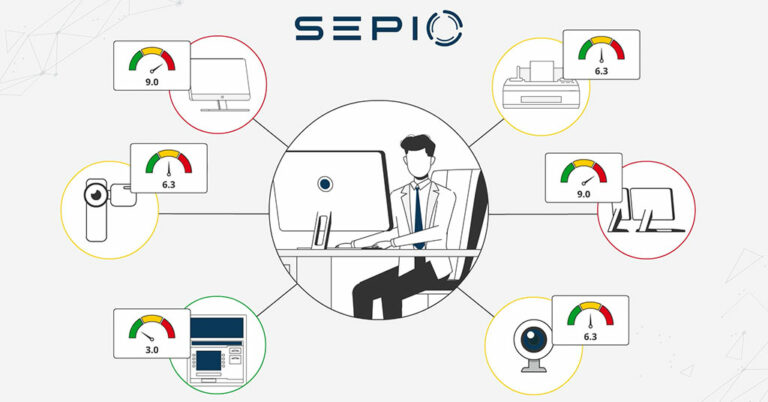
Asset visibility is the ability to continuously discover, identify, locate, characterize, and track the assets present in an organization’s environment. For financial institutions, this means maintaining a reliable understanding of connected devices, including IT, OT, and IoT assets, regardless of where they are deployed or how they connect to the network.
Effective asset visibility goes beyond maintaining an inventory of known devices. It provides accurate and up-to-date information about each asset, including its identity, location, connectivity, attributes, and status. This enables organizations to distinguish authorized assets from unauthorized or rogue devices, identify changes in the environment, and reduce network blind spots that adversaries can exploit.
As financial institutions expand their digital ecosystems and increasingly rely on interconnected technologies, maintaining comprehensive asset visibility becomes more challenging. Assets may be distributed across different environments and managed through separate operational silos, making it difficult to maintain a consistent view of the organization’s infrastructure. Without reliable asset visibility, organizations can overlook unknown or unauthorized devices, misjudge asset risk, and leave gaps in security and compliance controls.
Comprehensive asset visibility provides the foundation for effective security and risk management. By maintaining an accurate and continuous understanding of the assets within their environment, financial institutions can make informed security decisions, enforce policies consistently, identify emerging risks, and respond more effectively to threats.
Why Asset Visibility is Crucial for Regulatory Compliance
Asset visibility is foundational to effective security and regulatory compliance. Clear and comprehensive visibility provides financial institutions with an accurate and continuously updated understanding of the assets connected to their environments, reducing network blind spots and helping ensure that security controls are applied to the right assets. Without reliable asset visibility, organizations can struggle to identify unauthorized devices, assess asset risk, and maintain consistent security and compliance controls, particularly when IT, OT, and IoT assets are managed across separate silos.
Accurate asset visibility ensures financial organizations can:
- Strengthen incident response and breach prevention strategies.
- Assess asset risk levels effectively.
- Enforce security hygiene and compliance policies.
- Mitigate vulnerabilities associated with hardware-based attacks and phishing schemes.
Challenges with Existing Cyber Security Solutions
Many cybersecurity solutions, such as Extended Detection and Response (XDR), Network Access Control (NAC), and Intrusion Detection Systems (IDS), fail to provide sufficient asset visibility, leaving financial organizations exposed to hardware-based attacks. These solutions primarily focus on monitoring known threats and enforcing access policies but often lack the ability to detect and identify unauthorized or rogue hardware assets. As a result, attackers exploit these gaps using spoofed network-connected and USB devices, bypassing traditional security measures and undermining regulatory compliance.
Without comprehensive asset visibility and robust firewall protections, financial institutions face an increased risk of malware infections, ransomware attacks, and data breaches. The inability to detect unauthorized hardware assets leads to blind spots in the network, creating security gaps that adversaries can leverage to gain unauthorized access or manipulate critical systems. As cyber threats become more sophisticated, organizations must adopt solutions that provide complete and continuous visibility into all connected assets, ensuring stronger security and regulatory adherence.
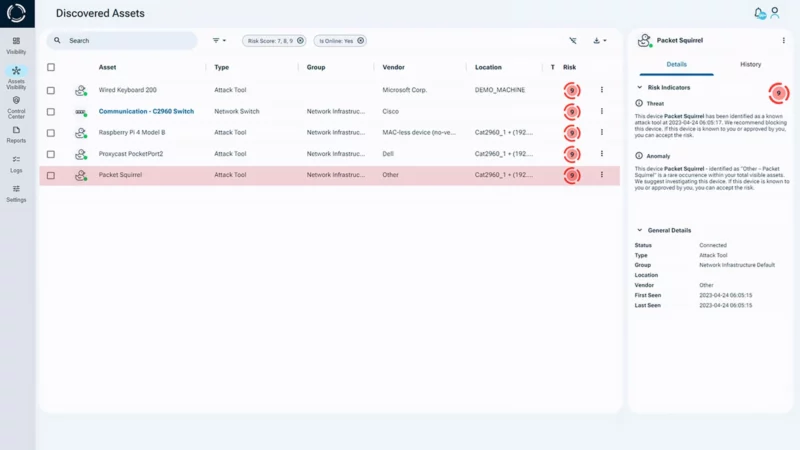
True Asset Visibility With Sepio
Sepio enhances security by analyzing the physical layer of every asset, generating a unique AssetDNA™ profile. This advanced approach introduces a new dimension of visibility to an organization’s security management, allowing teams to accurately determine whether an asset is legitimate or rogue. By doing so, Sepio helps close security vulnerabilities and policy gaps that traditional solutions often overlook.
The physical layer analysis includes electrical and functional characteristics, offering agnostic visibility and objective truth, independent of software-based profiling or behavioral assumptions. This ensures that every asset, regardless of its function, operational status, or location, is accurately detected and identified. By eliminating blind spots, Sepio delivers unparalleled reliability in asset visibility and security enforcement.
Asset Visibility with Sepio and Axonius
Sepio and Axonius together empower Financial Institutions (FIS) with a complete and comprehensive asset inventory. Axonius aggregates, normalizes, deduplicates, and correlates data from Sepio and other customer-owned tools to deliver full asset visibility across the entire environment, including Operational Technology (OT) and Information Technology (IT), all within a single pane of glass. By seamlessly integrating Sepio with Axonius via a simple API key, organizations can efficiently manage all Cyber-Physical Systems (CPS) assets under a unified risk framework, ensuring granular policy enforcement and continuous security monitoring.
With this integration, organizations gain deeper insights and contextualized asset-related data, including the detection of previously unidentified rogue assets. These may include passive taps, Human Interface Device (HID) scripting tools, Man-in-the-Middle (MiTM) attacks over network and USB, keyloggers, and other covert threats. By offering easy deployment, enhanced visibility, enriched context, and fine-grained policy controls, Sepio and Axonius enable true asset management at scale, strengthening security posture and regulatory compliance.
Complete Asset Visibility for Security and Control
Complete Asset Visibility
By connecting the Sepio adapter to Axonius, organizations gain visibility into all assets, including OT and IoT devices. Combined with data from over 750 additional sources available on the Axonius platform, Sepio and Axonius provide a credible and comprehensive inventory of all IT assets. This unified view makes it easier to identify and mitigate potential security risks across the entire attack surface.
Mitigating Attack Tools
Mitigate hardware based attacks (introduced by internal threat actors or externally – initiated hardware supply chain attacks), removing the so-called path of least resistance. Eliminate the ability for attackers to obtain user credentials through keyloggers. Preventing them from carrying out network/USB MiTM attacks or manipulating the internal hardware modules.
Granular Controls
Enforce specific controls based on organizational preferences. Today’s controls are like a light switch: they’re either all on or all off. With Sepio and Axonius, organizations can set granular level controls based on preferences. Whether it’s for a specific vendor, model, set of users, or specific PCs, organizations now have the flexibility to provide a better employee experience while still protecting the organization.
Sepio & Axonius Benefits
Sepio and Axonius together deliver not only a complete and comprehensive inventory of all assets visibility in your environment, but also deeper insight and contextualization into asset-related data.
- Protect your private data and prevent breaches caused by malicious hardware attack tools.
- Enforce granular entitlement at scale. Easily meet regulatory compliance requirements.
- Better budget and resource planning.
- Reduce clutter and improve your ESG scores.