Zero Trust Device Security extends the principles of Zero Trust Security to the devices connecting to your environment. Based on the principle of “never trust, always verify,” it requires continuous validation of both user identity and device trust before access is granted to network resources.
Traditional Zero Trust strategies focus on identities, applications, and network policies but often overlook a critical component: the physical layer (Layer 1). This creates visibility gaps that can allow rogue, spoofed, or unmanaged devices to bypass security controls. Sepio addresses this gap by providing hardware-level security, enabling organizations to verify device identity, strengthen device trust, and maintain continuous visibility across connected assets.
What is Zero Trust Architecture?
The concept of Zero Trust Architecture (ZTA) has existed since 1994, but its importance has increased as organizations adopt cloud services, remote work, BYOD programs, and connected IoT devices.
Traditional network security relied on a trusted perimeter, assuming that users and devices inside the network could be trusted. Today’s threat landscape has made this approach increasingly ineffective. Insider threats, compromised devices, shadow IT, and sophisticated attackers can operate from both inside and outside the organization.
Zero Trust Architecture eliminates implicit trust by requiring continuous verification of users, devices, and access requests. Rather than trusting a user or device because of its location on the network, Zero Trust validates identity, authorization, and risk before granting access to resources.
Challenges in Modern Network Security
Securing modern networks has become increasingly complex as organizations adopt cloud services, remote work, BYOD programs, and growing numbers of IoT devices. Employees frequently connect personal laptops, smartphones, peripherals, and smart devices that may not meet corporate security standards (WFH).
These connected devices expand the attack surface and create new opportunities for attackers to gain access to enterprise resources. Many IoT devices lack built-in security controls, while unmanaged and BYOD devices often operate outside traditional security monitoring processes.
Traditional network security and endpoint detection solutions were not designed to provide complete visibility into every connected asset. As a result, organizations may struggle to identify rogue devices, enforce Zero Trust policies consistently, and maintain accurate device inventories across their environments.
Why Traditional Zero Trust Falls Short
While Zero Trust Device Security improves security through least-privilege access and micro-segmentation, many implementations still rely on device information that can be spoofed or manipulated. As a result, organizations may enforce Zero Trust policies without fully verifying device integrity or device trust.
- Spoofed or rogue devices can bypass software-based access controls.
- BYOD and shadow IT create hidden gaps that traditional solutions cannot detect.
- Micro-segmentation policies fail when devices remain invisible or impersonate legitimate assets.
Without physical-layer verification, attackers can exploit these blind spots to move laterally across networks and compromise critical assets.
Zero Trust Device Security
Zero Trust Device Security depends on the ability to verify both user identity and device trust before granting access to network resources. However, limited network visibility can create blind spots that weaken Identity and Access Management (IAM) decisions and reduce the effectiveness of Zero Trust controls.
Traditional security solutions focus on software, identities, and network traffic but often lack visibility into the physical layer. As a result, rogue, spoofed, unmanaged, and compromised devices may evade detection while appearing to be legitimate assets. This challenge becomes even greater in environments that support BYOD, IoT devices, remote work, and shadow IT.
According to Pulse Secure’s Zero Trust Progress Report, 71% of organizations are seeking to improve their IAM capabilities, highlighting the growing need for accurate device visibility and continuous trust validation.
Without physical layer visibility, organizations cannot fully verify device identity or device integrity. Attackers can exploit this gap by using spoofed devices that impersonate trusted assets and bypass traditional Zero Trust security controls.
As connected devices continue to increase across enterprise, BYOD, and IoT environments, organizations require a more robust approach to Zero Trust Device Security (ZTHA). Device trust cannot rely solely on credentials, network location, or software-reported information. It must be based on accurate device identification and continuous verification.

To overcome these challenges, Sepio provides Physical Layer Visibility, Hardware Access Control, and Rogue Device Mitigation capabilities that extend Zero Trust Security to the hardware layer.
By verifying device identity and continuously monitoring connected assets, Sepio helps organizations:
- Improve Zero Trust network visibility
- Detect rogue and spoofed devices
- Strengthen device trust and device security
- Secure BYOD and IoT environments
- Enforce Zero Trust policies using verified hardware identity
Zero Trust Hardware Access serves as a critical extension of Zero Trust Architecture, helping organizations eliminate hardware blind spots and strengthen protection across their entire connected environment.
How to Achieve Zero Trust Device Security
Achieving Zero Trust Device Security requires organizations to verify device identity, maintain continuous visibility across connected assets, and enforce access controls based on trusted hardware characteristics. Sepio addresses these challenges through Layer 1 visibility, Hardware Access Control, and Rogue Device Mitigation, giving organizations greater control over every device connected to their network.
Full Hardware Visibility
Zero Trust Architecture relies on accurately identifying both users and devices before granting access. However, hardware-based attacks often involve rogue devices that hide or spoof their identities. These hardware attack tools manipulate authentication and authorization processes, presenting themselves as legitimate assets.
As a result, Zero Trust controls may be bypassed, and access is granted based on false information. This undermines the effectiveness of Zero Trust security and enables attackers to infiltrate the network.
How Sepio Mitigates This Challenge
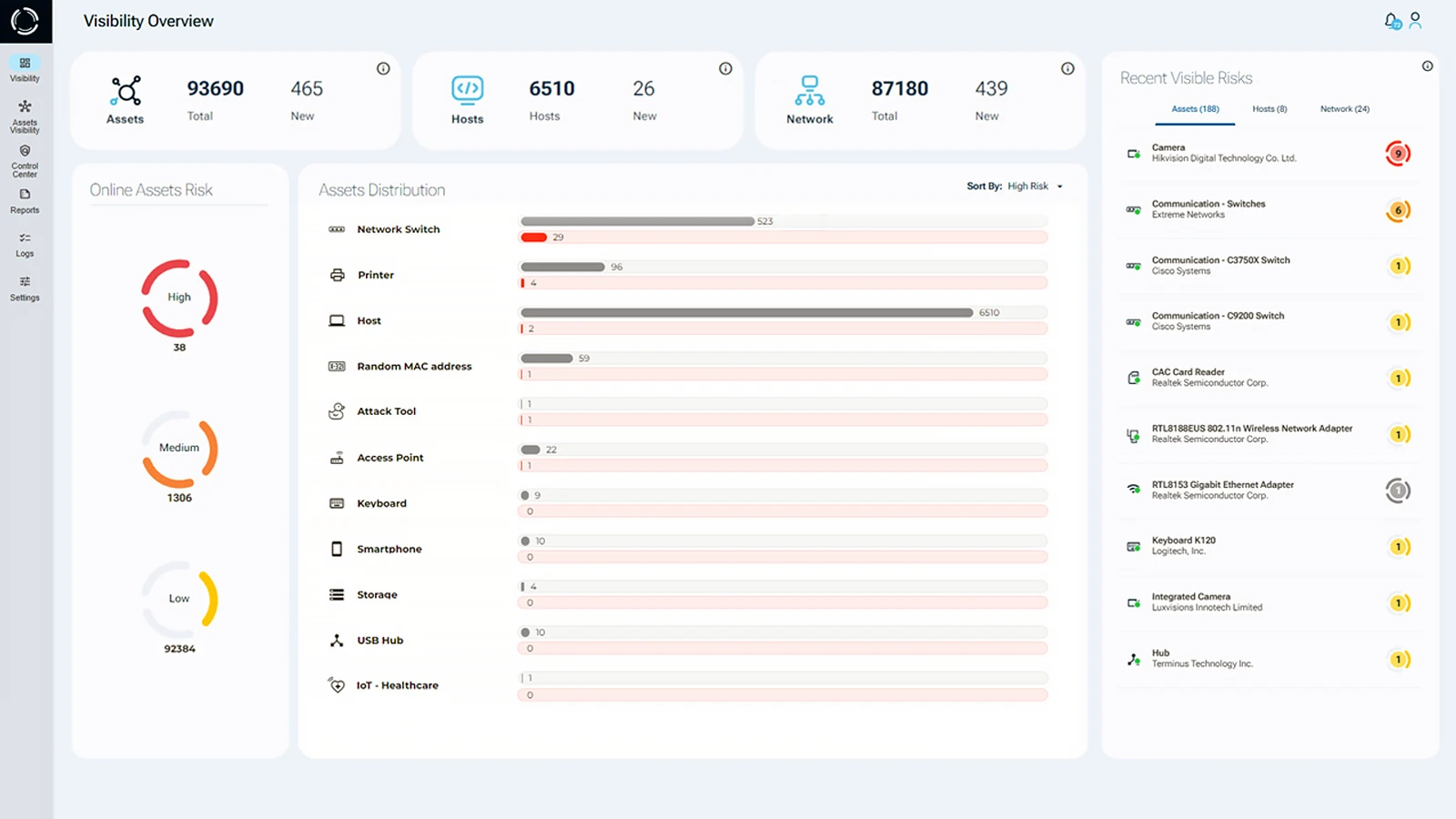
Sepio provides complete asset visibility through Physical Layer (Layer 1) fingerprinting. As the only solution offering full Layer 1 coverage, Sepio detects all assets operating within the enterprise environment, including managed, unmanaged, and hidden devices.
Using physical-layer electrical characteristics combined with machine learning, Sepio generates a unique digital fingerprint for every connected asset. These fingerprints are compared against an extensive threat intelligence database to:
- Reveal the true identity of devices
- Detect rogue and spoofed assets
- Identify vulnerable or malicious hardware in real time
- Ensure continuous visibility across the infrastructure
This enables organizations to validate every connected asset based on immutable physical attributes.
Policy Enforcement and Micro-Segmentation
Zero Trust relies on access policies to enable micro-segmentation and the principle of least privilege (PLP). These policies define which network segments and resources each entity may access.
However, when hardware attack tools impersonate legitimate assets or remain invisible to security systems, policies cannot be enforced effectively. Unauthorized devices may bypass segmentation controls and move laterally across the network.
Additionally, access policies are built on asset and traffic data. Incomplete visibility leads to inaccurate policies, weakening their reliability and effectiveness.
How Sepio Mitigates This Challenge
Sepio enforces Hardware-Based Access Control that governs network access using device-level physical characteristics rather than easily spoofed credentials.
Key capabilities include:
- Policy enforcement based on hardware fingerprints
- Granular and adaptive access controls
- Real-time alerts for vulnerable or high-risk devices
- Integration with threat intelligence
This ensures that micro-segmentation policies are applied to all devices, visible or hidden, using accurate, verified information. As a result, enterprises can implement reliable, risk-based access controls.
Rogue Device Mitigation
When visibility and access controls are compromised, organizations cannot confidently protect their critical assets. If a rogue device is mistakenly trusted, attackers can exploit access privileges to steal data, disrupt operations, or compromise systems.
This creates uncertainty around the integrity and security of enterprise resources.
How Sepio Mitigates This Challenge
Sepio’s Rogue Device Mitigation capability automatically initiates response actions when unauthorized or malicious hardware is detected.
Once a device violates predefined security policies, Sepio:
- Blocks the device immediately
- Prevents lateral movement
- Stops unauthorized access attempts
- Enforces Zero Trust controls at the hardware level
By neutralizing threats at the point of entry, Sepio prevents attackers from bypassing micro-segmentation and other security mechanisms. This proactive approach protects sensitive data and critical infrastructure from hardware-based attacks.
Benefits of Zero Trust Device Security
Implementing Zero Trust Device Security with physical-layer verification helps organizations:
- Elimination of network blind spots
- Prevention of spoofed or rogue device access
- Reliable micro-segmentation across all devices
- Reduced insider threat risk
- Continuous, real-time monitoring and proactive mitigation
Traditional Zero Trust controls focus on users, identities, and applications. Sepio extends Zero Trust Device Security to the hardware layer, helping organizations verify device identity, maintain visibility across connected assets, and make access decisions based on trusted hardware intelligence.
By combining Physical Layer Visibility, Hardware Access Control, and Rogue Device Mitigation, organizations can reduce the risk posed by unauthorized, unmanaged, and compromised devices while strengthening their overall security posture.
Ready to secure every connected assets in your network?
Talk to a Sepio expert and discover how Zero Trust Device Security helps verify device identity, eliminate hardware blind spots, and protect critical assets from rogue device threats.