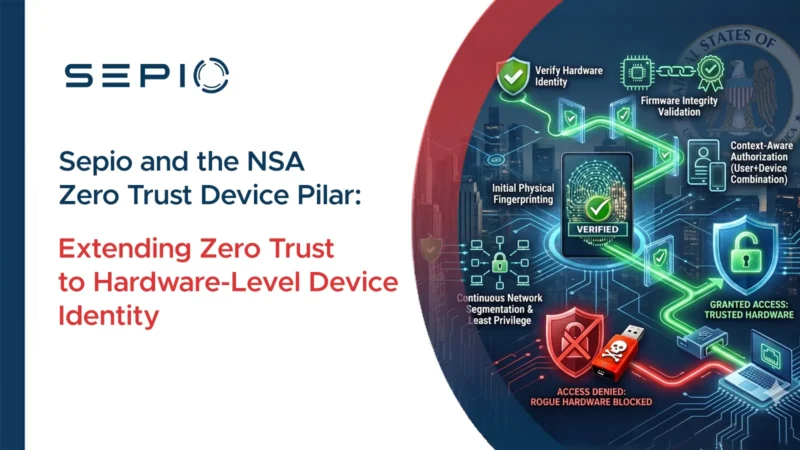
A Zero Trust Device is any device that must be continuously verified before it is granted access to enterprise resources. As organizations adopt Zero Trust Security, securing users alone is no longer enough. The NSA Device Pillar highlights the importance of identifying, assessing, authorizing, and continuously monitoring devices to establish device trust.
In other words, Zero Trust cannot stop at the login screen. It must extend to the device itself.
Key Takeaways
- The NSA Zero Trust Device Pillar highlights the importance of device inventory, compliance, authorization, monitoring, and response.
- Traditional security tools often rely on declared identity, software agents, network behavior, or known inventory records.
- This creates a blind spot when devices are unmanaged, spoofed, rogue, hidden, or operating below the software layer.
- Sepio extends Zero Trust to the hardware layer by validating what a device actually is, not just what it claims to be.
- Zero Trust Hardware Access (ZTHA) helps organizations strengthen device visibility, risk management, access control, and incident response.
What Is a Zero Trust Device?
A Zero Trust Device is a device that must continuously verify its identity, security posture, and authorization status before accessing enterprise resources. Unlike traditional security models that assume trust once a device is connected, Zero Trust requires ongoing validation to determine whether a device should be granted, limited, or denied access.
Zero Trust Devices may include endpoints, servers, network infrastructure, IoT devices, OT systems, IoMT devices, peripherals, and other connected assets that require continuous identity validation and monitoring. The goal is to ensure that every device is known, verified, and monitored before trust is established.
What is the NSA Zero Trust Device Pillar?
The NSA Zero Trust Device Pillar is a cybersecurity maturity model focused on how organizations identify, inventory, assess, authorize, monitor, and secure devices before allowing them to access enterprise resources.
In practical terms, the Device Pillar asks organizations to answer one critical question:
Can this device be trusted right now?
The Device Pillar is foundational because every access request depends on a device. Users, applications, workloads, data, and networks are all accessed through physical or virtual devices. If the device is not trustworthy, the access decision is incomplete.
Why Device Identity is Critical for Zero Trust Devices?
Many organizations already use tools that help manage devices. These may include CMDBs, NAC, EDR, XDR, MDM, UEM, vulnerability scanners, SIEM, SOAR, and asset management platforms.
These tools are important. But they often depend on information that the device, agent, network, or inventory system provides. That creates a problem.
A device may claim to be something it is not.
A rogue device may appear as a trusted keyboard, network adapter, camera, printer, or server. A spoofed device may use legitimate-looking identifiers. An unmanaged device may never appear in an endpoint tool. A hidden or transparent hardware implant may operate outside the visibility of traditional software-based controls.
This is where Zero Trust programs can fail at the first step. They attempt to enforce trust before they have verified the true identity of the device.
What is Zero Trust Hardware Access?
Zero Trust Hardware Access is a security model that validates the true identity and risk posture of hardware devices before allowing access, enforcing policy, or granting trust.
Zero Trust Hardware Access extends Zero Trust down to the hardware layer. It helps organizations verify devices such as endpoints, servers, switches, IoT devices, OT systems, medical devices, USB peripherals, network adapters, docking stations, KVMs, and other connected hardware.
The goal is simple: do not trust a device because it claims to be trusted. Trust it only after it has been verified.
What is Sepio?
Sepio is a Zero Trust Hardware Access platform that validates the true identity of connected hardware assets.
Sepio helps organizations discover, identify, classify, monitor, and control devices across IT, OT, IoT, IoMT, endpoint, network, and cyber-physical environments. Sepio uses AssetDNA™, a hardware-level device identity capability, to determine what a device actually is, not only what it claims to be.
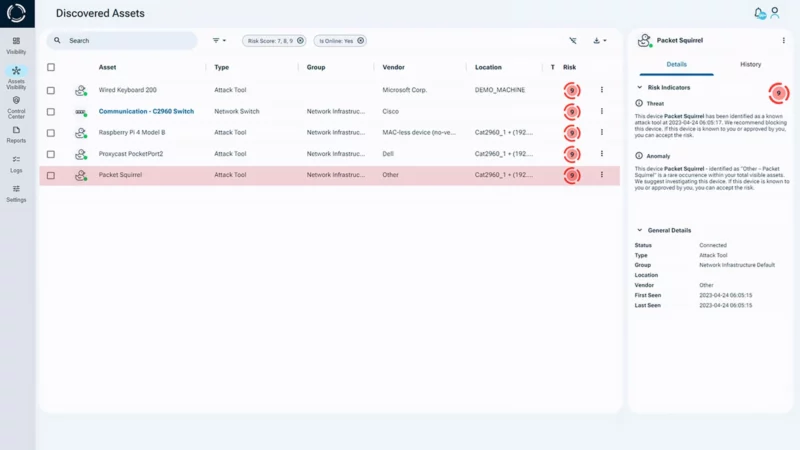
Sepio is especially relevant for organizations that need to detect rogue devices, spoofed devices, unmanaged assets, shadow IT, unauthorized peripherals, hidden hardware, and cyber-physical devices that traditional software-only tools may miss.
How Sepio supports the NSA Zero Trust Device Pillar
Sepio supports the NSA Zero Trust Device Pillar by adding a hardware-level trust layer to the Zero Trust architecture. This gives security teams a stronger foundation for device trust and risk-based access decisions.
1. Device Inventory
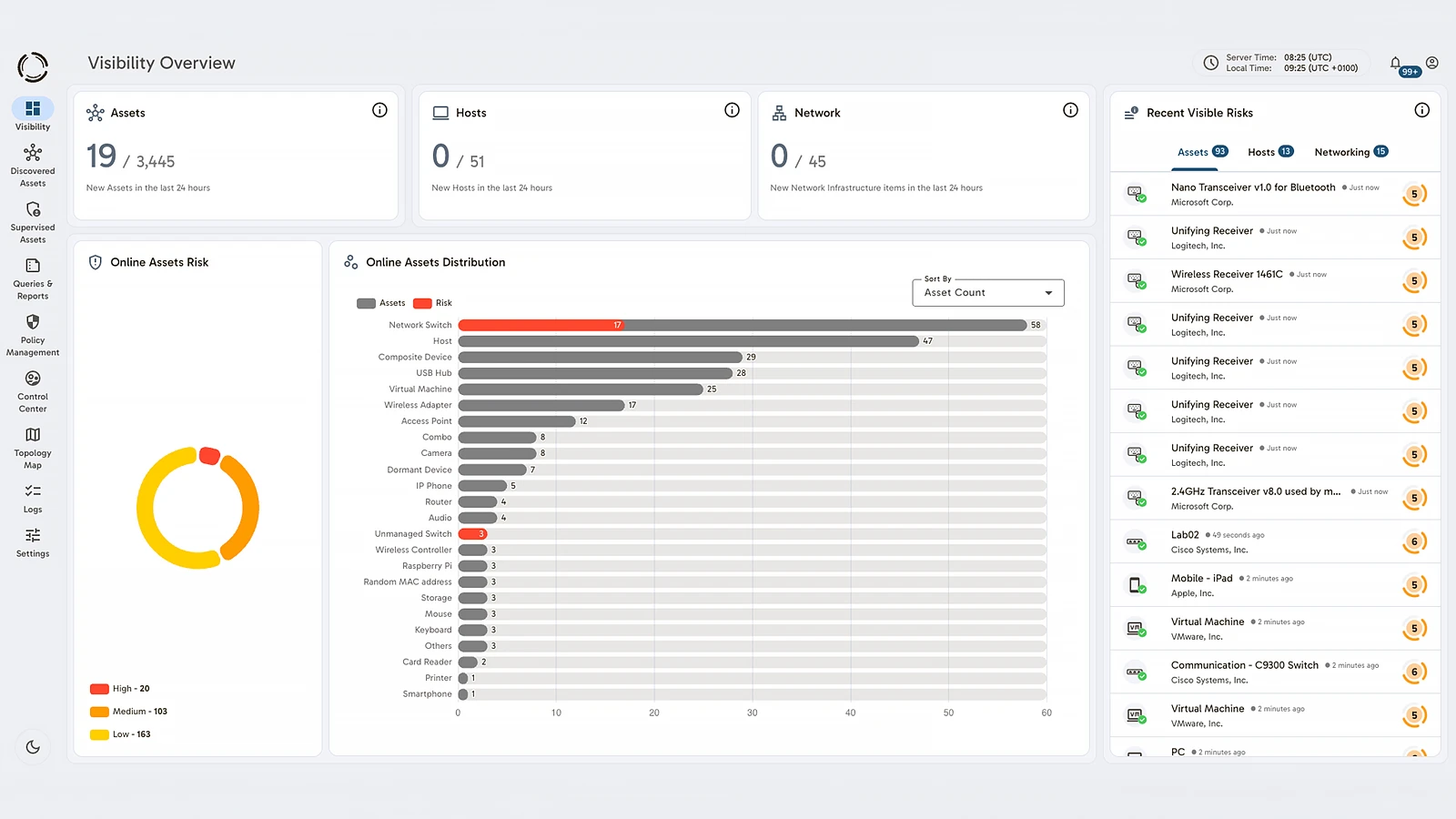
Device inventory is the foundation of Zero Trust device security. Sepio helps organizations create a hardware-validated view of connected assets, including managed devices, unmanaged devices, rogue devices, spoofed devices, shadow IT assets, network infrastructure, USB peripherals, IoT devices, OT devices, IoMT devices, and cyber-physical assets.
For Zero Trust programs, device inventory should evolve from a static list into a continuously validated source of hardware truth.
2. Device Detection and Compliance
Device detection and compliance require organizations to identify devices as they connect and determine whether they meet policy requirements.
Sepio supports this capability by validating device identity and detecting devices that are unknown, unauthorized, spoofed, unmanaged, or misrepresented.
Sepio helps security teams answer questions such as:
- Is this device approved?
- Is this device really what it claims to be?
- Is this device connected in the expected location?
- Is this hardware type allowed in this environment?
- Is this device violating policy?
- Should this device be allowed, blocked, isolated, or escalated?
3. Device Authorization with Real-Time Inspection
Zero Trust requires continuous authorization. A device should not be trusted only because it was trusted in the past.
Sepio provides hardware identity, location, policy status, device history, and risk indicators that can be used to inform access decisions. This supports a more mature “deny by default, allow by exception” approach to hardware access.
4. Remote Access Protection
Remote and hybrid work increase the importance of device trust. Remote access security often focuses on users, credentials, MFA, VPN, ZTNA, and endpoint posture. These controls are important, but they may not fully validate the hardware connected to the remote endpoint.
Sepio strengthens remote access protection by helping organizations identify unauthorized or risky hardware associated with endpoints and remote access environments, including unauthorized USB devices, rogue network adapters, unapproved peripherals, KVM devices, and hardware that does not match expected identity.
5. Vulnerability and Patch Management
Vulnerability and patch management depend on accurate asset visibility. If an organization does not know that a device exists, it cannot reliably assess, patch, remediate, or retire that device.
Sepio supports vulnerability and patch management by improving asset context and helping identify unmanaged, unknown, unsupported, or high-risk hardware. Sepio does not replace vulnerability scanners or patch management tools. Instead, Sepio improves the quality of vulnerability management by providing trusted hardware inventory and risk context.
6. Centralized Device Management
Centralized device management tools such as MDM and UEM help organizations manage endpoint configuration, policy enforcement, and device compliance.
However, centralized management tools may miss devices that are not enrolled, not agent-supported, unmanaged, hidden, spoofed, or operating as peripherals. Sepio complements centralized device management by identifying hardware assets outside traditional management coverage.
7. Endpoint Threat Detection and Response
EDR and XDR are essential parts of modern cybersecurity. They detect and respond to malicious activity on managed endpoints.
But EDR and XDR typically depend on software visibility. They may not detect hardware risks from devices without agents, unauthorized peripherals, spoofed devices, rogue network equipment, or hardware-level anomalies.
Sepio complements EDR and XDR by adding hardware-level detection and response context.
Sepio vs. Traditional Device Security Tools
Sepio does not replace traditional device security tools. Sepio enhances them.
A strong Zero Trust architecture may include IAM, NAC, EDR, XDR, MDM, UEM, CMDB, vulnerability management, SIEM, and SOAR. Sepio adds a hardware trust layer that strengthens each of these systems.
| Security Tool | What It Does | How Sepio Adds Value |
|---|---|---|
| IAM | Verifies user identity and access rights | Adds device-level hardware trust to access decisions |
| NAC | Controls network access | Provides verified hardware identity and risk context |
| EDR/XDR | Detects endpoint threats | Adds visibility into hardware and unmanaged device risks |
| MDM/UEM | Manages enrolled devices | Finds devices and peripherals outside management coverage |
| CMDB | Maintains asset records | Improves inventory accuracy with validated hardware data |
| Vulnerability Management | Identifies known vulnerabilities | Adds trusted asset context and exposure visibility |
| SIEM/SOAR | Correlates and automates response | Provides hardware-level alerts, context, and mitigation triggers |
Why Hardware Identity Matters for Zero Trust
Zero Trust is based on continuous verification.
For users, that means verifying identity, context, and behavior. For applications, it means verifying access rights and policy. For networks, it means enforcing segmentation and least privilege.
For devices, it must mean verifying the actual hardware.
Hardware identity matters because attackers and insiders can exploit assumptions about trusted devices. If a device can masquerade as something legitimate, bypass declared identity controls, or operate outside software visibility, then the Zero Trust model has a blind spot.
The Business Impact of Zero Trust Hardware Access
Zero Trust Hardware Access helps organizations reduce device-level risk, improve compliance readiness, and strengthen security operations.
With Sepio, organizations can:
- Improve hardware asset visibility
- Detect unknown and unmanaged devices
- Identify spoofed or misrepresented hardware
- Strengthen device access policies
- Improve CMDB accuracy
- Support Zero Trust maturity
- Improve incident response evidence
- Reduce risk from unauthorized peripherals
- Protect IT, OT, IoT, and IoMT environments
- Strengthen hardware supply chain security
From Device Visibility to Device Trust
Visibility is important, but visibility alone is not enough.
A device may be visible and still be untrusted. A device may be known and still be misrepresented. A device may be connected and still violate policy.
The next stage of Zero Trust maturity is device trust. Every Zero Trust Device must be continuously verified, monitored, and assessed to ensure it remains authorized and compliant.
Sepio helps organizations move from device visibility to device trust by validating hardware identity, detecting device-level anomalies, enforcing hardware access policies, and generating evidence that controls are operating.
Zero Trust Hardware Access with Sepio
Zero Trust Device Security depends on verifying hardware identity rather than assuming it.
By validating device identity at the physical layer, enabling risk-based access decisions, and supporting enforcement actions, Sepio helps organizations establish trust in connected devices across IT, OT, IoT, IoMT, and cyber-physical environments.
Talk to Sepio about Zero Trust Hardware Access
Discover how Sepio helps organizations verify hardware trust, reduce blind spots, and strengthen Zero Trust maturity across complex connected environments.
Frequently Asked Questions
The NSA Zero Trust Device Pillar is a cybersecurity maturity model focused on identifying, inventorying, assessing, authorizing, monitoring, and securing devices before allowing access to enterprise resources.
Sepio supports Zero Trust by validating hardware device identity, detecting unauthorized or spoofed devices, maintaining trusted asset visibility, and enabling policy-based hardware access control.
Zero Trust Hardware Access is the practice of verifying the true identity and risk posture of hardware devices before granting trust or access. It ensures that devices are validated based on what they actually are, not only what they claim to be.
Sepio is relevant to the NSA Device Pillar because the guidance emphasizes device inventory, detection, compliance, authorization, monitoring, and response. Sepio provides hardware-level device identity validation and visibility that support these objectives.
No. Sepio does not replace EDR or XDR. Sepio complements EDR and XDR by adding hardware-level visibility into rogue devices, spoofed devices, unmanaged assets, unauthorized peripherals, and hardware risks that software-based tools may miss.
No. Sepio does not replace NAC. Sepio enhances NAC by providing verified hardware identity, AssetDNA-based device validation, and risk context that can improve network access decisions.
Sepio helps identify endpoints, servers, switches, IoT devices, OT devices, IoMT devices, USB peripherals, network adapters, unmanaged devices, rogue devices, spoofed devices, and cyber-physical assets.
AssetDNA™ is Sepio’s hardware-level device identity capability. It helps validate what a device actually is by analyzing hardware and physical-layer characteristics, rather than relying only on declared software or network identifiers.