Healthcare providers are increasingly leveraging connected devices to enhance patient outcomes, streamline operations, and improve clinical decision-making. IoT use cases in healthcare span a wide range of applications, including remote patient monitoring, smart beds, wearable devices, infusion pumps, and connected imaging equipment. Each of these devices generates critical data that enables clinicians to make timely, informed decisions.
As hospitals and health systems continue expanding their use of IoT healthcare solutions, securing these devices has become a top priority, not only to protect patient safety, but also to safeguard organizational operations and sensitive data.
Expanding IoT Use Cases in Healthcare
IoT-enabled technologies are becoming foundational to modern healthcare delivery. Beyond bedside care, connected systems now support smart wards, automated inventory management, real-time staff and equipment location, and environmental monitoring across facilities.
These IoT healthcare solutions help organizations shift toward predictive and preventive care models. Continuous data streams allow care teams to identify anomalies earlier, respond faster, and reduce avoidable complications. At the same time, healthcare organizations benefit from better resource utilization, improved patient experiences, and reduced operational costs.
Baptist Health’s IoT Environment
Baptist Health comprises nine hospitals, employs approximately 23,000 staff (along with more than 2,000 independent physicians), and operates over 400 points of care with nearly 2,500 licensed beds. The employed provider network, Baptist Health Medical Group, includes more than 750 physicians and 740 advanced practice clinicians.
Supporting patient care at this scale requires careful oversight of both clinical operations and the IoT use cases that enable them. With thousands of connected devices in use, ranging from critical life-supporting medical equipment to everyday IT peripherals—ensuring the security and integrity of these assets is essential.
Operational Efficiency Through Connected Healthcare Systems
IoT devices play a vital role in healthcare operations as well as clinical care. Asset tracking systems help staff locate mobile medical equipment more quickly, reducing delays and eliminating unnecessary equipment purchases. Smart facility technologies monitor temperature, humidity, and air quality to meet healthcare standards while optimizing energy usage.
For a large healthcare system like Baptist Health, these operational IoT use cases help maintain consistency and efficiency across hundreds of locations. However, as operational technology and medical devices become increasingly connected, they must be protected with the same rigor as electronic medical records and core IT systems.
Challenges in Securing Healthcare IoT Devices
Baptist Health operates a vast ecosystem of medical devices, IoT devices, and traditional IT equipment. Properly managing all of these assets is essential to ensure the effectiveness of cybersecurity efforts and achieve optimal healthcare IoT security.
A major challenge is maintaining a complete asset inventory. Without physical layer visibility, it is difficult for healthcare teams to know exactly what devices are present in facilities at any given time. Michael Erickson, CISO of Baptist Health, emphasizes, “Understanding what’s in our facilities at any given time is a big challenge.” This lack of visibility creates a significant risk as cyberattack tools become more sophisticated, smaller, and harder to detect.
Security Threats to Connected Devices
Securing IoT in healthcare is particularly complex because malicious tools can hide within seemingly legitimate assets, such as medical devices or standard peripherals. Attackers may exploit the Physical Layer blind spot by spoofing trusted devices and remaining undetected.
“If you have an attack tool that’s designed to actually look like, or simulate or impersonate something that’s relatively benign, and it’s in your environment and it’s not doing anything, it’s pretty difficult to know that it’s there,” says Erickson.
Each connected device represents a potential attack vector, which is why healthcare organizations must carefully evaluate IoT use cases in healthcare when designing their security strategies.
Ensuring Device Integrity and Security with Sepio
Traditional security tools often struggle to differentiate between legitimate devices and rogue hardware, such as MAC spoofing tools or HID emulators. When thousands of connected assets are in use, ensuring device authenticity becomes critical.
“When you think about the delivery of a piece of equipment, are we able to be sure that the equipment delivered is actually what was designed by the manufacturer?” Erickson asks.
Sepio addresses this challenge by validating device identity at the hardware level, allowing organizations to detect unauthorized or impersonated devices that evade traditional security controls.
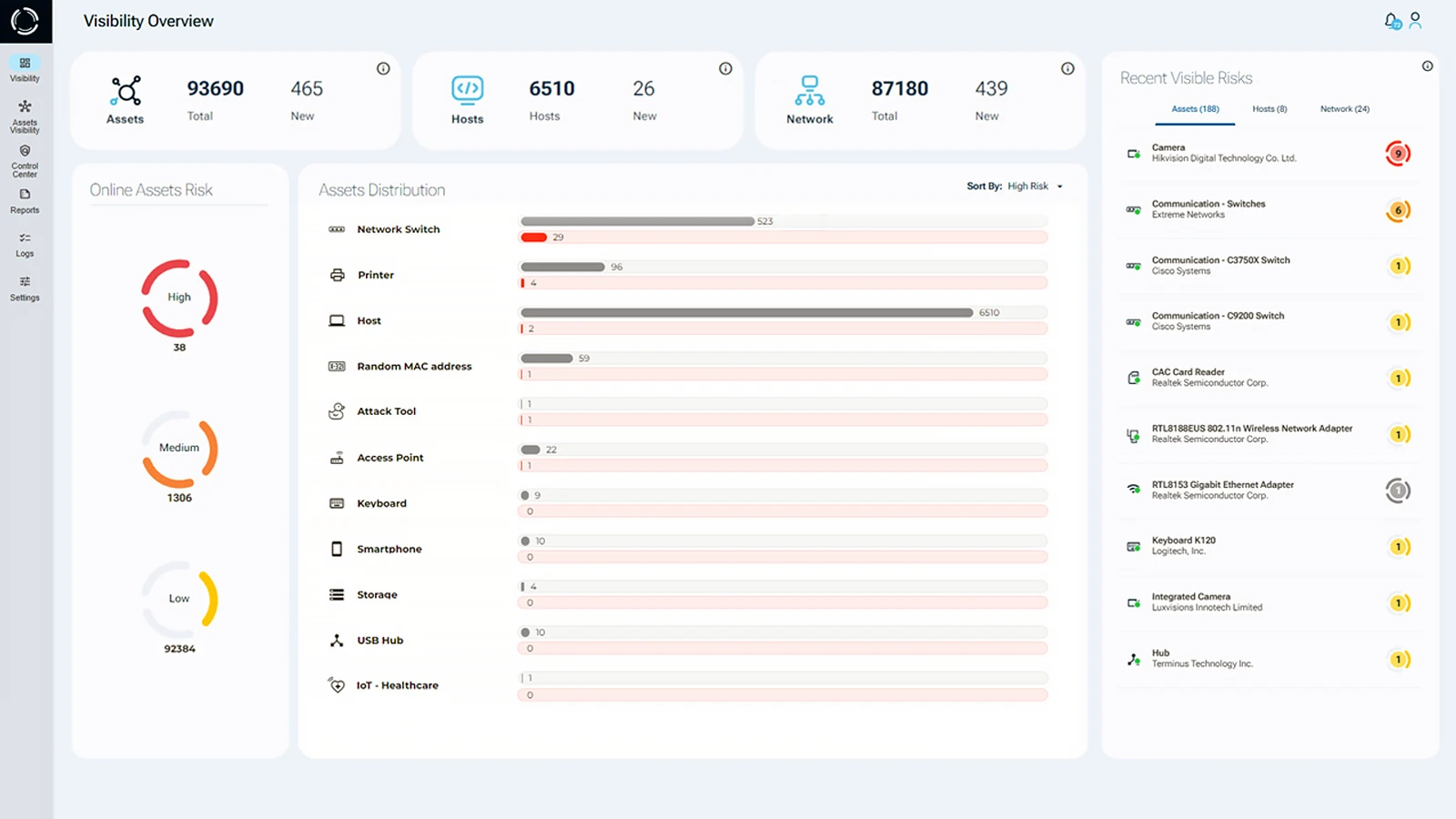
Gain Full Visibility and Control Over Your IoT Healthcare Assets
Healthcare organizations can secure IoT use cases in healthcare by gaining complete visibility into every connected device. Sepio’s solutions provide 100% hardware-level visibility, enabling providers to detect unauthorized devices, prevent data breaches, and enforce security policies across the network.
By continuously monitoring all connected medical devices and IoT endpoints, healthcare organizations can proactively mitigate risk, maintain regulatory compliance, and protect patient safety, without limiting innovation.
Building a Secure Foundation for the Future of Healthcare
A resilient IoT security strategy starts at the Physical Layer. When healthcare organizations trust what is physically connected, they can confidently expand digital health initiatives, adopt new IoT healthcare solutions, and support advanced clinical and operational use cases.
Talk to an expert to learn how Sepio’s patented technology helps healthcare organizations gain control over asset risk and secure their IoT environments, today and in the future.