What Is Healthcare Cybersecurity?
Healthcare cybersecurity refers to the technologies, processes, and strategies used to protect patient data, healthcare networks, connected medical devices, and clinical operations from cyber threats. As healthcare organizations become increasingly reliant on digital systems, electronic health records (EHRs), cloud applications, and Internet of Medical Things (IoMT) devices, cybersecurity plays a critical role in ensuring patient safety, operational continuity, and regulatory compliance.
Healthcare organizations face a growing number of threats, including ransomware attacks, phishing campaigns, insider threats, and vulnerabilities in connected medical devices. A successful cyberattack can expose sensitive health information, disrupt patient care, and create significant financial and reputational damage.
To address these risks, healthcare organizations implement healthcare cybersecurity solutions that combine multiple layers of protection, including network security, endpoint detection and response, identity and access management, threat monitoring, and medical device security. Together, these capabilities help reduce risk, improve visibility, and strengthen resilience against evolving cyber threats.
Strong healthcare cybersecurity practices also support compliance with regulatory frameworks such as HIPAA, GDPR, and NIST. By adopting a comprehensive security strategy, healthcare providers can better protect patient privacy, secure critical systems, and maintain trust in an increasingly connected healthcare environment.
Why Is the Healthcare Sector a Target for Cyberattacks?
Healthcare organizations are a frequent target for cyberattacks due to the high value of medical data and the critical nature of healthcare services. Cybercriminals often view healthcare providers as attractive targets because successful attacks can result in significant financial gain, operational disruption, or unauthorized access to sensitive patient information.
Key reasons include:
- Valuable PHI Data: Medical records are often more valuable than financial data on the black market.
- Ransomware Impact: Hospitals and healthcare providers are more likely to pay ransoms due to the urgency of maintaining patient care and critical operations.
- Expanding Attack Surface: The growing adoption of connected medical devices (IoMT) cloud platforms, and third-party integrations creates additional security challenges.
- Legacy Infrastructure: Many healthcare organizations continue to rely on older systems that were not designed to address modern cybersecurity threats.
As a result, healthcare organizations remain one of the most targeted sectors, making healthcare cybersecurity essential for protecting patient data, medical devices, and healthcare networks.
Common Cybersecurity Threats in Healthcare
Healthcare organizations face a wide range of cyber threats that can compromise patient data, disrupt clinical operations, and impact patient safety. As healthcare environments become increasingly connected, cybercriminals continue to exploit vulnerabilities across healthcare networks, medical devices, and user accounts.
Below are some of the most significant cybersecurity threats facing healthcare organizations today:
- Rogue Devices: Unauthorized hardware can bypass traditional security controls.
- Data Breaches: Unauthorized access to patient data can expose protected health information (PHI), lead to regulatory penalties, and damage patient trust. For more details, visit Cases Currently Under Investigation.
- Ransomware Attacks: Attackers encrypt critical systems and data, demanding payment in exchange for restoration while disrupting healthcare operations and patient care.
- Phishing and Social Engineering: Healthcare staff are frequent targets of deceptive emails and communications designed to steal credentials or gain unauthorized access.
- IoMT and Medical Device Vulnerabilities: Connected medical devices often have limited built-in security controls, making them attractive targets for attackers.
- Insider Threats: Employees, contractors, or third parties can intentionally or unintentionally expose sensitive information or introduce security risks.
- Rogue Devices: Unauthorized or unmanaged hardware can bypass traditional security controls, creating hidden attack paths within healthcare environments.
Healthcare Cybersecurity Best Practices
Healthcare cybersecurity requires a combination of people, processes, and technology to protect patient data, connected medical devices, and critical healthcare systems. By implementing cybersecurity best practices, healthcare organizations can reduce risk, improve resilience, and strengthen their overall security posture.
- Data Protection: Ensure the confidentiality, integrity, and availability of patient information while complying with regulations such as HIPAA.
- Healthcare Network Security: Implement network segmentation, firewalls, and continuous monitoring to prevent unauthorized access and detect suspicious activity.
- Endpoint Security: Protect workstations, servers, mobile devices, and healthcare applications from malware, ransomware, and other cyber threats.
- Access Control: Enforce strong authentication, role-based access controls, and multi-factor authentication (MFA) to limit access to sensitive systems and data.
- Incident Response: Establish and regularly test plans for identifying, containing, and recovering from security incidents and data breaches.
- Security Training and Awareness: Educate healthcare staff to recognize phishing attempts, social engineering attacks, and other common cybersecurity risks.
- Asset Visibility and Device Security: Maintain visibility into all connected assets, including IoMT devices and unmanaged hardware, to identify vulnerabilities and reduce hidden risks.
- Regulatory Compliance: Align security practices with HIPAA, GDPR, NIST, and other applicable healthcare cybersecurity frameworks.
By combining these best practices with comprehensive healthcare cybersecurity solutions, organizations can better protect patient privacy, secure healthcare networks, and maintain uninterrupted patient care.
Why Zero Trust Is Essential for Healthcare
Zero Trust has become an important component of modern healthcare cybersecurity strategies. While many Zero Trust initiatives focus on users, applications, and network access, healthcare organizations must also consider the devices connecting to their environment.
Connected medical devices, unmanaged assets, and unauthorized hardware can introduce risks that traditional security controls may overlook. Extending Zero Trust principles to the hardware layer helps healthcare organizations verify device identities, improve asset visibility, and reduce the risk posed by rogue or masquerading devices.
As healthcare environments become more complex, maintaining visibility into every connected asset is essential for implementing an effective Zero Trust strategy (ZTHA) and reducing cybersecurity risk.
How Sepio Strengthens Healthcare Cybersecurity
Healthcare organizations need visibility into every asset connected to their environment, including IT devices, IoMT equipment, and unmanaged hardware. Sepio helps healthcare providers strengthen cybersecurity by delivering complete asset visibility and control through AssetDNA™ physical layer technology.
Sepio’s platform identifies, validates, and monitors connected hardware across healthcare networks using AssetDNA™ technology, helping organizations detect rogue devices, reduce hardware-related risks, and improve security operations. By providing continuous visibility into known and unknown assets, Sepio supports healthcare cybersecurity best practices and Healthcare Zero Trust Security initiatives while helping organizations strengthen compliance and operational resilience.
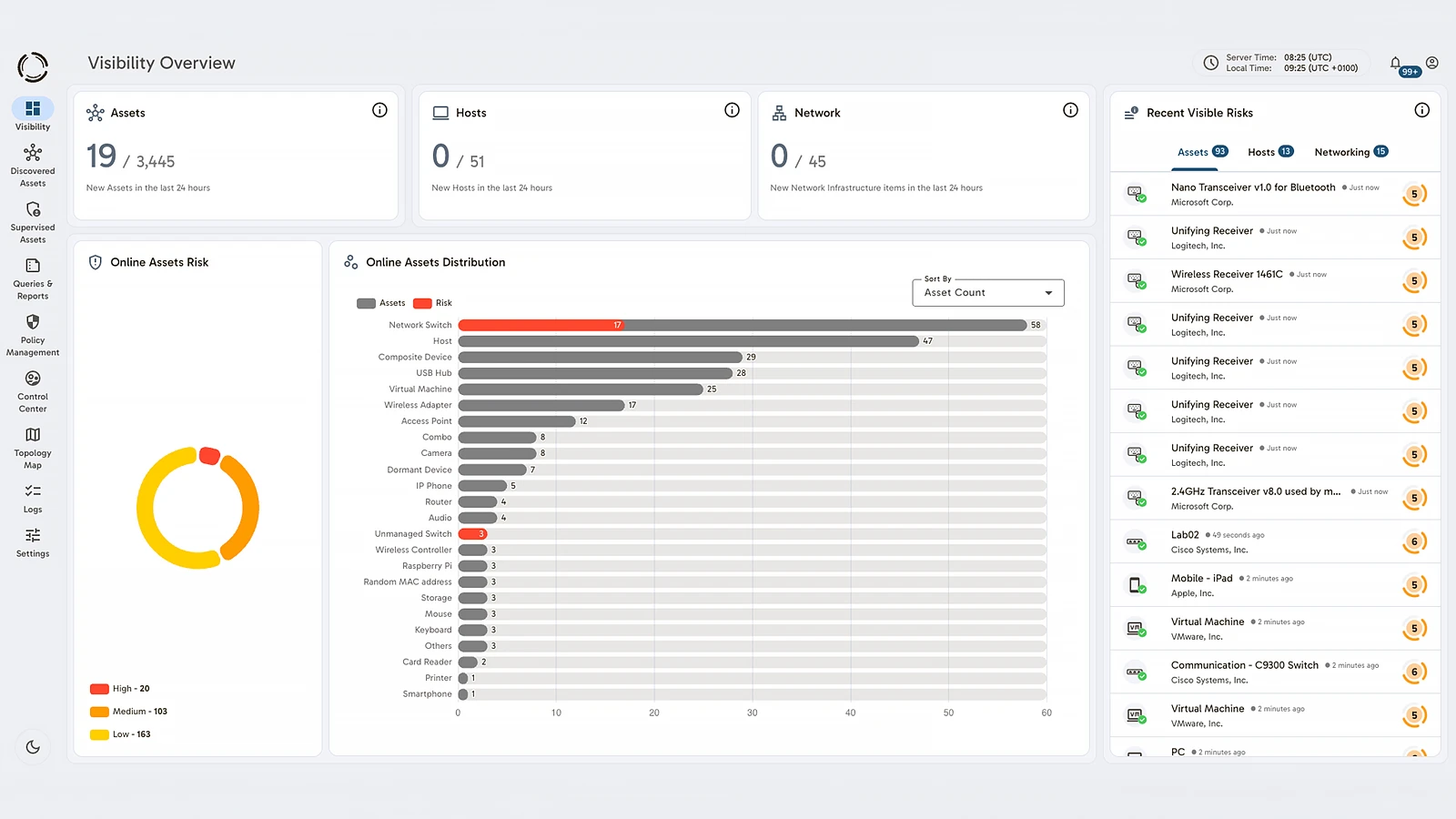
By adopting Sepio’s platform, healthcare providers can detect and mitigate risks associated with rogue devices, unauthorized hardware, and hardware attack tools. This proactive approach helps protect patient data, support uninterrupted healthcare services, and improve preparedness against evolving cybersecurity threats.
Strengthen Your Healthcare Cybersecurity Strategy
Organizations invest heavily in network security, endpoint protection, access controls, and threat detection capabilities. However, maintaining visibility across all connected assets remains a critical component of Healthcare Zero Trust Security and a resilient cybersecurity strategy.
Discover how Sepio helps healthcare organizations improve asset visibility, reduce risk, and strengthen healthcare cybersecurity through hardware-level security and continuous asset monitoring.
Talk to an expertFrequently Asked Questions
Healthcare cybersecurity refers to the technologies, processes, and strategies used to protect patient data, healthcare networks, connected medical devices, and clinical operations from cyber threats. Its goal is to ensure patient safety, data privacy, operational continuity, and regulatory compliance.
Healthcare cybersecurity is important because healthcare organizations handle sensitive patient information and rely on interconnected systems to deliver care. Cyberattacks can lead to data breaches, operational disruption, financial losses, and risks to patient safety.
Healthcare organizations are frequent targets because medical records are highly valuable, hospitals depend on continuous operations, and many environments contain a mix of legacy systems, connected medical devices, and third-party technologies that can expand the attack surface.
Common healthcare cybersecurity threats include ransomware attacks, data breaches, phishing campaigns, insider threats, vulnerabilities in connected medical devices, and unauthorized or rogue devices connected to the network.
Healthcare cybersecurity solutions are technologies and security controls used to protect healthcare environments from cyber threats. These may include network security, endpoint protection, identity and access management (IAM), threat detection and response, medical device security, and asset visibility solutions.
Healthcare organizations can strengthen cybersecurity by implementing strong access controls, protecting endpoints, monitoring networks, training employees, securing connected medical devices, maintaining asset visibility, and following recognized frameworks such as HIPAA, GDPR, and NIST.
Connected medical devices and IoMT assets expand the healthcare attack surface. Because many devices have limited built-in security features, organizations must maintain visibility into these assets and monitor them for vulnerabilities, misconfigurations, and unauthorized activity.
Asset visibility helps organizations identify, classify, and monitor all connected devices across healthcare environments. By knowing what is connected to the network, security teams can detect rogue devices, reduce unmanaged risks, and strengthen Healthcare Zero Trust Security initiatives.