What is Zero Trust Hardware Access?
Zero Trust Hardware Access (ZTHA) is a security approach focused on verifying the identity and trustworthiness of hardware before access is allowed. It addresses a critical blind spot in many Zero Trust strategies: the assumption that the device itself is legitimate.
This approach requires organizations to continuously discover, identify, validate, and control hardware assets connected to their environment. These assets may include managed and unmanaged endpoints, USB peripherals, network-connected devices, OT equipment, IoT devices, and hardware introduced by employees, contractors, or attackers.
In modern enterprise environments, Zero Trust Hardware Access (ZTHA) plays a vital role in exposing unauthorized, rogue, spoofed, or unmanaged devices and enforcing policies based on the true physical identity of the asset. By continuously monitoring the hardware environment and validating trust at the device level, organizations can reduce cyber-physical risk, strengthen resilience, support regulatory compliance, and advance a more complete Zero Trust posture.
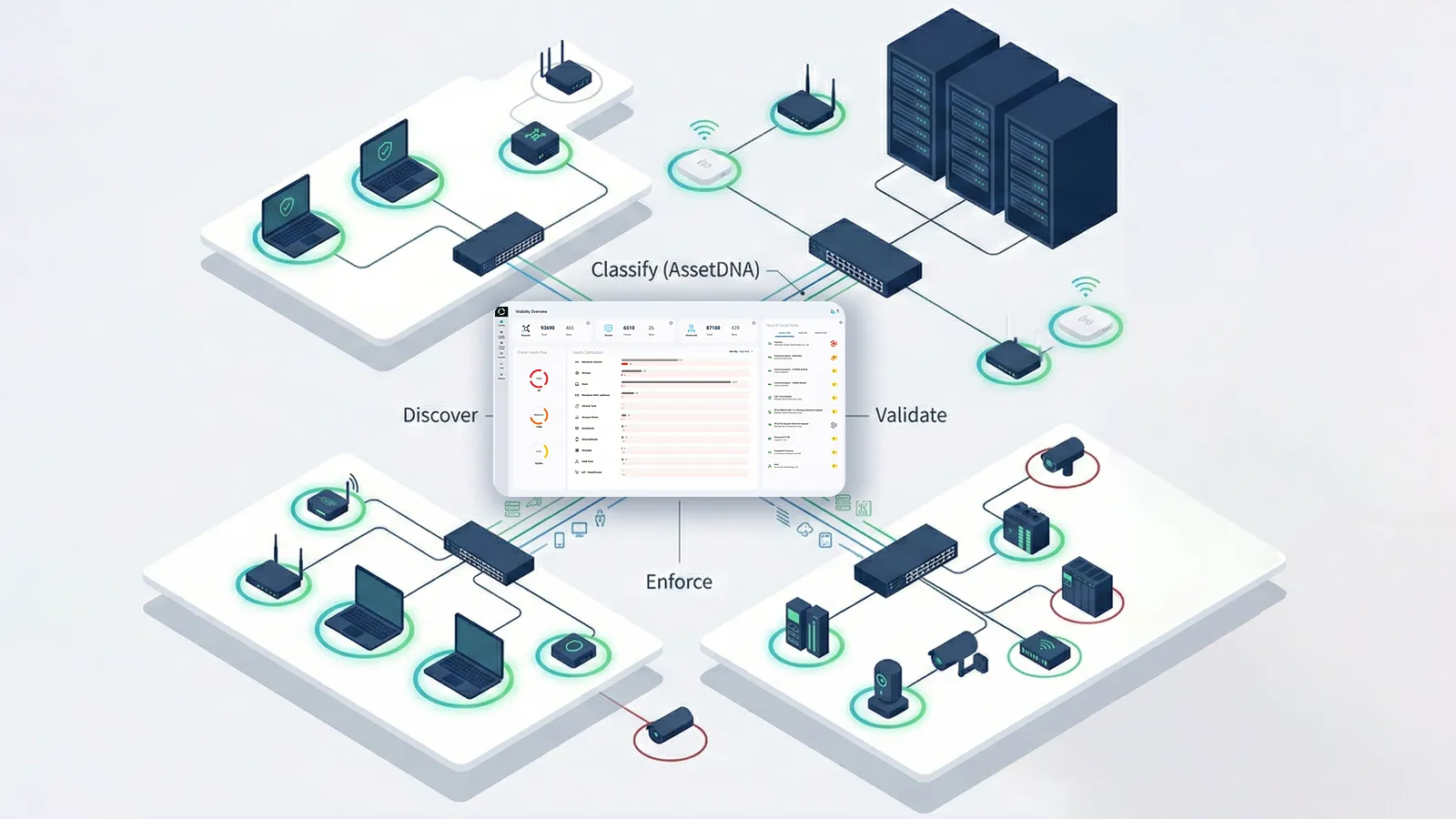
Sepio’s Zero Trust Hardware Access Platform
Sepio’s Zero Trust Hardware Access (ZTHA) platform delivers comprehensive visibility and control over hardware assets connected to enterprise endpoints and networks. Leveraging patented technology, Sepio enables immediate discovery, validation, and control of both known and shadow assets, providing security teams with unmatched operational and security insight.
By using physical-layer data, Sepio reveals the true identity of every asset, regardless of who introduced it, where it was connected, or what it claims to be. This provides a level of trust and visibility that behavior-based tools alone cannot deliver. The platform enables organizations to enforce hardware access policies automatically and at scale, helping security teams validate devices before they become a source of risk.
What sets Sepio apart is its ability to generate an objective hardware identity profile for every device based on its physical characteristics. This capability strengthens security across IT, OT, IoT, and peripheral environments, including devices that may lack unique identifiers or remain invisible to conventional tools. Sepio’s patented algorithms eliminate reliance on misleading declared identities and behavioral assumptions, giving organizations a centralized, scalable, and vendor-agnostic foundation for Zero Trust Hardware Access.
Zero Trust Hardware Access for IT / OT / IoT Security
Visibility is the prerequisite for control, but visibility only matters if it leads to action. Sepio helps organizations understand which assets require attention by continuously identifying device trust status, highlighting suspicious hardware, and enabling policy-based response.
Using AssetDNA, contextual business information, location, and policy logic, Sepio helps security teams prioritize hardware risk and strengthen control over their connected environment. This additional layer of intelligence enables teams to quickly identify high-risk hardware, accelerate remediation, uncover compliance gaps, and prevent threats from becoming incidents.
Sepio continuously monitors the asset landscape for changes in device identity, state, or behavior. This persistent awareness helps organizations detect anomalies early and maintain an accurate, real-time view of their hardware attack surface.
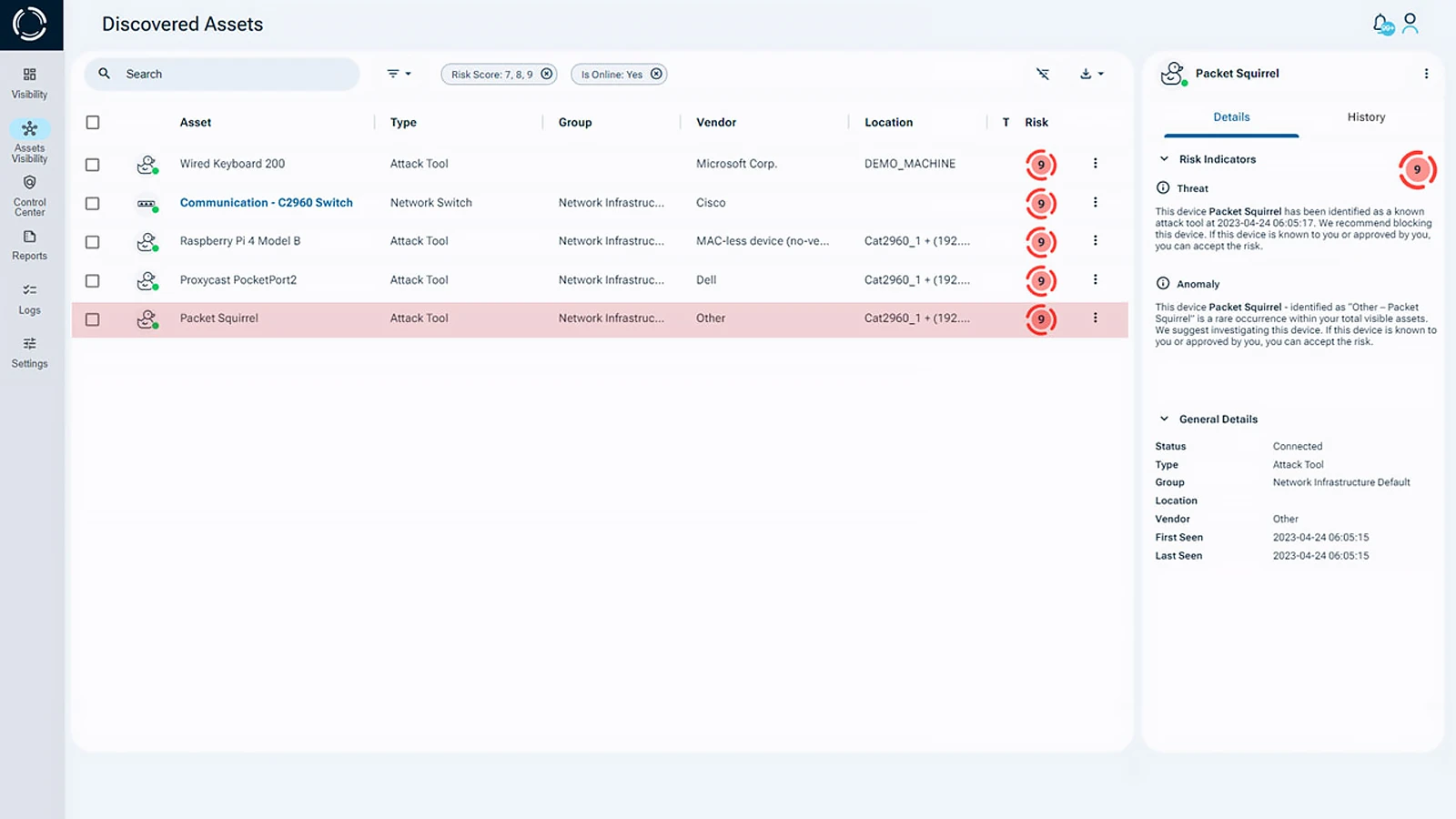
Big data, machine learning, and external intelligence sources further enhance this visibility by helping identify vulnerable, suspicious, or known malicious hardware. The result is actionable hardware intelligence that supports faster decisions, stronger operational resilience, and a more effective Zero Trust architecture.
Real-Time Hardware Risk Mitigation
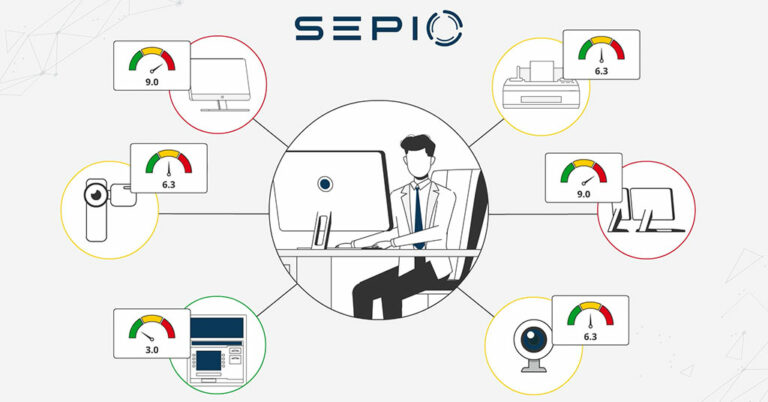
Sepio empowers organizations to take control of hardware risk by automatically enforcing hardware usage policies defined by administrators. Customers can create differentiated policies based on hardware characteristics such as device type, vendor, interface, location, trust status, or custom tags.
The platform continuously compares each asset’s physical identity and policy status against predefined enforcement rules. Any change to the device, its connection, or its trust posture is immediately detected and can trigger an automated response. Assets that violate policy or are identified as known attack tools can be blocked instantly.
This allows organizations to move beyond passive visibility and into active enforcement, ensuring that only trusted hardware is allowed to access critical systems and infrastructure.
For a comprehensive evaluation of Sepio’s security posture, visit the Sepio Trust Center and explore the Sepio Security Rating.
Centralized Management and Scalability
Sepio simplifies the deployment and management of hardware access policies across diverse device types and environments through a single, unified platform. This centralized approach enables consistent enforcement across endpoints, network segments, and operational environments while improving operational efficiency and supporting enterprise-scale deployments.
Whether deployed in traditional IT, industrial networks, healthcare environments, financial infrastructure, or distributed enterprise environments, Sepio provides a scalable foundation for Zero Trust Hardware Access.
Platform Modules
Sepio offers two complementary modules that can be deployed independently or together to address distinct hardware security challenges.
The Endpoint Device Security module provides real-time detection and monitoring of all USB-connected assets on endpoints. Powered by a lightweight Sepio agent, it analyzes device capabilities and identity, supports accurate trust validation, and enables granular allow or block policies for specific assets and interfaces.
The Network Device Security module continuously monitors network-connected hardware to detect rogue, passive, invisible, or dormant assets, including devices that may operate without standard identifiers such as IP or MAC addresses. It also identifies unmanaged network switches and the assets behind them, helping expose shadow IT and extend visibility across the environment.
Hardware Risk Mitigation Starts with Visibility
Effective Zero Trust Hardware Access depends on full awareness of the connected hardware environment. Organizations cannot enforce trust on what they cannot see. In today’s rapidly expanding and often uncontrolled device ecosystem, enterprises face growing challenges in identifying and controlling hardware assets regardless of where they are deployed, who introduced them, or how they are being used.
Sepio ensures complete visibility into both known and unknown assets, giving organizations the ability to establish trust at the hardware level and mitigate risk with confidence.
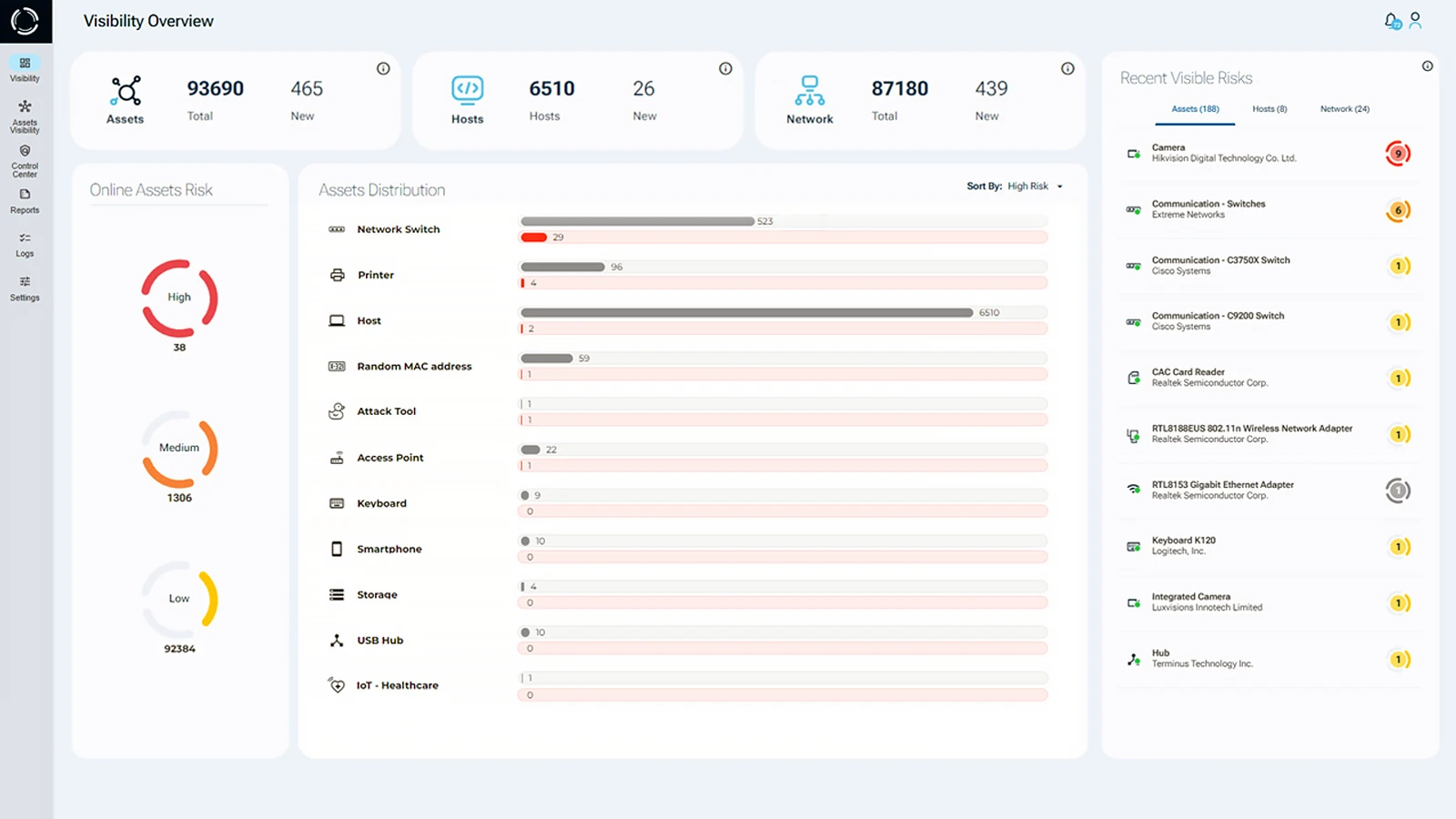
Beyond deep physical layer visibility, Sepio provides a robust policy enforcement framework that helps administrators define and apply strict or highly granular hardware access rules. These capabilities make Zero Trust Hardware Access practical and operational. When a device violates a predefined policy, Sepio can immediately trigger mitigation measures to prevent unauthorized, rogue, or untrusted hardware from gaining or maintaining access.
Why It Matters to IT and Security Teams
Sepio delivers measurable value by giving teams complete visibility into all connected hardware assets, including those that traditional tools may miss. The platform enables organizations to detect shadow assets, validate device trust, prioritize risk, and enforce policy based on objective hardware identity.
With Sepio, security and IT teams gain the control needed to reduce hardware-based risk, strengthen compliance, improve operational efficiency, and close one of the most overlooked gaps in Zero Trust.
Schedule a Demo with Sepio’s Zero Trust Hardware Access (ZTHA) experts to see how patented physical-layer technology helps organizations validate hardware trust, gain control over connected assets, and strengthen security across IT, OT, and IoT environments.
Read the Zero Trust Hardware Access Brief. (pdf)