Ransomware attacks remain one of the most disruptive cyber threats facing organizations today. While many resources explain what ransomware is, fewer focus on how ransomware actually enters an enterprise environment.
Understanding ransomware attack vectors is critical. Modern ransomware infections rarely rely on a single technique, instead, attackers use a combination of phishing, stolen credentials, software vulnerabilities, and increasingly, overlooked physical entry points such as rogue devices.
By identifying how ransomware is introduced into your environment, organizations can move from reactive response to proactive prevention. This article explores the most common ransomware attack methods, including emerging hardware-based risks that traditional security controls may not fully detect.
What Are Ransomware Attacks?
Ransomware is a type of cyberattack in which malicious software encrypts or locks access to data and demands payment, usually in cryptocurrency, to restore it. These attacks can target individuals, businesses, and critical infrastructure, making them a major concern for modern cybersecurity strategies.
As ransomware continues to evolve, it is increasingly important to understand not only how it operates, but also how it enters an environment.
Modern ransomware attacks often involve:
- Sophisticated malware
- Social engineering techniques
- Ransomware‑as‑a‑Service (RaaS) platforms
The impact of a ransomware attack goes beyond financial loss. Organizations may suffer operational downtime, reputational damage, regulatory penalties, and even national security consequences.
Evolution of Ransomware
Ransomware first appeared in 1989 with the PS Cyborg Virus, which encrypted files and demanded payment by mail. Since then, it has evolved into a global threat, fueled by the rise of cryptocurrencies and increasingly accessible attack frameworks.
Over time, ransomware has progressed from simple file encryption to more advanced tactics, including data exfiltration and double extortion. In recent years, attackers have shifted toward causing operational disruption, combining encryption, data theft, and system damage to increase pressure on victims.
Today, ransomware is faster, more automated, and widely distributed through Ransomware-as-a-Service (RaaS) platforms.
How Ransomware Attacks Begin
Ransomware attacks typically follow a predictable sequence, but the initial entry point can vary significantly. Understanding both the attack flow and the entry vectors is essential for effective defense.
Common Ransomware Attack Vectors
Ransomware typically enters a system using one or more of the following attack vectors:
- Phishing and Social Engineering: For instance, victims click links to fake websites or unknowingly download malicious files, which install ransomware on the device.
- RDP Credentials: Attackers steal weak or exposed RDP credentials, gain server access, bypass endpoint detection, and initiate the attack.
- Software Vulnerabilities: Exploiting unpatched vulnerabilities gives attackers an open door to inject ransomware and steal data.
- Rogue Devices and Hardware-Based Entry Points: Rogue devices represent a less visible but highly effective entry vector. Without proper hardware-level security, rogue devices can connect undetected and quietly inject malicious code into enterprise environments.
For example, a BadUSB device disguised as a keyboard or flash drive can be plugged into an endpoint and immediately execute malicious commands, download ransomware, or create backdoors. All without triggering traditional endpoint or network security tools, such as EDR or NAC. Because these devices operate at the Physical Layer, they are trusted by the operating system and often invisible to software-based defenses.
What Happens After Initial Compromise
Once inside the environment, attackers begin to expand their access and prepare for ransomware deployment.
This typically includes:
- Encrypting files or systems
- Moving laterally across the network
- Stealing sensitive data
- Disrupting business operations
Victims face a difficult choice: pay the ransom or lose access to critical data. Payments are usually demanded in cryptocurrency, making them difficult to trace. Even when a ransom is paid, data recovery is not guaranteed.
Modern Ransomware Campaigns
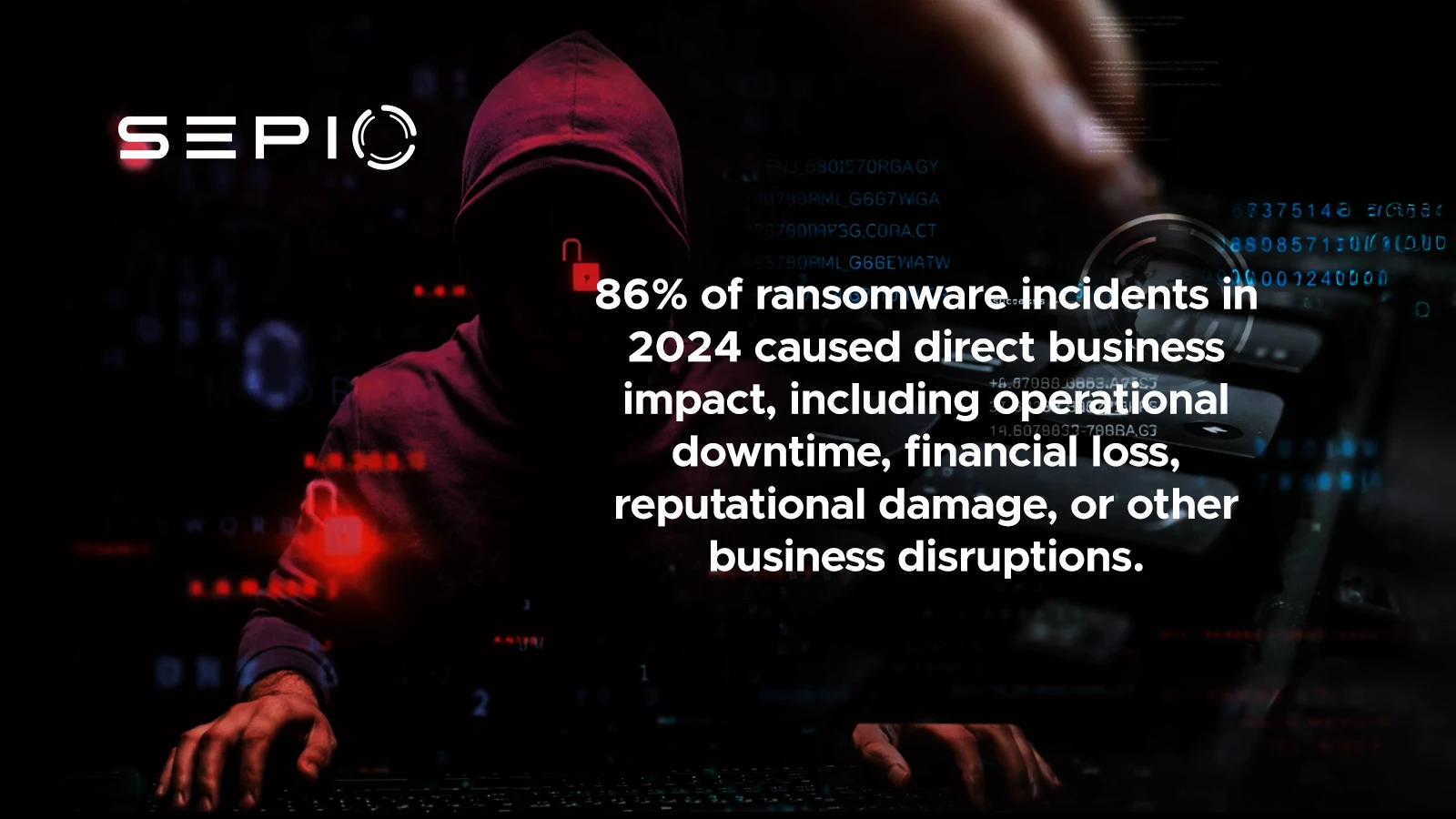
Ransomware and extortion‑related attacks are faster, more complex, and more disruptive than before. In 2024, Unit 42 responded to over 500 major cyberattacks, and 86% of those caused direct business impact, including operational downtime and reputational harm.
Attackers are combining traditional ransomware encryption with data theft and deliberate operational disruption, going beyond simple file encryption to pressure victims with broader impact.
The speed of attacks has increased sharply: in nearly 20% of cases data exfiltration occurred within one hour of compromise, giving defenders very little time to respond.
Attackers leverage automation, Ransomware-as-a-Service (RaaS) toolkits, expanded attack surfaces, and AI-driven tactics, which makes their campaigns more scalable and harder for organizations to defend against.
Ransomware Attacks and Enterprise Risk
The RaaS model has significantly escalated the threat landscape. Today, ransomware campaigns can be launched by individual hackers, organized crime groups, and even state‑sponsored actors.
Critical sectors, including healthcare, government, transportation, and energy, are prime targets. Attacks on these systems can disrupt physical operations, endanger public safety, and pose serious national security risks.
Ransomware increasingly targets Operational Technology (OT) systems, where digital attacks can cause real‑world damage. Attackers may combine ransomware with denial‑of‑service (DoS) attacks, data theft, or data destruction to increase pressure on victims.
Reducing Ransomware Risk Across Attack Vectors
Mitigating ransomware requires a layered approach that addresses both digital and physical entry points.
Key measures include:
- Strengthening email security and user awareness
- Securing remote access and credentials
- Patching vulnerabilities promptly
- Monitoring network activity
- Gaining visibility into all connected devices, including unmanaged or unknown hardware
By addressing these areas, organizations can reduce exposure and limit the opportunities attackers have to gain initial access.
How Sepio Helps Reduce Ransomware Entry Risk
Many cybersecurity strategies focus primarily on software-based threats. However, without protection at the Physical Layer, companies remain vulnerable to cyberattacks targeting physical devices.
Rogue Devices can go undetected, spoof peripherals can bypass endpoint security, and network implants can evade tradicional cybersecurity tools (e.g., Network Access Control). Hackers exploit these gaps to infiltrate systems and inject malicious code.
Sepio’s Asset Risk Management (ARM) provides organizations with full visibility into their hardware. It actively monitors the Physical Layer, which is often unprotected, and blocks hardware attacks before they can cause damage.
Using Physical Layer fingerprinting and machine learning, Sepio creates a unique profile for each device and compares it against known patterns. This enables the identification of unknown or suspicious devices that may pose a risk.
By improving visibility at the hardware level, organizations can better understand and manage potential entry points for threats such as ransomware.
Protect Your Organization Against Ransomware Attacks
Understanding how ransomware enters an environment is key to strengthening defenses.
By combining full hardware security, threat intelligence, and solid cyber security practices, enterprises can better manage risks. As a result, they can protect their sensitive data from ransomware attacks more effectively.
Talk to an expert today to learn how Sepio’s patented technology can help you achieve complete asset visibility and secure your infrastructure from modern cyber threats.