Rogue devices are unauthorized, unmanaged, or unknown devices that connect to an organization’s network without the approval of IT and security teams. In cybersecurity, the term “rogue device” refers to any endpoint operating outside established security controls, whether introduced intentionally or accidentally, creating hidden attack paths that threat actors can exploit.
As modern environments expand across remote workforces, cloud services, and IoT ecosystems, rogue devices are no longer edge cases. They have become a persistent and growing threat to organizational security and cyber resilience.
What Is a Rogue Device in Cybersecurity?
In cybersecurity, a rogue device is any unauthorized, unmanaged, or unknown device connected to an organization’s network or systems. Rogue devices may be legitimate hardware introduced without IT approval or purpose-built attack tools designed to bypass security controls, intercept communications, or provide attackers with unauthorized access.
Not all rogue devices are inherently malicious. Many result from everyday business activities, such as employees connecting personal devices or deploying unmanaged IoT equipment. Others are intentionally introduced by threat actors or malicious insiders to establish persistence, evade detection, intercept data, or compromise connected systems.
Regardless of how they are introduced, rogue devices increase an organization’s attack surface by creating unmanaged entry points that can be exploited by cybercriminals. Without continuous visibility, these devices often go undetected, enabling attackers to establish persistence, move laterally across the network, intercept sensitive communications, or exfiltrate data.
Common examples of unauthorized devices include:
- Personal laptops, smartphones, and tablets connected without authorization
- Unmanaged printers, IP cameras, sensors, and other IoT devices
- Contractors’ or vendors’ devices that retain network access after an engagement ends
- Previously trusted endpoints that have been compromised and reconnect to the network
Common examples of malicious hardware include:
- Rogue wireless access points
- Raspberry Pi or other single-board computers connected to the network
- Hardware keyloggers
- BadUSB devices and malicious USB peripherals
- Unauthorized switches, network TAPs, or packet sniffers
Why Rogue Devices are a Serious Cybersecurity Risk
Rogue devices are a serious cybersecurity risk because they connect to an organization’s network without authorization and remain outside the visibility and control of IT and security teams. Operating beyond established security controls, they can evade endpoint protection, access policies, asset inventories, and continuous monitoring. This creates security blind spots that attackers can exploit to gain unauthorized access, move laterally across the network, or maintain persistence within the environment.
Once connected, a rogue device can:
- Enable unauthorized access to sensitive systems and data
- Serve as a foothold for lateral movement across the network
- Evade endpoint and network security monitoring
- Introduce exploitable vulnerabilities through unpatched or misconfigured software
- Undermine Zero Trust architectures and regulatory compliance efforts
- Expand an organization’s attack surface
High-profile cyber incidents have repeatedly demonstrated how rogue devices and shadow IT can enable attackers to maintain persistence long after the initial compromise. These cases reinforce a fundamental cybersecurity principle: you can’t secure what you can’t see.
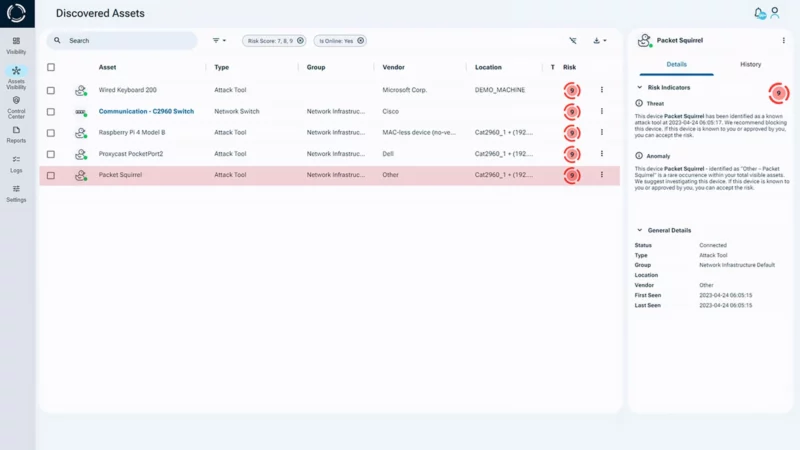
As organizations expand their IT, operational technology (OT), and Internet of Things (IoT) environments, the number of connected devices continues to grow. This increased connectivity creates more opportunities for rogue devices to enter the network and remain undetected.
Comprehensive asset inventory and visibility are essential for detecting and mitigating rogue devices. Without an accurate, continuously updated inventory of connected assets, organizations cannot reliably identify unauthorized devices. As a result, rogue devices increase the attack surface and weaken the organization’s overall security posture.
Rogue Devices and Hardware-Based Attacks
Despite early claims that the threat of rogue devices had subsided, recent high-profile attacks demonstrate that they remain a significant security risk. For example, the May 2023 cyberattack on Brazil’s National Institute of Social Security involved cybercriminals exploiting insider access to introduce unauthorized devices into the network. The breach resulted in significant financial losses, compromised system access, and the theft of sensitive data, illustrating how rogue devices can provide attackers with a foothold inside trusted environments.
The threat is even more pronounced in critical infrastructure. Looking at past cyberattacks, such as the 2017 Triton attack targeting Saudi Aramco and the 2018 breaches involving U.S. defense contractors, rogue devices and unauthorized hardware played a key role in enabling attackers to infiltrate sensitive networks. These incidents, spanning sectors from energy and aerospace to defense, demonstrate the severe operational and security consequences that can result when unauthorized devices go undetected.
Together, these examples underscore the importance of implementing robust rogue device detection and mitigation capabilities. By continuously identifying unauthorized hardware and preventing it from being exploited, organizations can significantly reduce their attack surface, strengthen the resilience of critical infrastructure, and improve their overall cybersecurity posture.
How to Detect and Mitigate Rogue Devices
Detecting rogue devices requires complete visibility into every asset connected to your environment. Traditional discovery methods that rely on IP or MAC addresses can miss unauthorized or spoofed devices, leaving organizations exposed to hardware-based attacks. Sepio addresses this challenge through its Asset Risk Management (ARM) platform, providing continuous visibility across IT, OT, IoT, cyber-physical, and peripheral assets to identify and mitigate rogue devices before they can be exploited.
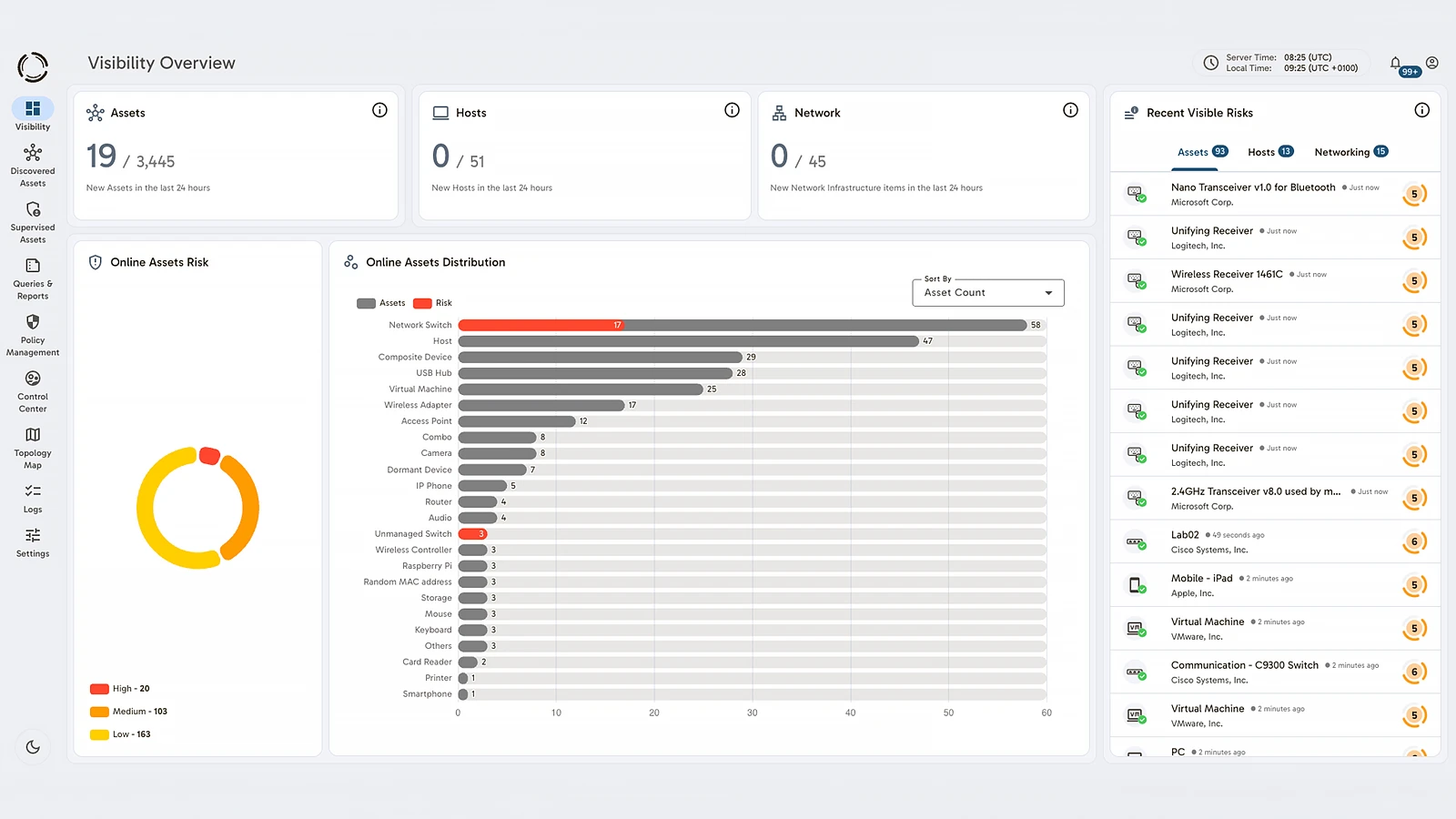
Powered by AssetDNA™, Sepio goes beyond traditional device identifiers by creating a hardware-based fingerprint for every connected asset. This enables security teams to accurately identify known, unknown, and rogue devices, even when they attempt to evade conventional security controls, ensuring complete asset visibility across the enterprise.
With Sepio’s platform, organizations can:
- Continuously discover and inventory every connected asset
- Detect and mitigate rogue and unauthorized devices in real time
- Monitor asset risk and prioritize remediation efforts
- Enforce device policies and block unauthorized hardware from accessing critical systems
- Support compliance with regulatory and security frameworks through continuous asset visibility
Sepio’s hardware-centric approach enables organizations to establish layered security controls that adapt to evolving business requirements and cyber threats. By combining continuous asset discovery with rich AssetDNA™ intelligence, security teams gain granular control over every connected device, allowing approved assets to operate while rapidly identifying unauthorized hardware and anomalous behavior before it can be exploited.
As hardware-based attacks continue to evolve, organizations need more than traditional network monitoring, they need complete visibility into every connected asset. By integrating Sepio into their cybersecurity strategy, organizations can reduce their attack surface, strengthen operational resilience, and protect critical systems from rogue devices and other hardware-based threats.
Talk to an expert