As cyber threats evolve, effective hardware security measures have become an essential component of a comprehensive cybersecurity strategy. These measures help organizations identify vulnerabilities, reduce their attack surface, and strengthen their overall security posture. Organizations increasingly rely on hardware security controls and hardware security risk assessments to identify vulnerabilities, reduce their attack surface, and strengthen their overall security posture. While traditional security solutions focus on software vulnerabilities, attackers are increasingly targeting the physical layer, leveraging hardware-based attacks to bypass detection and infiltrate critical systems.
At the Global Cyber Innovation Summit Virtual Event, Bentsi Benatar, Co-founder & CMO at Sepio Systems, explored the challenges of harnessing OSINT (Open-Source Intelligence) for hardware security and highlighted why organizations must adopt a multi-layered approach to protect their physical infrastructure. As hardware security threats continue to evolve, effective protection requires a combination of asset visibility, physical hardware security controls, continuous monitoring, and risk-based enforcement.
The Growing Threat of Hardware-Based Attacks
Unlike software vulnerabilities, hardware security threats are often overlooked due to a lack of visibility at the physical layer. This creates blind spots that attackers can exploit to bypass traditional security controls and gain unauthorized access to systems, networks, and sensitive data. As a result, organizations must implement hardware security measures as a critical component of their overall cybersecurity strategy and hardware security risk assessment processes.
Attackers commonly exploit these gaps through:
- Rogue Devices: Malicious hardware disguised as legitimate peripherals, such as USB cables, keyboards, or network devices.
- Supply Chain Compromise: Hardware implants or manipulated components introduced during manufacturing, shipping, or distribution.
- Insider Threats: Employees or contractors connecting unauthorized devices to corporate environments.
- Physical Tampering: Direct modifications to hardware components designed to bypass security controls or enable persistent access.
These threats are difficult to detect using traditional security tools such as NAC, EDR, or IDS because they operate at higher network layers and lack visibility into the physical layer. Without effective physical hardware security controls and continuous hardware monitoring, organizations may be unable to identify unauthorized, spoofed, or compromised devices before they create significant security risks.
Essential Hardware Security Measures
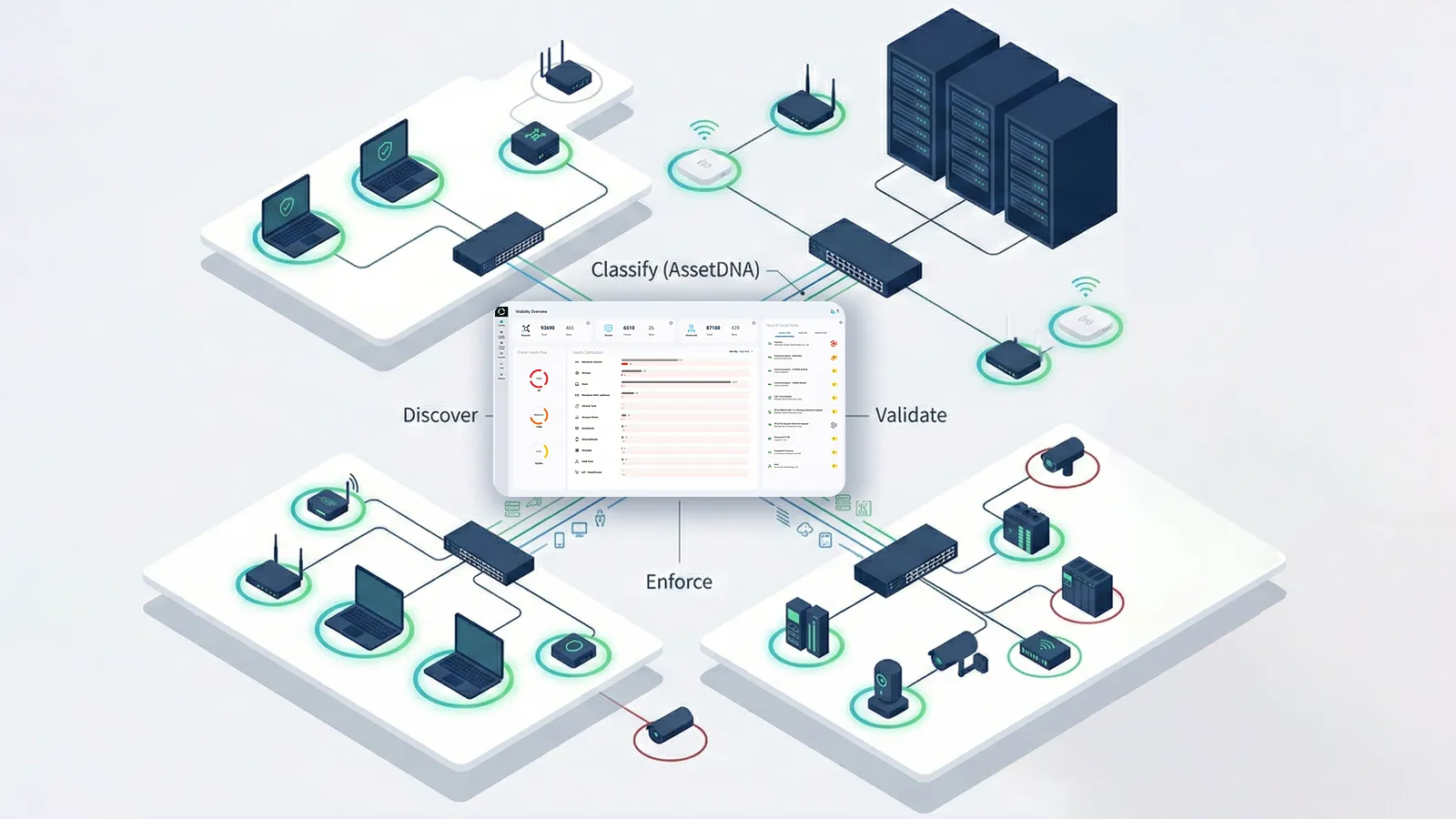
To defend against hardware-based threats, organizations must implement proactive hardware security measures that provide complete asset visibility, threat detection, risk assessment, and policy enforcement. Effective hardware security requires organizations to understand what devices are connected, verify their identity, evaluate their risk, and enforce appropriate controls.
Asset Visibility & Inventory Management
A complete hardware asset inventory is one of the most important hardware security measures and serves as the foundation of a strong hardware security program.
- Know what’s connected: Maintain a real-time inventory of all IT, OT, and IoT assets.
- Identify unauthorized devices: Detect shadow IT and rogue hardware before they become a security risk.
- Leverage AI-driven classification: Distinguish between legitimate and malicious devices instantly.
Hardware-Based Zero Trust Enforcement
- Deny access to unknown devices: Implement a Zero Trust Hardware Access Policy where only authorized devices can connect.
- Continuous monitoring: Enforce strict authentication controls at the hardware level.
- Risk-based policy enforcement: Take automated actions based on real-time risk scoring.
Supply Chain Security & Hardware Integrity Checks
These preventive measures help reduce supply chain risk and ensure the integrity of critical hardware assets.
- Vendor risk assessments: Conduct thorough security audits of hardware suppliers.
- Pre-deployment validation: Inspect new hardware before integration into critical systems.
- Firmware integrity monitoring: Detect unauthorized modifications to device firmware.
Physical Security & Insider Threat Prevention
- Restrict physical access: Implement strict access controls for sensitive hardware assets.
- Surveillance & logging: Monitor and log physical interactions with critical hardware.
- Insider threat awareness: Train employees on the risks of social engineering attacks and hardware manipulation.
The Role of OSINT in Hardware Security
Open-Source Intelligence (OSINT) can help security teams identify emerging hardware security threats, monitor supply chain risks, and support hardware security risk assessment efforts. However, OSINT alone cannot provide complete visibility into the devices connected to an organization’s environment.
Challenges include:
- Limited hardware-specific intelligence: Most OSINT resources focus on software vulnerabilities and cyber threats rather than hardware risks.
- Complex supply chain mapping: Tracking the origin and security posture of hardware components across multiple vendors can be difficult.
- Delayed threat intelligence: Publicly available information may lag behind real-world attack activity and newly discovered hardware threats.
To maximize the value of OSINT, organizations should combine external threat intelligence with hardware security measures such as asset visibility, continuous monitoring, and risk assessment. This enables security teams to identify potentially vulnerable or unauthorized devices, prioritize remediation efforts, and strengthen their overall hardware security posture before threats materialize.
How Sepio’s Asset Risk Management (ARM) Platform Helps
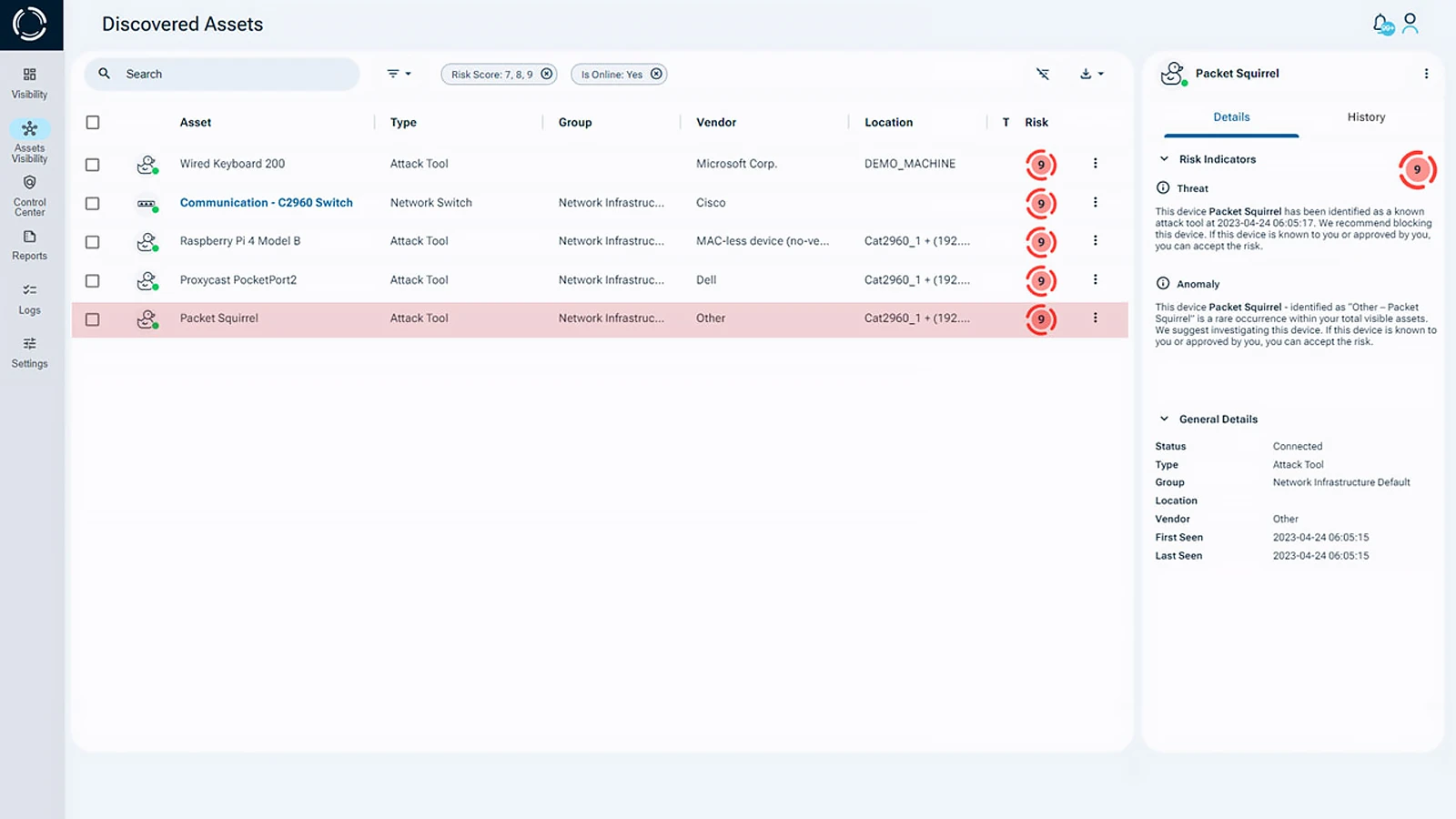
Sepio’s ARM platform helps organizations implement effective hardware security measures by providing complete asset visibility, continuous monitoring, and hardware security risk assessment capabilities. By identifying every connected device and evaluating its risk in real time, security teams can reduce blind spots and strengthen their overall hardware security posture.
Sepio’s ARM platform provides organizations with:
- Hardware Asset Visibility: Identify every connected device, even those undetectable by traditional security tools.
- Automated Risk Scoring: Assess the security posture of each device in real time.
- Hardware-Based Zero Trust Implementation: Enforce security policies at the physical layer.
- Threat Detection & Mitigation: Identify rogue devices and prevent unauthorized access.
By integrating hardware security measures with advanced asset risk management, organizations can achieve true Zero Trust Hardware Access (ZTHA) enforcement and eliminate blind spots that cybercriminals exploit.
Stay Ahead of Hardware-Based Cyber Threats
As attackers increasingly shift toward hardware-level exploits, organizations must prioritize proactive hardware security measures and continuously improve those measures to defend against Rogue Devices, insider threats, and supply chain risks.
- Want to learn more? Contact Sepio today to discover how our industry-leading ARM platform can help you detect, identify, and block hardware-based threats before they compromise your security.
- Let’s connect at upcoming cybersecurity events!
- Your hardware is your first line of defense, make sure it’s protected!