The Internet of Medical Things (IoMT) is transforming healthcare by enabling more connected, data-driven patient care. From infusion pumps and patient monitors to imaging systems and wearable devices, healthcare environments now depend on thousands of connected medical devices.
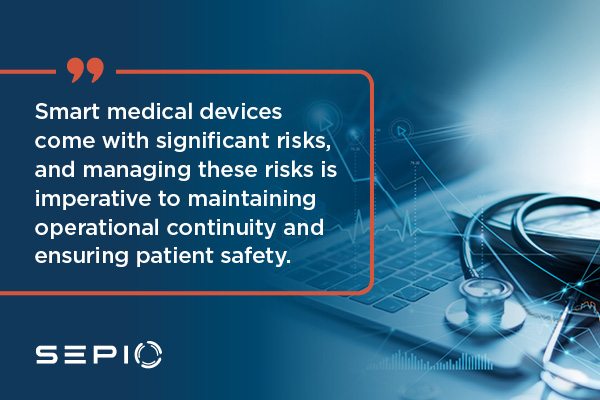
While this digital transformation improves efficiency and patient outcomes, it also expands the healthcare attack surface. A single compromised device can disrupt clinical workflows, delay treatment, and impact patient safety.
Modern healthcare cybersecurity must go beyond protecting data. It must ensure operational continuity, patient safety, and trust across all connected medical devices.
Despite investments in endpoint security, network monitoring, and access controls, a critical blind spot remains: organizations often lack full visibility into what medical devices actually are at the hardware level.
Traditional identification methods are limited:
- Network identifiers such as IP and MAC addresses can be spoofed
- Many IoMT devices do not support security agents
- Traffic visibility is restricted due to encryption and segmentation
- Asset inventories quickly become outdated in dynamic clinical environments
As a result, healthcare delivery organizations (HDOs) struggle to manage IoMT risk effectively.
The Expanding Healthcare Attack Surface
Healthcare environments combine IT, OT, and IoMT systems, creating complex and highly dynamic infrastructures. Medical devices are often managed by multiple stakeholders, including clinical teams, biomedical engineers, vendors, and third-party service providers.
This complexity introduces several key risks:
- Unmanaged or unidentified medical devices on the network
- Limited visibility into device behavior and context
- Vendor-managed devices with restricted access or oversight
- Legacy systems that cannot support modern security controls
Consequently, security teams may not fully understand what is connected, where it is located, or whether it can be trusted.
Why Traditional Security Approaches Fall Short
Traditional security models rely on software-based identification and assumptions about device identity. However, in IoMT environments, devices may be:
- Misclassified or undocumented
- Repurposed without visibility
- Vulnerable to spoofing or impersonation
- Operating outside expected clinical workflows
Moreover, software-based controls cannot always be applied to medical devices due to regulatory, operational, or technical constraints.
Without hardware-level verification, security decisions are based on incomplete or unreliable information.
A Hardware-Based Approach to IoMT Security
To address these challenges, healthcare organizations need a new approach that extends security to the physical device layer.
Sepio’s Asset Risk Management (ARM) platform provides continuous visibility into all connected medical devices by leveraging physical-layer intelligence. This enables organizations to:
- Discover both known and unknown medical devices
- Verify the true identity of each device
- Monitor device behavior and context
- Enforce access controls based on trusted device identity
As a result, HDOs gain a reliable foundation for managing IoMT risk and ensuring secure healthcare operations.
Key IoMT Security Use Cases
Healthcare environments require continuous visibility and control across connected medical devices. Key use cases include:
- Discovering unmanaged and shadow medical devices
- Detecting unauthorized or rogue devices in clinical environments
- Improving visibility into biomedical and clinical systems
- Identifying gaps in security coverage
- Enforcing policies based on verified device identity
Strengthening Healthcare Security and Patient Safety
By extending security to the hardware level, organizations can reduce blind spots, improve risk awareness, and support compliance with healthcare regulations.
Ultimately, securing IoMT environments is not just about preventing cyberattacks, it is about ensuring patient safety, maintaining clinical operations, and building trust in connected healthcare systems.
Ready to eliminate blind spots in your healthcare environment? Request a demo and learn more.